.svg)
Choosing an fNIRS System: NIRx or Artinis
NBT distributes both NIRx and Artinis in Israel, so this comparison carries no commercial preference in either direction. Modality choice, vendor comparison, channel count and montage, short separation channels, regulatory status, analysis pipeline and synchronisation.

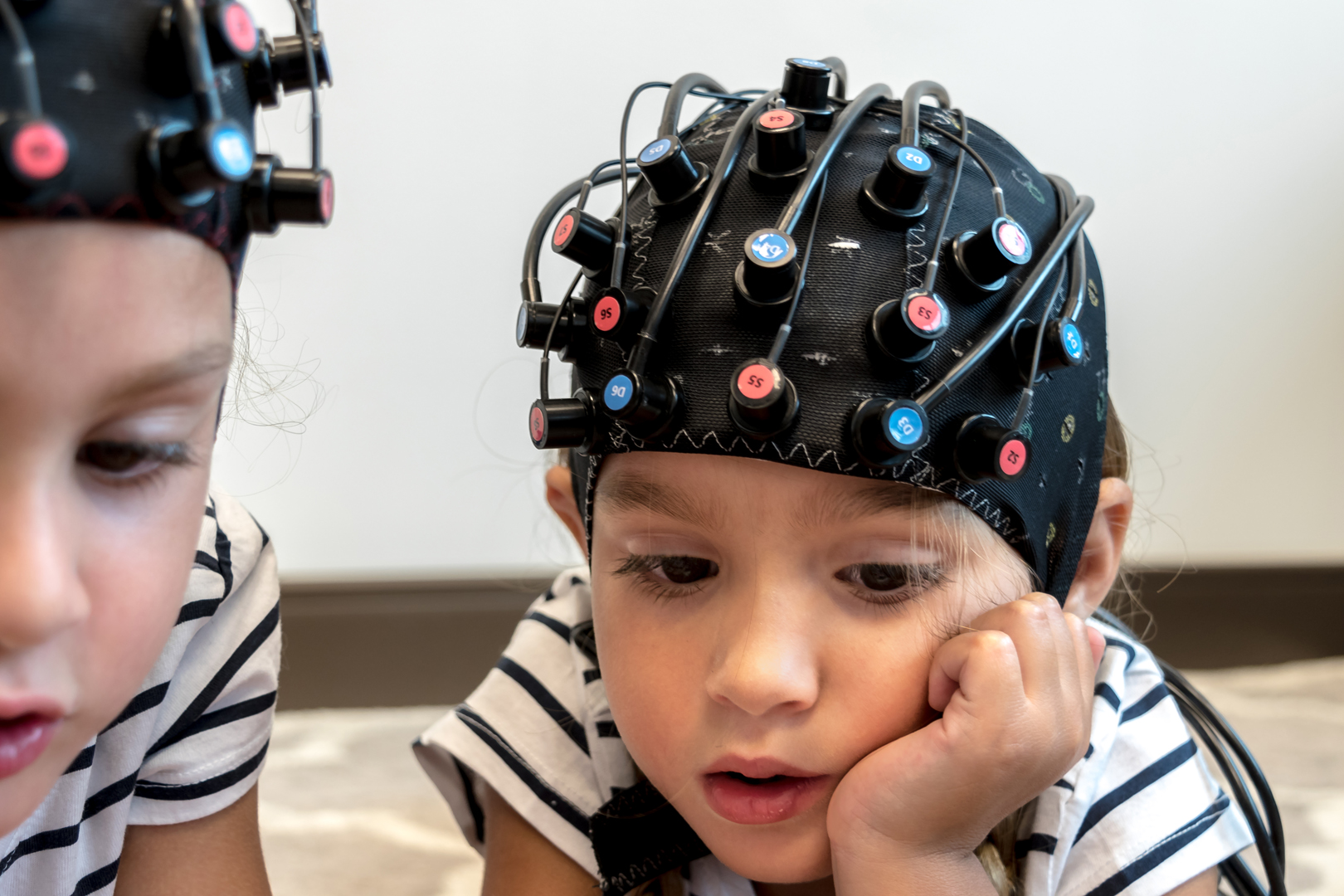
NBT distributes both NIRx and Artinis in Israel. A manufacturer comparing itself against a competitor is producing marketing. We supply both lines, so the comparison below carries no commercial preference in either direction.
First, is fNIRS the right measure
fNIRS measures the haemodynamic response, the same signal as fMRI, by passing near infrared light through the scalp and recording changes in absorption by oxygenated and deoxygenated haemoglobin.
Against EEG. fNIRS provides spatial localisation within the cortex and tolerates subject movement. EEG provides millisecond temporal resolution. ERP components occur within a time window the haemodynamic response cannot resolve, so a paradigm built on component latency is an EEG paradigm.
Against fMRI. fNIRS applies where the subject cannot lie still, where the task is social or naturalistic, where the population is infant, or where scanner access is the limiting factor. fMRI retains the advantage in depth and in whole brain coverage. fNIRS reaches cortex, not subcortical structures.
Recording fNIRS together with EEG is the configuration we install most frequently, for the reasons above.
NIRx or Artinis
The two lines differ less in signal quality than in what they are engineered around. NIRx is built for channel density and multimodal integration. Artinis is built for wearability and participant tolerance.
Density and scalability – NIRx. 8 to 80 sources and 8 to 80 detectors, up to 5 devices fully synchronised.
Wearability – Artinis. Brite MKIV control unit at 300 grams, mounted on the headcap.
MRI environment – NIRx. NIRxBorealis couples up to two NIRSport2 devices with fibre optodes, laser illumination and APD detectors.
Infant and toddler populations – Artinis. BabyBrite for young infants, Brite Lite Frontal at 8 channels for prefrontal work in small children.
Hospital settings – Artinis. MediBrite, Class I under MDR (EU) 2017/745, under 200 grams, up to 27 channels. See the regulatory section below before assuming what this covers.
Large scale hyperscanning – Artinis. Brite Connect Ultra monitors up to 30 Brite devices from a single interface. NIRx synchronises up to 5 devices and specifies 10 or more subjects over a wired network.
Analysis – no clear advantage either way at present.
Our reading of that comparison, stated as opinion rather than fact.
Specify NIRx where the intended output is an image. Channel density, source reconstruction, MRI compatibility, and Satori as an analysis route that does not require the analyst to write code.
Specify Artinis where the participant is the limiting factor. Infants, toddlers, patients, subjects recorded in motion, or large simultaneous groups.
Specify both where the group runs both classes of study, which several Israeli labs now do.
Where the paradigm is a prefrontal task on 30 healthy adults, neither flagship is indicated. State the paradigm and we will specify the smaller system.
How many channels, and where
Channel count follows from the montage, and the montage follows from the hypothesis.
8 channels over prefrontal cortex is sufficient for executive function, working memory, and the majority of the applied and sports literature. Brite Lite Frontal is an 8 channel prefrontal device and nothing further.
Up to 27 channels from a configurable optode template, as on the Brite, covers a single cortical region with a full montage, whether motor, temporal or prefrontal.
Above that the NIRSport2 applies. A single device yields approximately 25 to 50 channels at the standard 3 cm separation and scales from 8 to 80 sources and 8 to 80 detectors, with the base device configured 8 by 8 or 16 by 16. Three connected devices give a 48 source and 48 detector arrangement, the point at which diffuse optical tomography and image reconstruction become feasible.
3 cm is the standard adult source to detector separation. Infant separations are shorter, which is why paediatric systems exist as separate products rather than as a configuration setting.
Short separation channels
Near infrared light traverses scalp and skull twice before reaching the detector. A substantial fraction of the recorded signal therefore originates in extracerebral tissue, principally skin blood flow. Short separation channels use a reduced source to detector distance to sample the superficial layer alone, providing a regressor for removing that contribution from the long channel data.
Without them, systemic fluctuations in heart rate, blood pressure and skin perfusion remain in the data and are not separable from task related activation. Reviewers now expect this to be addressed.
Both manufacturers implement short separation channels, contrary to a common assumption. NIRx supplies 8 mm short distance detectors with full array head placement, up to 16 on a single NIRSport2 and up to 80 across connected devices. Artinis achieves it through the adjustable inter optode distance on the Brite, 10 to 55 mm, together with an SSC splitter that adds up to 8 short channels at limited cost to the standard channel count.
A quotation that does not specify them warrants a question.
Hair and skin pigmentation
Near infrared light is attenuated by dense dark hair, and signal quality over posterior sites degrades accordingly. Skin pigmentation contributes to the same effect.
Both manufacturers now address this in hardware. NIRx supplies variable tension spring holders for scalp coupling. Artinis implements multi power gain control on the Brite MKIV, four output levels plus an automatic setting, and supplies spring optode holders for temporal, parietal and motor sites.
The problem is reduced, not eliminated. Frontal montages avoid it. For whole head work, allow additional preparation time for optode combing and expect some channel loss. Optode design should be discussed against the intended subject population before the montage is fixed.
Regulatory status, and what it covers
MediBrite is a Class I medical device, certified under MDR (EU) 2017/745 and MHRA registered. It is not a diagnostic instrument. No fNIRS system currently on the market is cleared for clinical diagnosis, and any claim to the contrary should be treated as marketing.
What the certification provides is a regulatory position for research conducted inside a hospital: a shorter ethics approval path and fewer questions about the device itself. Where the study runs in a clinical setting, that translates directly into calendar time.
Where the work sits in a university lab under standard research ethics approval, the certification confers no benefit and should not be paid for. The Brite is the appropriate specification.
NIRx systems are research devices and are stated as such by the manufacturer.
Analysis pipeline
The analysis route constrains the hardware choice more than is generally anticipated, and should be settled first.
.snirf is the standard interchange format and is what preserves portability. Artinis Brite Connect exports it for downstream analysis in Homer or MNE Python. NIRx Satori, developed with Brain Innovation and distributed by NIRx, provides GLM, multi subject analysis, 2D and 3D visualisation and Python integration without requiring code, which is relevant where the analyst is a first year student.
One change is pending. The next Brite Connect release writes .snirf files that Satori accepts in full, including 3D optode locations. That opens Artinis hardware to analysis in NIRx software, which has not previously been a clean route. Where Artinis is the likely specification and Satori the intended pipeline, ask us for the status of that release before committing to an alternative.
Labs already running Homer3, NIRSTORM or FieldTrip in MATLAB should state so in the quotation request. It changes the recommendation.
Triggers and synchronisation
Both product lines support Lab Streaming Layer, so event markers stream from E-Prime or PsychoPy directly. NIRSport2 additionally accepts a cabled trigger input. Brite Connect accepts events from a keyboard press, a PortaSync unit, or the button on the device.
Where fNIRS is combined with EEG, the timing master should be determined at specification stage. Resolving it after both systems are installed is considerably harder.
Integration guides
fNIRS is rarely the only measure in the room. Each guide below covers one combination in detail: the hardware that links the two systems, where the timing fails, and where the money should not go.
EEG with fNIRS, and the fight for space on the scalp – every electrode added costs an optode position. Which measure is primary determines whether you add 8 fNIRS channels to an amplifier you already own, or place electrodes into the fNIRS cap.
Eye tracking with EEG, and where the timing breaks – three clocks, one 8-bit trigger word to both devices, and the photodiode calibration that belongs in the methods section.
Physiology, video and gaze in one observation lab – MindWare, MediaRecorder, Tobii Glasses and Observer XT. What has to be wired, and what does not.
The full set sits under Integration Guides. The specification comparison for the two fNIRS lines is on the fNIRS systems page.
Buying fNIRS in Israel
NBT is the Israeli distributor for both NIRx and Artinis. Installation, training and support are provided locally, Sunday to Thursday, on site where required.
Specification follows from three inputs: the paradigm, the population and the analysis pipeline. Supply those and we will state which of the two lines we would specify, and why we would exclude the other. Which is the binding constraint in your case, the participant or the coverage?

NEED MORE INFORMATION ABOUT THIS PRODUCT?
Send us your emailFrequently Asked Questions
Do I need short separation channels?
If the study reports task related activation, yes. Short separation channels sample scalp blood flow so it can be regressed out of the long channel data. Without them, systemic changes in heart rate and skin perfusion are not separable from activation. Both NIRx and Artinis implement them, so this is not a basis for choosing between the two.
NIRx or Artinis, which is better?
Neither line is superior overall, and NBT supplies both. NIRx for channel density, MRI compatibility and source reconstruction. Artinis for wearability, paediatric populations, setup time and large scale hyperscanning. Neither is a diagnostic instrument. Supply the paradigm and the population and we will state which we would specify.
How many channels do I need?
8 frontal channels covers prefrontal work such as executive function and working memory. Up to 27 channels on a Brite covers one region with a proper montage. A single NIRSport2 gives roughly 25 to 50 channels at 3 cm separation and scales to 80 sources and 80 detectors, which is where image reconstruction becomes possible.
Is any fNIRS system approved for clinical diagnosis?
No. The Artinis MediBrite is a Class I medical device certified under MDR (EU) 2017/745 and MHRA registered, which shortens ethics approval for research inside a hospital. It does not make fNIRS a diagnostic tool. NIRx systems are research devices and NIRx states this on their own site. If your work sits in a university lab, the certification buys you nothing and you should not pay for it.
Can fNIRS be recorded with EEG, or inside the MRI, or on infants?
Yes to all three. fNIRS with EEG is the combination we install most often and both manufacturers are built for it. For the MRI, NIRxBorealis couples up to two NIRSport2 devices with fibre optodes and APD detectors for concurrent fMRI and fNIRS. For infants, Artinis BabyBrite is built for young babies and Brite Lite Frontal for prefrontal work with small children. For many participants at once, Brite Connect Ultra monitors up to 30 Brite devices from one screen.
Still have questions?
Recent Blog Posts


.svg)
Advance Your Research
Contact NBT today for expert consultation on your neuroscience instrumentation needs.