.svg)
.svg)
fNIRS Systems – Choosing Between NIRx and Artinis
Channel count, short separation channels, hyperscanning and analysis pipelines. We distribute both NIRx and Artinis in Israel, so this comparison costs us nothing either way. A buyer's guide to research fNIRS from the Israeli distributor for both.
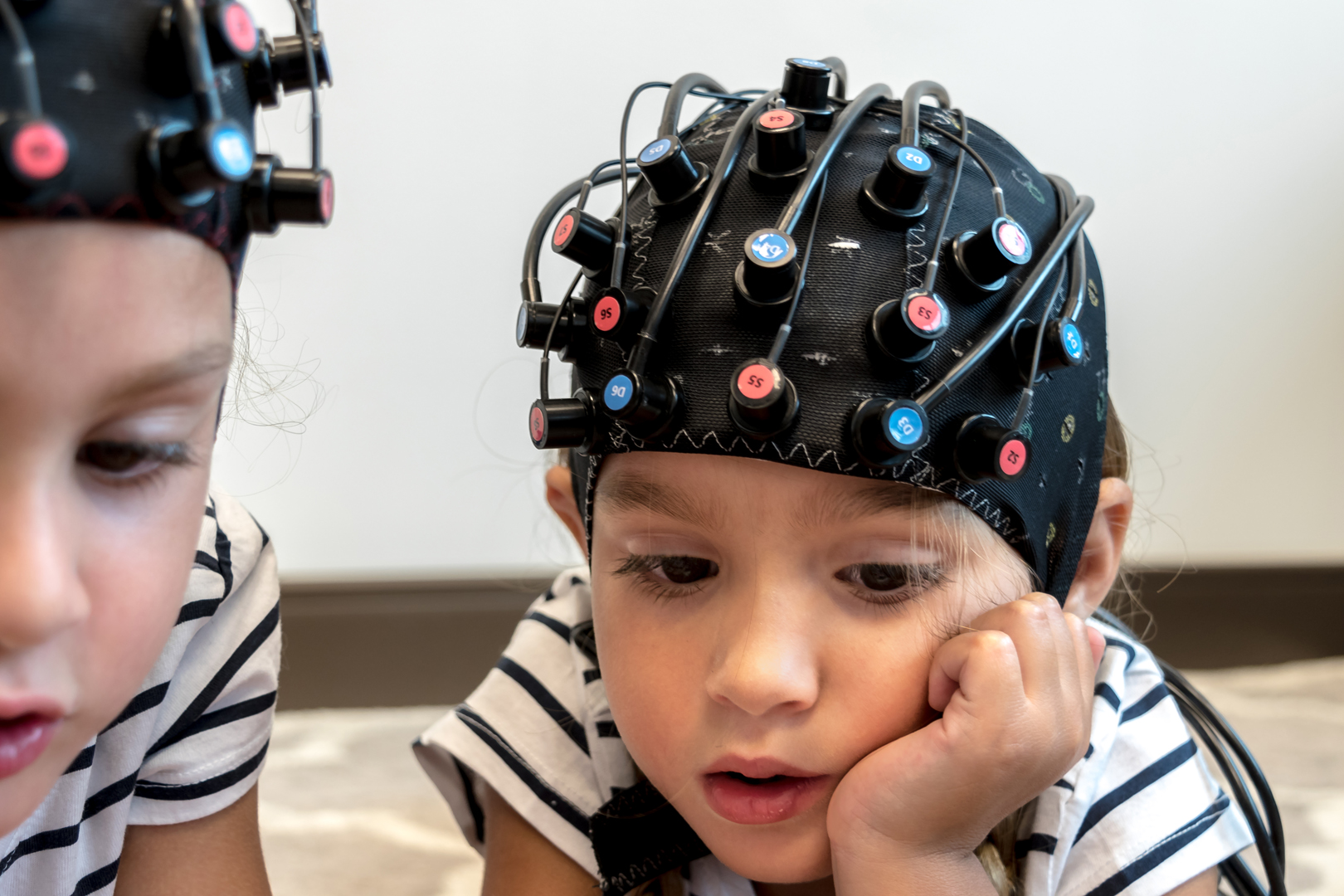
Choosing an fNIRS system
We distribute both NIRx and Artinis in Israel. That is unusual, and it is the reason this page exists. A manufacturer comparing itself to a competitor is writing marketing. We sell both, so the comparison below costs us nothing either way.
First, is fNIRS the right measure
fNIRS measures the haemodynamic response, the same signal as fMRI, using near infrared light through the scalp.
Choose fNIRS over EEG when you need to know where in the cortex, and when the subject has to move. Choose EEG over fNIRS when you need millisecond timing. ERP components live in a window fNIRS cannot see.
Choose fNIRS over fMRI when the subject cannot lie still, when the task is social or naturalistic, when you are testing infants, or when scanner time is the constraint. fMRI still wins on depth and on whole brain coverage. fNIRS reaches cortex, not deep structures.
The most common combination we install is fNIRS with EEG, for exactly this reason.
Short separation channels
Ask about this before anything else. It is the question that separates buyers who have run fNIRS from buyers who have read about it.
Near infrared light passes through scalp and skull twice before it returns to the detector. A large part of what you measure is skin blood flow, not brain. Short separation channels sit close to the source, sample the superficial layer only, and let you regress that contamination out.
Without them, systemic changes in heart rate, blood pressure and skin perfusion sit in your data looking like task activation. Reviewers know this now. Artinis offers short separation channels on the OxyMon and Brite systems.
If a quote you receive does not mention them, ask why.
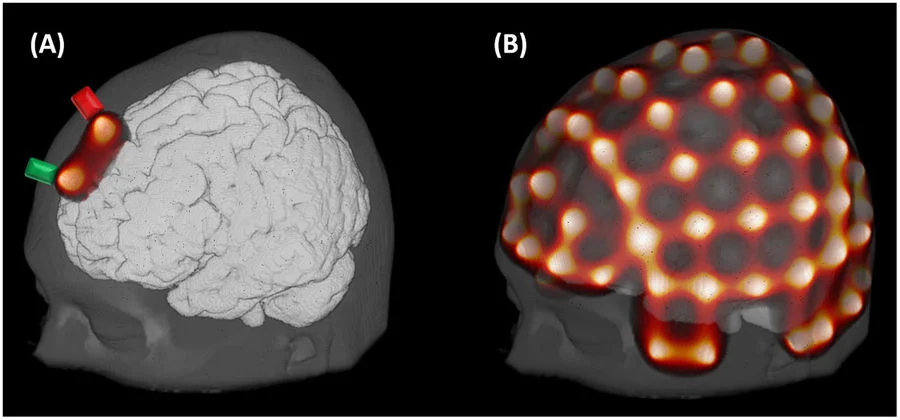
How many channels, and where
Frontal only, 8 channels, is enough for prefrontal work: executive function, working memory, and most of the applied and sports literature.
Around 24 to 27 channels gives you a region with real coverage, motor cortex or temporal, with room for a proper montage.
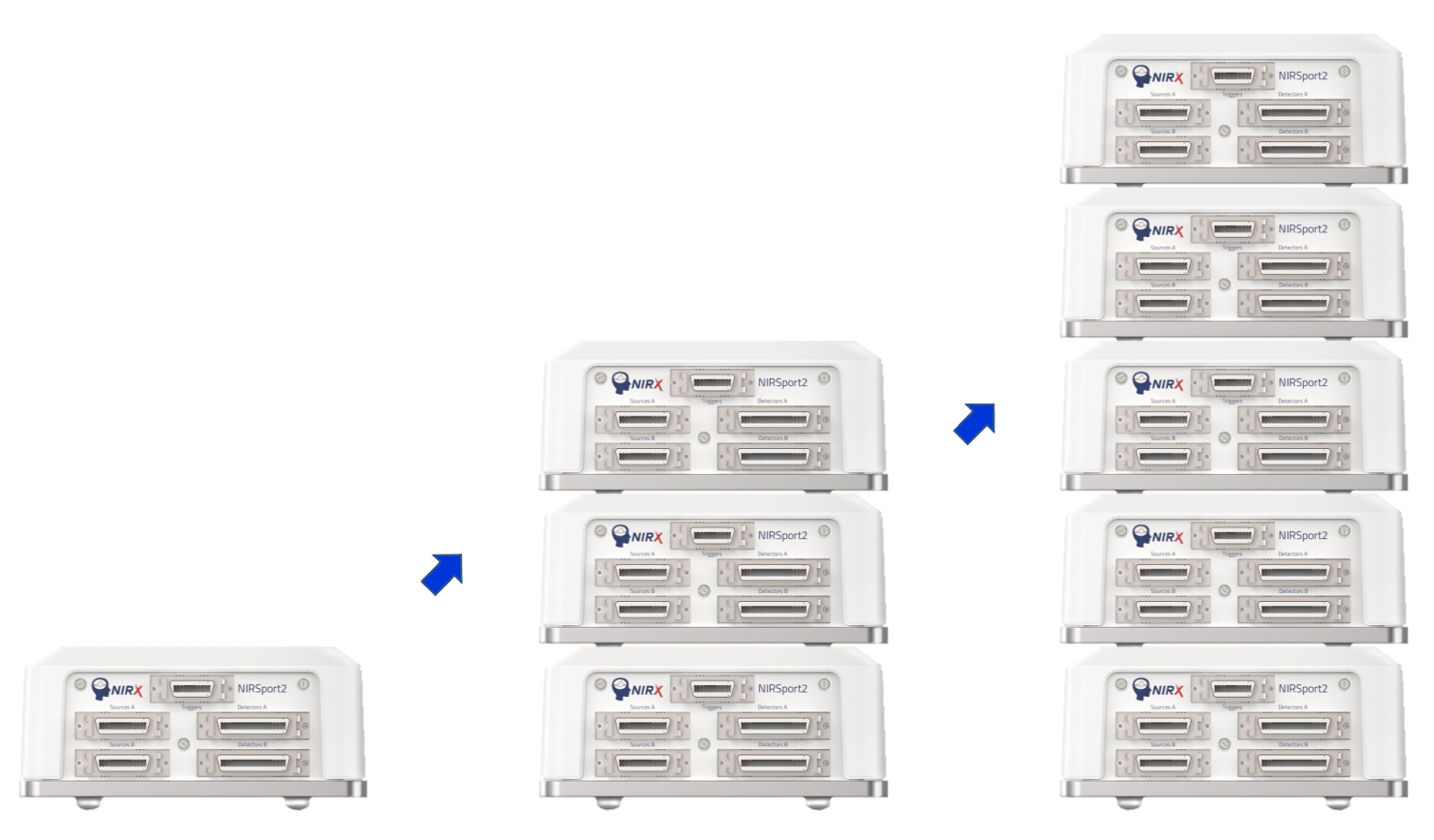
High density, meaning dozens of sources and detectors, is what you need if you intend diffuse optical tomography or anything approaching image reconstruction. NIRSport2 scales from 8 to 80 sources and 8 to 80 detectors, and up to 5 devices synchronise together. Three connected devices give a 48 source and 48 detector arrangement.
Standard adult source to detector separation is 3 cm. Infants need shorter, which is why paediatric systems exist as separate products rather than as a setting.
.webp)

Analysis, before you buy the hardware
Decide the pipeline first. It constrains the purchase more than people expect.
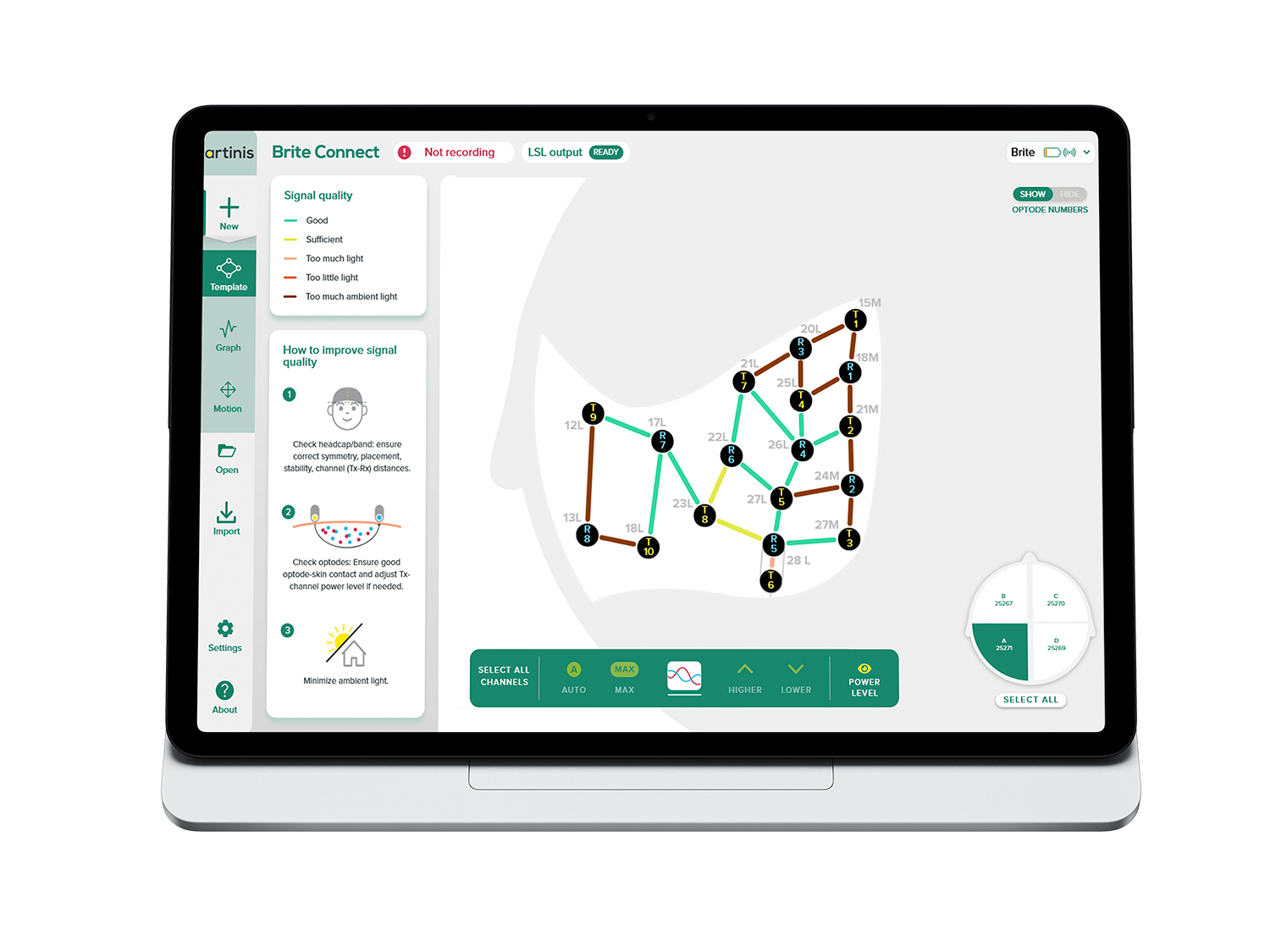
.snirf is the standard export format and it is what keeps you portable. Brite Connect exports it for downstream work in HOMER or MNE Python. NIRx Satori covers GLM, multi subject analysis, 2D and 3D visualisation and Python integration with no programming required, which matters if the person analysing is a first year student.
If your lab already runs Homer3, NIRSTORM or FieldTrip in MATLAB, say so in the quote request. It changes the recommendation.
Triggers and synchronisation
Both families support Lab Streaming Layer, so events stream from E-Prime or PsychoPy directly. Brite Connect also accepts events from a keyboard press, PortaSync, or the device button.
If you are combining fNIRS with EEG, decide early which system is the timing master. Doing this after both are installed is painful.
The hair problem
Nobody puts this in a brochure. Near infrared light does not pass through dense dark hair well, and signal quality on posterior sites drops accordingly.
Frontal montages avoid the problem entirely. For whole head work, budget preparation time for optode combing and expect some channel loss. Ask us about optode design before you assume a montage will work on your subject population.
Buying fNIRS in Israel
NBT is the Israeli distributor for both NIRx and Artinis. We install, train, and support here, Sunday to Thursday, on site when needed.
Send us the paradigm, the population and the analysis pipeline. Those three decide the system. We will tell you which of the two we would put in your lab, and why.
Frequently asked questions
Who distributes NIRx in Israel?
NBT (New Biotechnology Ltd) is the NIRx distribution and support partner in Israel, listed on the NIRx global partners page. Installation, application training and technical support are provided locally.
Who distributes Artinis in Israel?
NBT. We supply the full Brite family, OxySoft and Brite Connect, with local installation, training and support.
NIRx or Artinis, which is better?
Neither, and we sell both so we have no reason to say otherwise. NIRx for density, MRI compatibility and source reconstruction. Artinis for wearability, paediatrics, fast setup and large scale hyperscanning.
What are short separation channels and do I need them?
They are channels with a small source to detector distance that sample scalp blood flow so it can be regressed out of your brain signal. If you are publishing task activation, yes.
Can fNIRS be recorded with EEG at the same time?
Yes, and it is the most common combination we install. Both NIRx and Artinis systems are designed for it.
Can fNIRS be recorded inside the MRI?
With NIRx, yes. NIRxBorealis combines NIRSport2 amplifiers with fibre based laser stimulation and APD detectors for concurrent fMRI and fNIRS.
Can I study infants with fNIRS?
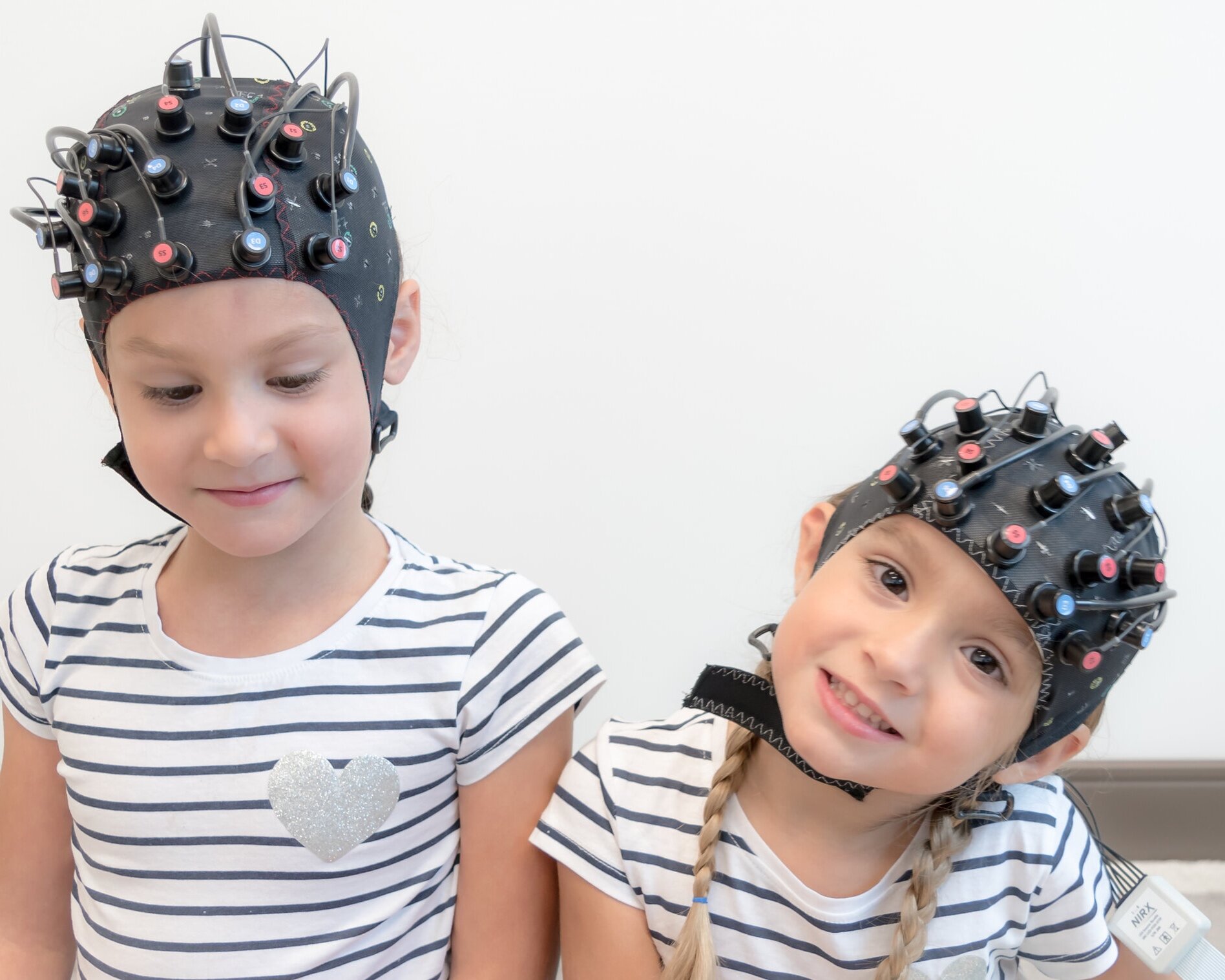
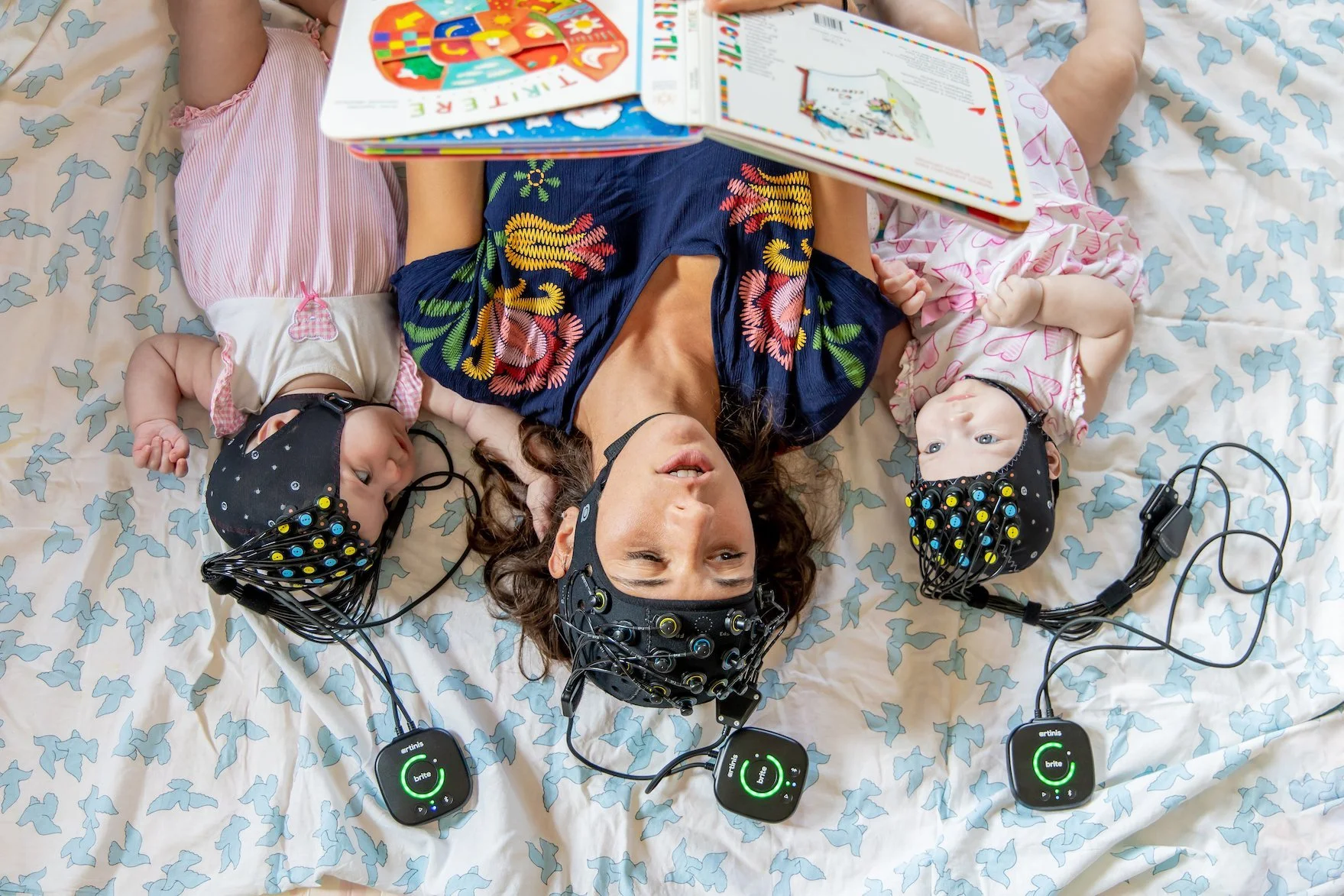
Yes, and it is one of the strongest cases for fNIRS over every alternative. Artinis BabyBrite is built for young babies, and the Brite Lite Frontal mini for toddlers and preschoolers.
How many participants can I record simultaneously?
Up to 5 synchronised NIRSport2 devices with NIRx. Up to 30 Brite Ultra devices with Artinis Brite Connect Ultra.
What does an fNIRS system cost?
It depends on channel count, wearability and software. Send us the paradigm and we will quote what runs it.

NIRx or Artinis
| NIRx | Artinis | |
| Strong at | Density, scalability, multimodal | Wearability, speed of setup, paediatrics |
| Flagship | NIRSport2, 8 to 80 sources and detectors, ~900 g | Brite, up to 27 channels, worn on the head |
| In the MRI | NIRxBorealis, built for concurrent fMRI and fNIRS | Not the route |
| Infants | Configurable | BabyBrite, and Brite Lite Frontal mini for toddlers |
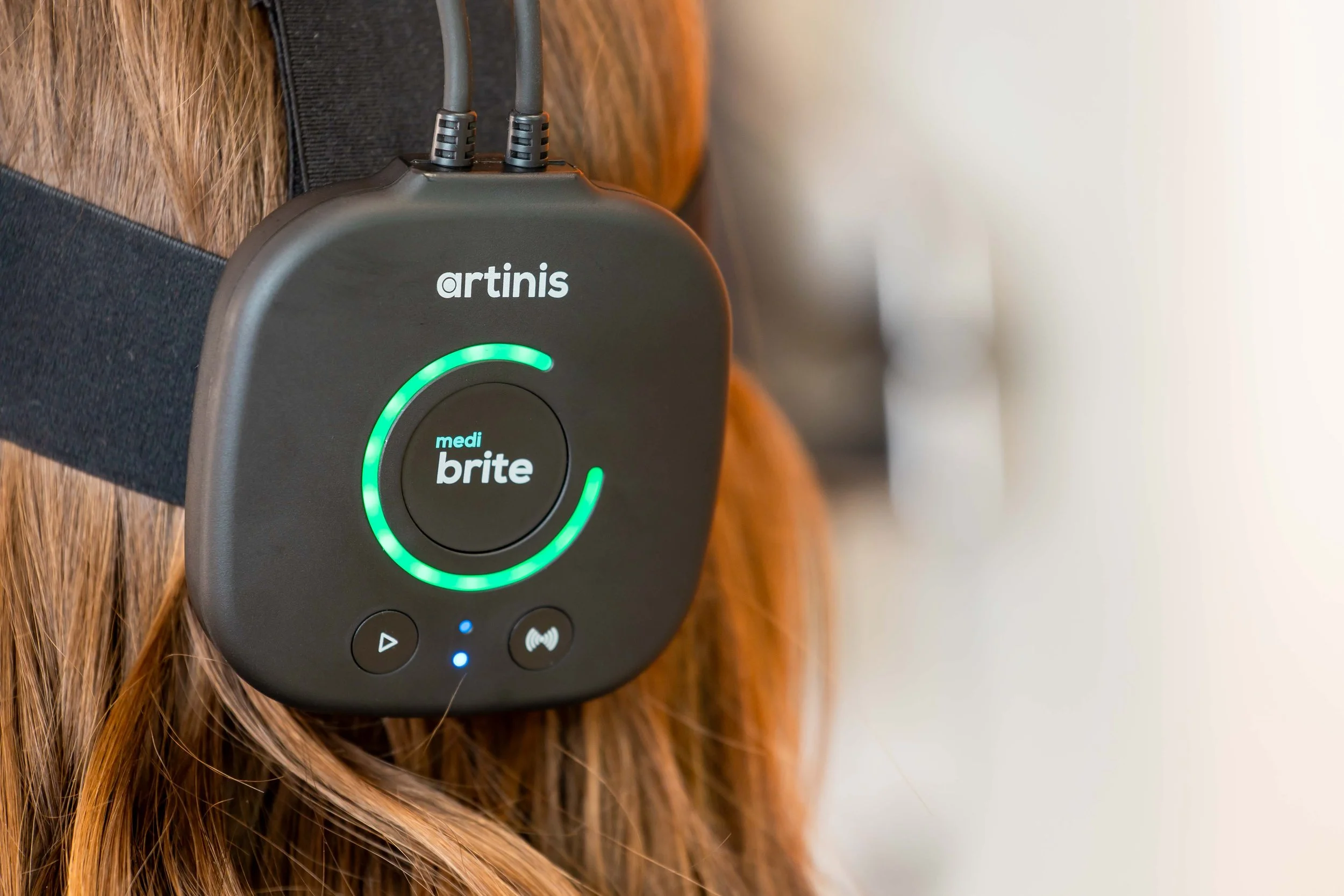
| Clinical | Research platform | MediBrite, first portable NIRS device CE marked under MDR |
| Hyperscanning | Up to 5 synchronised devices | Brite Ultra, up to 30 devices on one screen |
| Analysis | Satori, built with Brain Innovation, GLM and 2D/3D, no programming required | OxySoft and Brite Connect, .snirf export to HOMER or MNE Python |
How we advise, and this is our opinion
Buy NIRx if the paper you want to write has an image in it. Density, source reconstruction, MRI compatibility, and Satori as an analysis path that a student can actually use.
Buy Artinis if the constraint is the participant. Infants, toddlers, patients, athletes mid-movement, or thirty people in a room at once. Artinis reports 80% of their users setting up in under 10 minutes, and with a two year old that number is the whole experiment.
Buy both if you are running a group that does both, which several Israeli labs now do.
Applications
- Prefrontal work: executive function, working memory, cognitive load
- Naturalistic and social paradigms where the subject moves
- Infant and developmental research
- Hyperscanning, from dyads to thirty participants
- Concurrent fNIRS and fMRI
- Simultaneous fNIRS and EEG
- Sports, performance and applied research outside the lab
- Clinical research requiring a CE marked portable device



fNIRS
Explore All ProductsDevelopmental research
Explore All ProductsCognitive Neuroscience
Explore All ProductsFunctional MRI research
Explore All ProductsBrain-Computer Interface Research
Explore All ProductsfNIRS Systems Publications
NIRx and Artinis systems appear across the fNIRS literature: prefrontal cognition, infant and developmental studies, hyperscanning, naturalistic and sports paradigms, and concurrent fNIRS with EEG or fMRI. The search below covers published work using NIRSport2, NIRScout, NIRxBorealis and the Artinis Brite family.
Who distributes NIRx and Artinis in Israel?
NBT (New Biotechnology Ltd) distributes and supports both. NIRx lists us on their global partners page, and we supply the full Artinis Brite family, OxySoft and Brite Connect. Installation, application training and technical support are provided locally, Sunday to Thursday, on site when needed.
NIRx or Artinis, which is better?
Neither, and we sell both so we have no reason to say otherwise. NIRx for density, MRI compatibility and source reconstruction. Artinis for wearability, paediatrics, fast setup and large scale hyperscanning. Send us the paradigm, the population and the analysis pipeline - those three decide it.
What are short separation channels and do I need them?
They are channels with a small source to detector distance that sample scalp blood flow so it can be regressed out of your brain signal. Without them, heart rate, blood pressure and skin perfusion sit in your data looking like task activation. If you are publishing task activation, yes. Ask about them before anything else.
Can fNIRS be recorded with EEG, or inside the MRI, and can I study infants?
fNIRS with EEG is the most common combination we install and both families are designed for it. For the MRI, NIRxBorealis combines NIRSport2 amplifiers with fibre based laser stimulation and APD detectors for concurrent fMRI and fNIRS. For infants, Artinis BabyBrite is built for young babies and the Brite Lite Frontal mini for toddlers and preschoolers.
How many participants can I record simultaneously, and what does a system cost?
Up to 5 synchronised NIRSport2 devices with NIRx, and up to 30 Brite Ultra devices with Artinis Brite Connect Ultra. Cost depends on channel count, wearability and software. Send us the paradigm and we will quote what runs it.
Still have questions?
Request for Quote
Please fill in as much details as possible and we will take care of your request as soon as possible
Request for Quote
Please fill in as much details as possible and we will take care of your request as soon as possible