.svg)
.svg)
NIRxBorealis For fNIRS data acquisition in the MRI environment
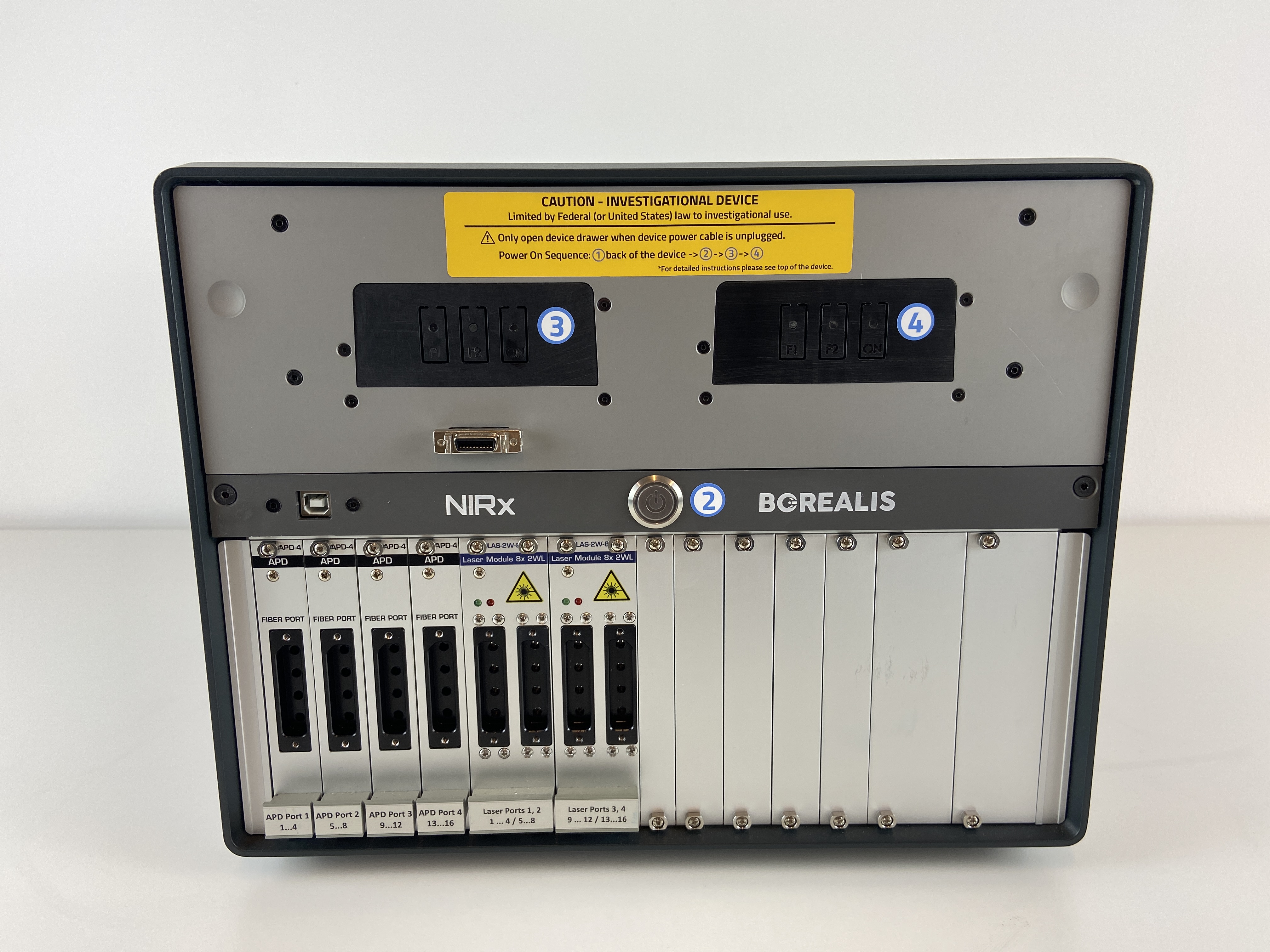
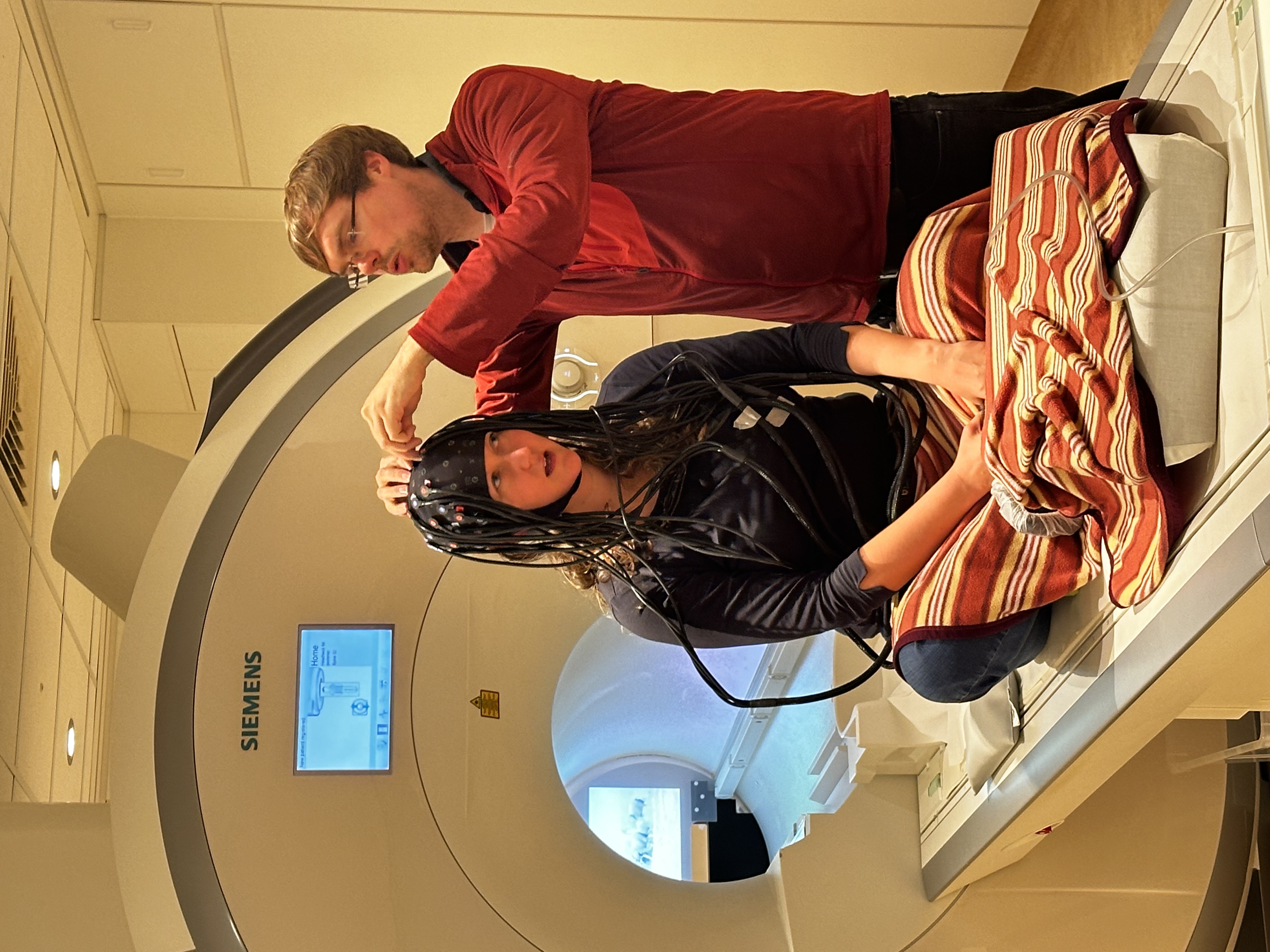
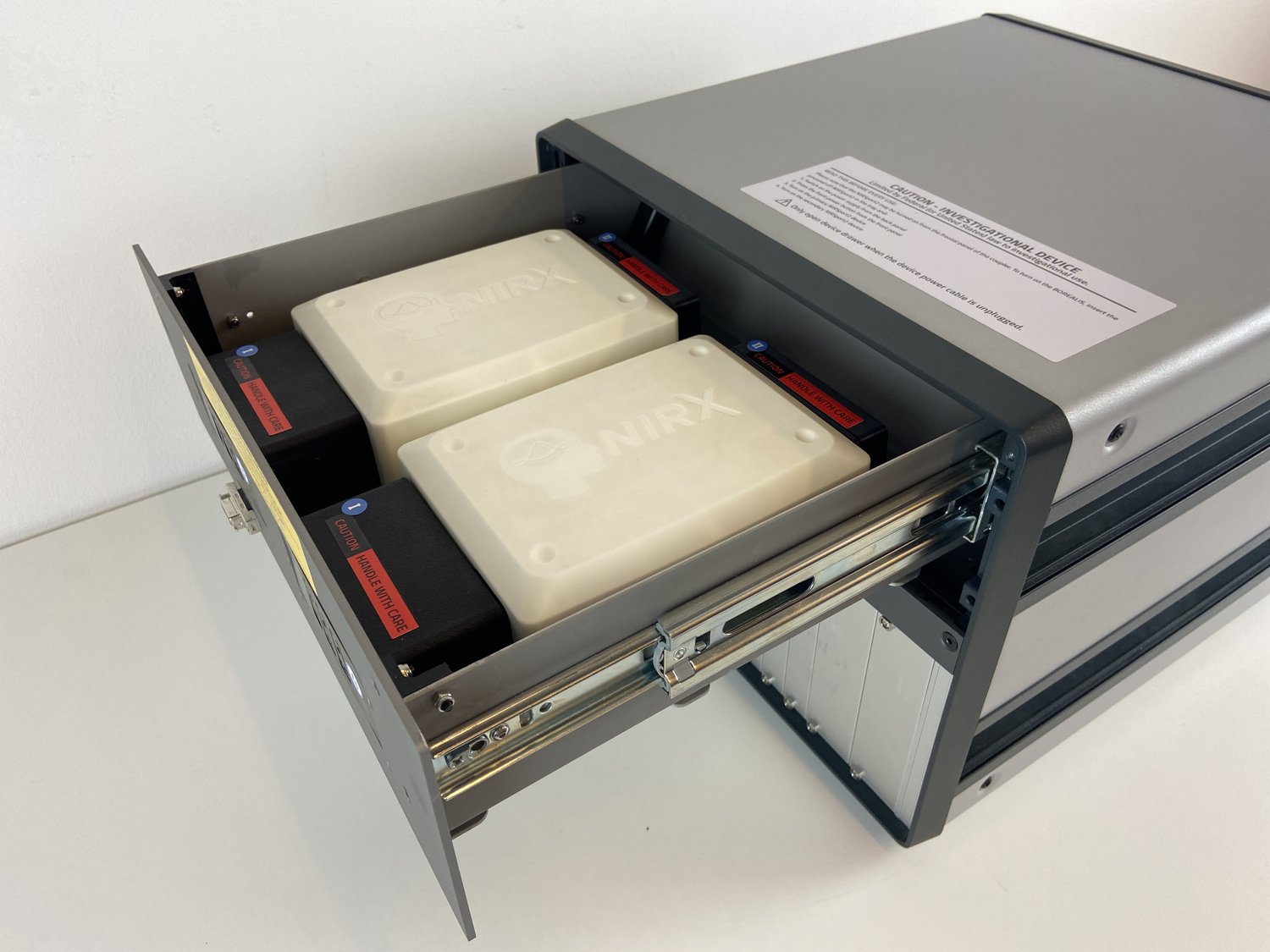
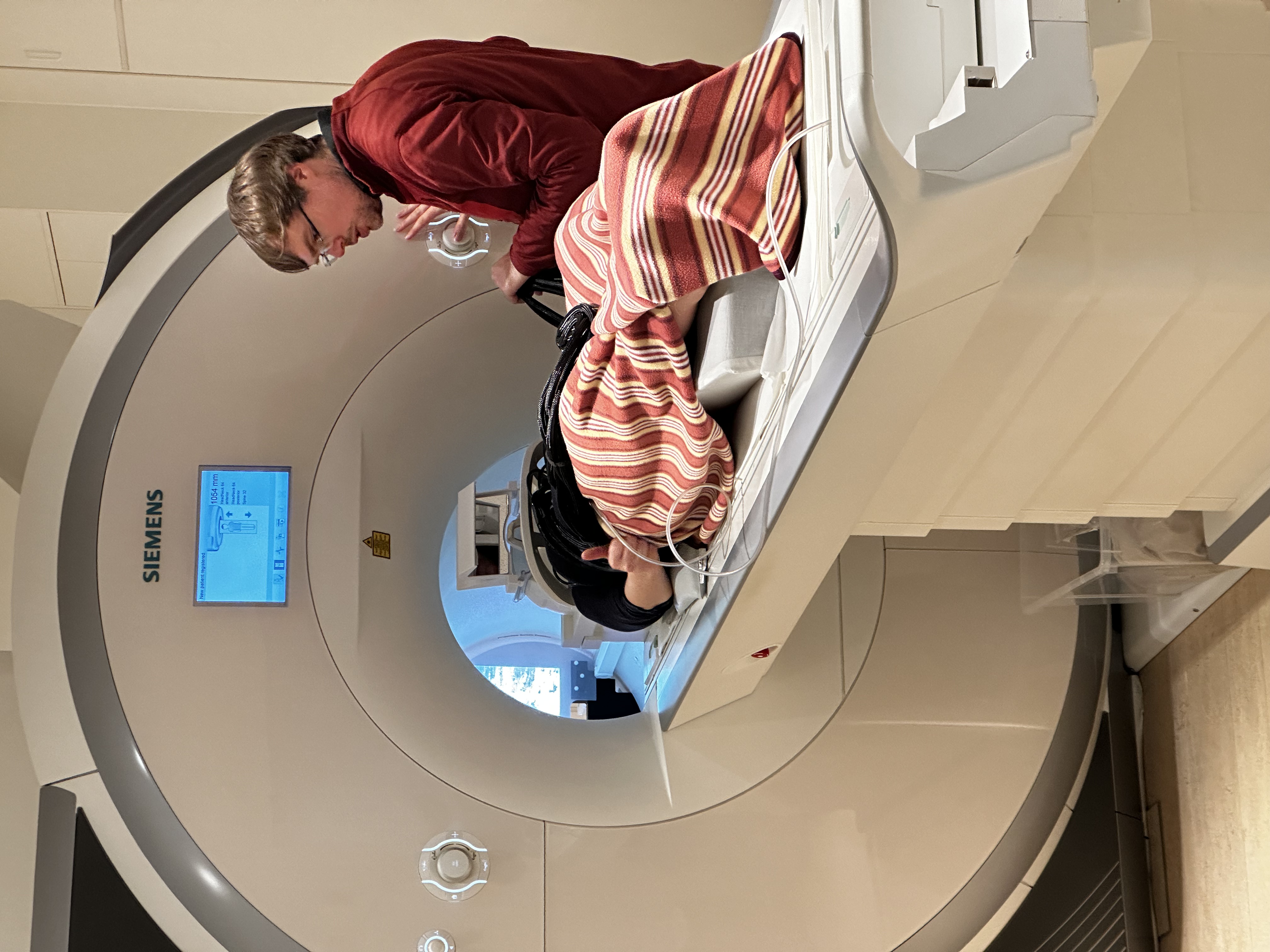
NIRx custom builds the NIRxBorealis to combine the NIRx flagship NIRSport2 amplifiers with fiber-based laser stimulation and ADP detectors. This allows concurrent fMRI and fNIRS recordings and then the co-analysis of fNIRS and fMRI results.
Advantages
The use of optical fiber based optodes for combining fNIRS with fMRI serves impactful research applications, and combining the two modalities aids the validation of the complementary signals (see Scarapicchia et al., 2017 for review). Compared to the deoxy-Hb based signal of fMRI, fNIRS separately measures deoxy-Hb and oxy-Hb which provides further information about hemodynamics and can improve the fMRI signal quality (Cooper et al., 2012). Additionally, combined fNIRS-fMRI multimodal imaging studies can assess the congruence between full-body behaviors with fNIRS and analogous stationery designs with fMRI, thereby extending research into more ecologically valid and real world settings.
Functionalities
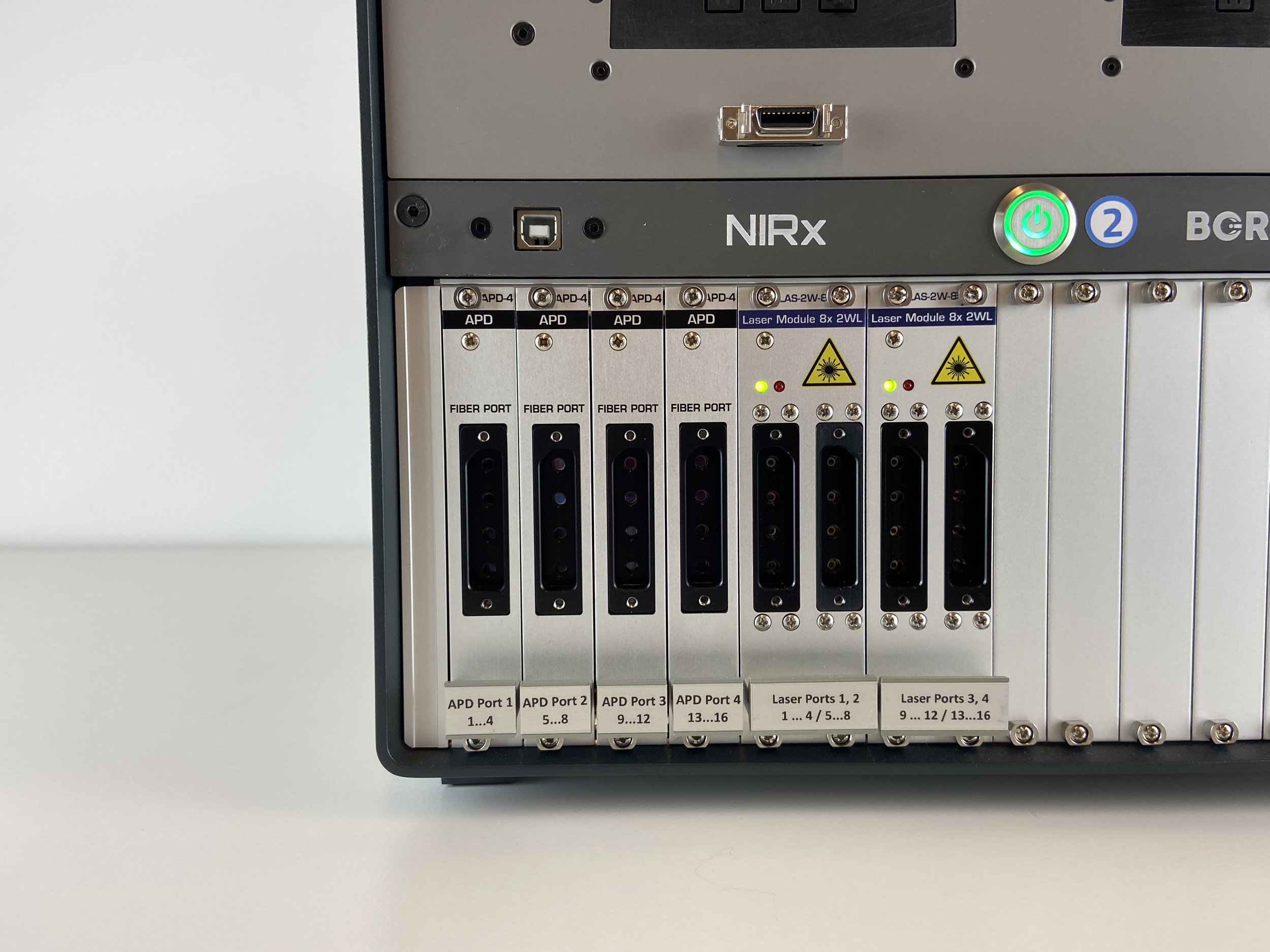
NIRxBorealis performs dual-wavelength continuous-wave fNIRS on large tissue structures at high (several Hz) sampling rates in a time-multiplexed, scanning fashion. The use of powerful laser sources and ultra-sensitive Avalanche Photodiode detectors allows for diffuse transmission measurements up to ~4 cm, making it suitable for optical tomographic (‘multi-distance’) imaging which extends the depth of recording. A sliding rack enclosure couples with the NIRSport2 devices streamlining the installation. Source and detector components are implemented as modular electronic cards, which can be extended for higher density recording. The device also features eight parallel optically isolated digital input channels for the acquisition of event trigger signals. Operation is provided through our highly user-friendly Aurora fNIRS software, and connected via USB. This research platform uses our proprietary ultra-fast set up sequence and signal optimization process.

.webp)
Functional MRI research
Explore All ProductsfNIRS
Explore All ProductsNIRX fNIRS publications
Academic publications and research studies utilizing NIRx fNIRS systems for functional near-infrared spectroscopy, sourced from the NIRx publications portal.
What is the NIRxBorealis For fNIRS data acquisition in the MRI environment and what is it used for?
NIRx custom builds the NIRxBorealis to combine the NIRx flagship NIRSport2 amplifiers with fiber-based laser stimulation and ADP detectors. This allows concurrent fMRI and fNIRS recordings and then the co-analysis of fNIRS and fMRI results.
What research applications is the NIRxBorealis For fNIRS data acquisition in the MRI environment suited for?
The NIRxBorealis For fNIRS data acquisition in the MRI environment is suited for researchers in neuroscience, behavioral science, physiology, and related life science fields. It is designed to support experimental workflows that require reliable, high-quality data acquisition and analysis.
What are the key technical features of the NIRxBorealis For fNIRS data acquisition in the MRI environment?
The NIRxBorealis For fNIRS data acquisition in the MRI environment (catalog number: NIRX-NIRxBorealis) is engineered for precision performance in laboratory settings. It offers user-friendly operation, robust construction, and compatibility with standard laboratory workflows to maximize experimental efficiency and reproducibility.
Is the NIRxBorealis For fNIRS data acquisition in the MRI environment available in Israel with local support?
Yes. NBT Ltd is the exclusive distributor of this product in Israel. Our team of scientific specialists provides full local support including installation, application training, and ongoing technical assistance for the NIRxBorealis For fNIRS data acquisition in the MRI environment.
What accessories or systems is the NIRxBorealis For fNIRS data acquisition in the MRI environment compatible with?
The NIRxBorealis For fNIRS data acquisition in the MRI environment is designed to integrate seamlessly with complementary laboratory instruments and software used in its application domain. NBT Ltd can advise on compatible accessories, consumables, and system configurations to meet your specific research needs.
Still have questions?
Request for Quote
Please fill in as much details as possible and we will take care of your request as soon as possible
Request for Quote
Please fill in as much details as possible and we will take care of your request as soon as possible