.svg)
.svg)
Tail Suspension Test
Video-tracking-based depression model measuring immobility during tail suspension. Available for mice and small rats (Cat. 40183; 236×216×470 mm) and large rats (Cat. 40182; 340×316×622 mm), scalable to 46 simultaneous chambers with Excel data export.
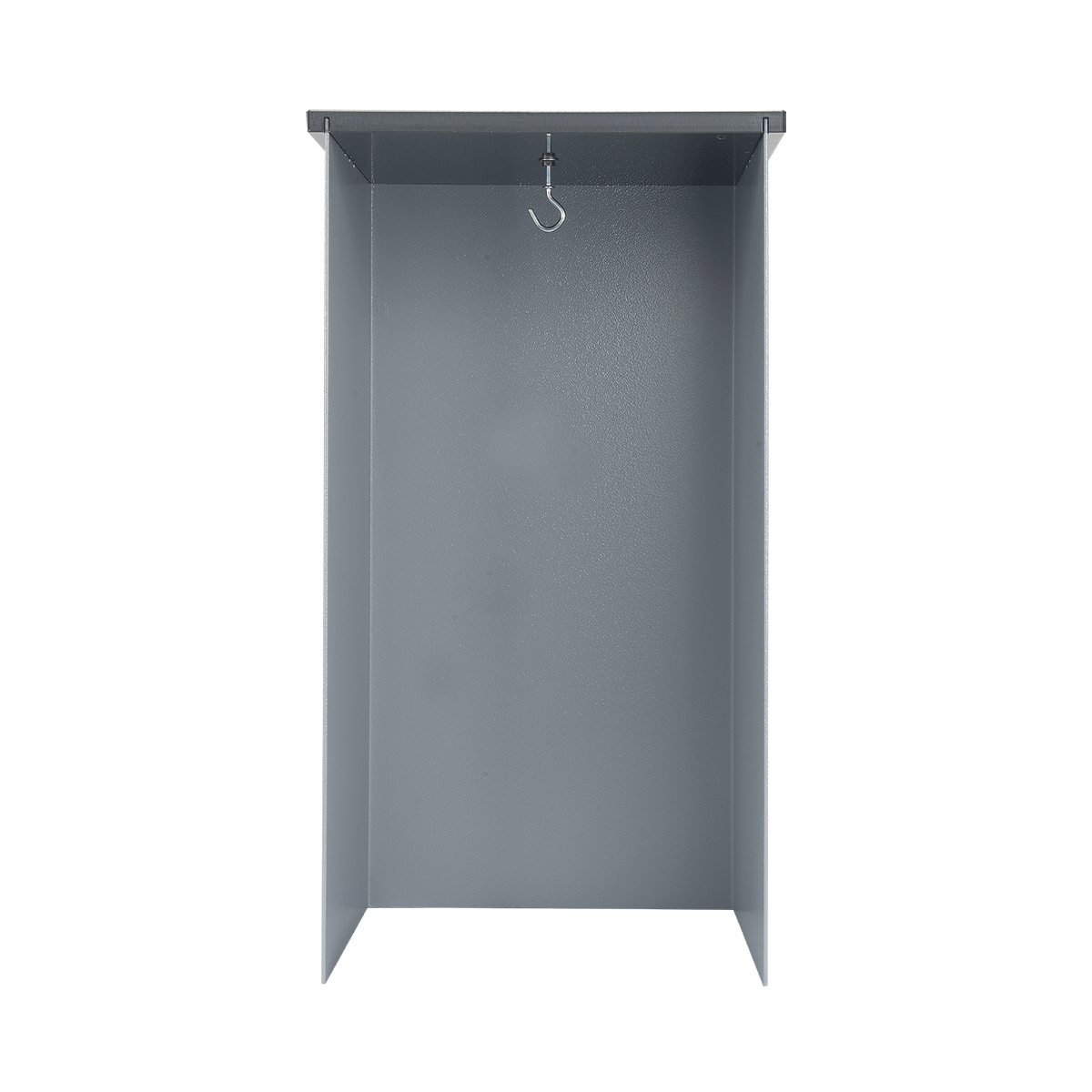
Tail Suspension Test
The Ugo Basile Tail Suspension Test (TST) quantifies depression-like behavior in rodents by measuring immobility during a brief period of inescapable suspension. Animals are suspended by the tail and their struggle/immobility ratio is automatically scored via video-tracking, providing an objective, experimenter-bias-free measure of despair behavior responsive to antidepressant treatments.
The system accommodates mice and small rats (Cat. 40183) or large rats (Cat. 40182), and can be expanded to run up to 46 chambers simultaneously. High-contrast grey backgrounds ensure reliable tracking, and data export to Excel is standard.
Key Features
- Automated video-tracking-based immobility scoring
- Mouse/small rat (40183) and large rat (40182) models available
- Scalable to up to 46 simultaneous chambers
- Grey background for optimal video-tracking contrast
- Compatible with Porsolt Forced Swim Test chambers
- Data export to Excel format
.webp)

Research Applications
The Tail Suspension Test is one of the most extensively validated behavioral models for assessing depression-like states in rodents. Its sensitivity to a wide range of antidepressant drug classes, combined with automated video-tracking scoring, makes it a cornerstone assay for CNS drug discovery and translational neuroscience.
- Depression modeling: Measuring despair behavior in rodent models of depressive disorder
- Antidepressant screening: Detecting effects of SSRIs, SNRIs, TCAs, and novel antidepressant candidates
- Genetic phenotyping: Characterizing depression-like phenotypes in transgenic and knockout mice
- Stress research: Assessing the behavioral consequences of chronic stress protocols
- Combination studies: Pairing with Porsolt FST for multi-model antidepressant profiling

Memory and Learning
Explore All ProductsTail Suspension Test Publications
The Tail Suspension Test is widely cited in depression research as a rapid screen for antidepressant compounds in mice, complementing the forced swim test as a behavioral despair paradigm sensitive to monoaminergic interventions.
What behavioral parameter does the Tail Suspension Test measure?
The TST measures the proportion of time animals spend in immobility when suspended by the tail - an index of behavioral despair that is increased in depressive states and reduced by antidepressant treatment.
What catalog numbers are available for the TST?
Cat. 40183 is designed for mice and small rats, while Cat. 40182 is the large rat version.
How is immobility detected in the TST?
Immobility is automatically detected and quantified through video-tracking software, eliminating manual scoring and experimenter-induced scoring bias.
How many animals can be tested simultaneously?
The system is scalable to up to 46 simultaneous chambers, suitable for high-throughput drug screening.
Can the TST be combined with the Porsolt Forced Swim Test?
Yes. Compatible lid accessories (Cat. 40122-321 and 40123-321) allow Porsolt FST cylinders to be converted for Tail Suspension Test use.
Still have questions?
Request for Quote
Please fill in as much details as possible and we will take care of your request as soon as possible
Request for Quote
Please fill in as much details as possible and we will take care of your request as soon as possible