.svg)
.svg)
L-VIS (Low Volume In-Vitro Slice Chamber)
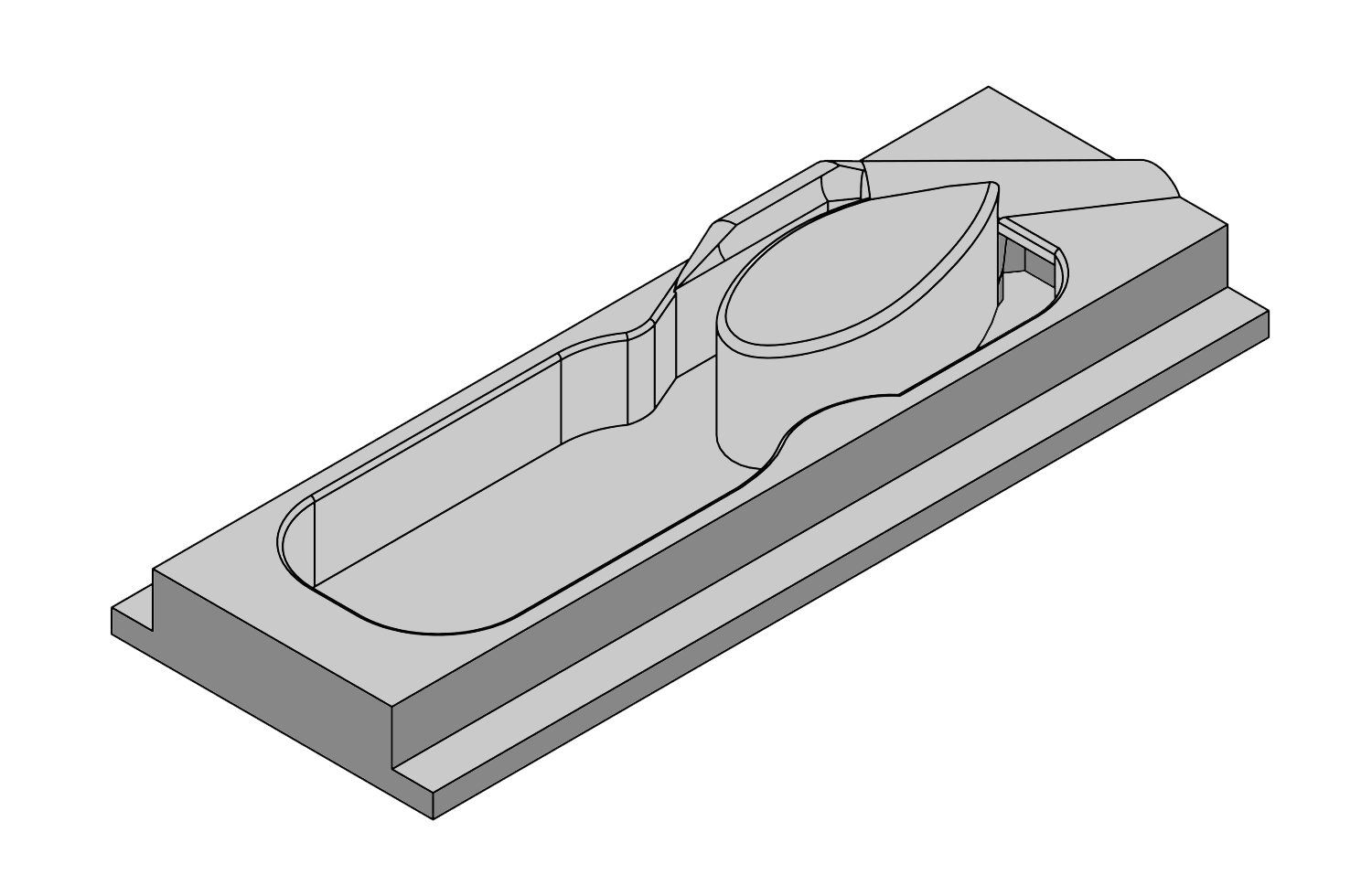
The L-VIS (Low Volume In-Vitro Slice Chamber) from PopNeuron is a patented recording chamber that reduces ACSF volume to just 1.5–2 ml per experiment - the lowest of any design on the market. By eliminating external reservoirs entirely and using an internal water pump for figure-8 recirculation, it dramatically reduces pharmacological reagent costs and pays for itself in 1–3 experiments.
What is the L-VIS Slice Chamber?
The L-VIS (Low Volume In-Vitro Slice Chamber) from PopNeuron is a patented recording chamber designed to dramatically reduce the amount of artificial cerebro-spinal fluid (ACSF) required for in-vitro brain slice experiments. Where conventional chambers consume 10–30 ml or more of ACSF per experiment, the L-VIS requires only 1.5 to 2 ml - achieving the lowest volume of any design on the market. By eliminating external containers and tubes entirely, PopNeuron has reimagined the slice recording chamber from the ground up.
How It Works
The L-VIS uses a single fill of ACSF. Once loaded, a gas inlet tube carries only the oxygenation gas into the chamber, where it continuously reoxygenates the solution in place. A miniature internal water-pump mechanism recirculates and mixes the ACSF in a patented figure-8 fluid flow pattern, maintaining uniform oxygen saturation and solution movement across the tissue, without any external reservoirs, peristaltic pumps, or drain lines. The design was validated through fluid dynamics modeling, real-life dye-and-bead flow testing, oxygen saturation measurements over multiple hours, liquid chromatography for solution stability, and patch clamp recordings for tissue health assessment.
Why Ultra-Low Volume Matters
When experiments require expensive pharmacological additives - ion channel blockers, receptor antagonists, caged compounds, or custom synthesized molecules - the cost of a single experiment can reach hundreds or thousands of dollars using conventional chambers. The L-VIS pays for itself in as few as 1–3 experiments by reducing reagent consumption by more than tenfold. Example savings include approximately $130 with ω-agatoxin, $260 with MNI caged glutamate, and over $5,000 with caged ATP.
Key Features
- Ultra-Low ACSF Volume: Only 1.5–2 ml per experiment - several-fold less than any other design available.
- No External Containers or Tubing: The solution stays in the chamber; gas inlet handles oxygenation; built-in pump drives recirculation.
- Patented Figure-8 Circulation: Internal pump creates uniform, validated flow across the tissue slice.
- Rigorously Validated: Tested with dye/bead visualization, oxygen saturation monitoring, mass spectrometry for solution stability, and patch clamp electrophysiology.
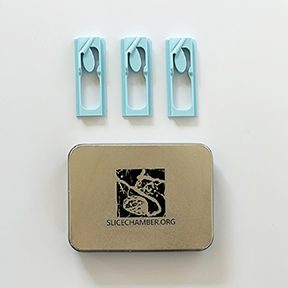
- Ready-to-Use Kits: Each kit includes premium cover glass slides, silicone caulk, air humidifier bottle, and all tubing and luer connectors.
- Multiple Configurations: Available as single chamber, 3-chamber kit, or 3-kit bundle for multi-experiment labs.
Applications
- Patch clamp recordings from brain slices with expensive pharmacological additives
- Long-duration ex-vivo tissue health studies
- Optogenetic stimulation experiments on brain slices
- Any in-vitro recording experiment where ACSF additive cost is a concern
.webp)

Technical Specifications
| Product | L-VIS Low Volume In-Vitro Slice Chamber |
| ACSF Volume Required | 1.5–2 ml per experiment |
| Fluid Circulation Method | Internal water pump - figure-8 recirculation pattern |
| Oxygenation Method | Gas inlet tube (gas only, no liquid external reservoir) |
| External Containers/Tubing | None required |
| Validation Methods | Fluid dynamics modeling, dye/bead flow testing, O₂ saturation monitoring, mass spectrometry, patch clamp recording |
| Patent | U.S. Patent #9,458,420 |
| Kit Contents | L-VIS chamber, premium cover glass slides, silicone caulk, air humidifier bottle, all tubing and luer connectors |
| Available Configurations | Single kit, 3-chamber kit, 3-kit bundle |
| Compatible Applications | Patch clamp, optogenetics, pharmacology, in-vitro electrophysiology |


Patch Clamp Techniques
Explore All ProductsElectro-Physiology
Explore All ProductsL-VIS Slice Chamber Publications
The L-VIS slice chamber is backed by publications describing its patented figure-8 ACSF recirculation design, fluid dynamics validation, and patch clamp tissue-health outcomes compared to conventional chamber approaches.
What is the L-VIS and why does it use so much less ACSF than conventional chambers?
The L-VIS (Low Volume In-Vitro Slice Chamber) is a patented recording chamber that requires only 1.5–2 ml of ACSF per experiment - far less than the 10–30 ml consumed by conventional designs. It achieves this by eliminating external reservoirs: ACSF stays inside the chamber, is oxygenated in place via a gas-only inlet tube, and is continuously recirculated by an internal water pump in a figure-8 flow pattern.
How does the L-VIS save money in practice?
Savings come from reduced pharmacological reagent consumption. With conventional chambers, expensive additives require large volumes of ACSF and thus large amounts of the additive. The L-VIS reduces this by tenfold or more. Example savings: approximately $130 per experiment with ω-agatoxin, $260 with MNI caged glutamate, and over $5,000 with caged ATP - the chamber pays for itself in 1–3 experiments.
Is tissue health maintained in the L-VIS despite the unconventional design?
Yes. The L-VIS was rigorously validated before commercialization. Oxygen saturation was monitored over multiple hours and confirmed at physiological levels. Liquid chromatography and mass spectrometry verified no waste product accumulation. Patch clamp recordings over several hours demonstrated normal tissue health throughout. The full validation protocol is described in the methods publication and patent (U.S. Patent #9,458,420).
What configurations of the L-VIS are available?
The L-VIS is available as a single chamber kit (for focused studies), a 3-chamber kit (includes backup chambers), and a 3-kit bundle for labs running multiple experiments simultaneously. Each kit arrives complete with premium cover glass slides, silicone caulk, an air humidifier bottle, and all tubing and luer connectors.
Is the L-VIS available in Israel with local support?
Yes. NBT Ltd distributes POPneuron products in Israel, including the L-VIS slice chamber. We provide local support, availability of replacement parts and kit components, and technical guidance for setup and integration into your electrophysiology workflow.
Still have questions?
Request for Quote
Please fill in as much details as possible and we will take care of your request as soon as possible
Request for Quote
Please fill in as much details as possible and we will take care of your request as soon as possible