.svg)
.svg)
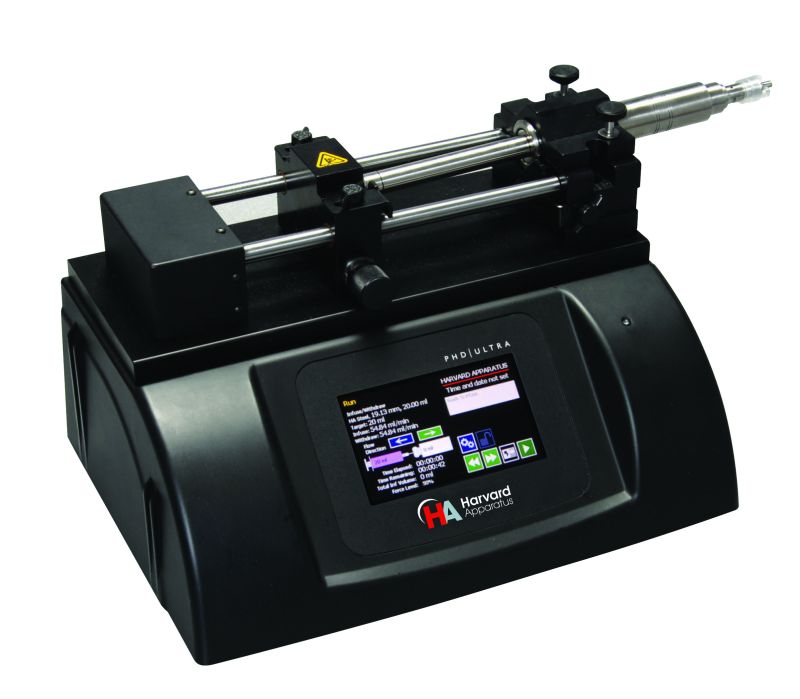
Harvard Apparatus PHD ULTRA™ CP 4400 Syringe Pump
The Harvard Apparatus PHD ULTRA™ CP 4400 is the first syringe pump to combine constant pressure and constant flow modes in a single unit. Connecting to any 0–10 VDC pressure transducer, it maintains user-set pressure within ±2%, making it uniquely suited for organ perfusion, ocular injections, and pressure-critical microfluidic experiments that demand automatic pressure compensation throughout the run.
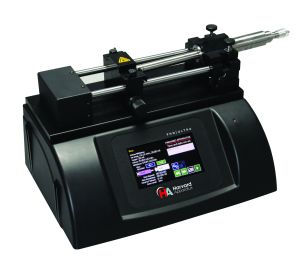
What is the Harvard Apparatus PHD ULTRA™ CP 4400?
The PHD ULTRA™ CP 4400 is the world's first syringe pump to combine constant pressure and constant flow operation in a single, versatile unit. By connecting to any standard 0–10 VDC pressure transducer or amplifier, the CP 4400 automatically regulates fluid delivery to maintain a user-defined pressure within ±2% - a critical requirement for pressure-sensitive applications where flow-rate-based control falls short.
Whether you are perfusing organs at physiological pressure, delivering fluids into the eye or body cavity under controlled resistance, or running microfluidic experiments that demand constant upstream pressure, the CP 4400 eliminates the need for external pressure regulators or manual adjustments. Built on the proven PHD ULTRA™ platform, it offers the same precision and programmability as the standard PHD Ultra while adding PID-controlled pressure feedback as a first-class operating mode.
Key Features
- Dual Mode Operation - Constant Pressure and Constant Flow: The CP 4400 uniquely supports both operating modes in a single pump. Switch between constant pressure and constant flow on the fly, making it adaptable to any experimental protocol without additional equipment.
- PID Pressure Feedback Control: Connects to any 0–10 VDC pressure transducer or amplifier for closed-loop pressure regulation, maintaining user-set pressure within ±2% across the full range of conditions.
- Exceptional Flow Range: Delivers from 3.06 pl/min up to 215.8 ml/min using a single syringe (0.5 µl to 140 ml), covering the full spectrum from nanoliter-scale microfluidics to large-volume organ perfusion.
- High Force Capacity: A maximum linear force of 200 lb ensures reliable operation with high-viscosity fluids, narrow-bore tubing, and resistance-heavy fluidic circuits.
- Intuitive 4.3" Colour Touchscreen: The WQVGA TFT touchscreen provides a clear, menu-driven interface for programming infusion/withdrawal sequences and entering pressure setpoints without requiring a PC.
- Broad Regulatory Approvals: Certified to CE, ETL (UL, CSA), WEEE, EU RoHS, and CB Scheme standards for use in laboratories worldwide.
.webp)

Technical Specifications
| Catalog Number | 88-3016 |
| Flow Rate Range | 3.06 pl/min to 215.8 ml/min |
| Flow Accuracy | ±0.35% |
| Pressure Control Accuracy | ±2% of set point |
| Pressure Input | 0–10 VDC (compatible with any standard transducer/amplifier) |
| Max Linear Force | 200 lb |
| Syringe Range | 0.5 µl to 140 ml |
| Display | 4.3" WQVGA TFT Color Touchpad |
| Drive Motor | 1.8° Stepper Motor |
| Dimensions (L × W × H) | 12.0 × 8.5 × 7.25 in (30.5 × 21.6 × 18.4 cm) |
| Weight | 12.1 lb (5.5 kg) |
| Power | 100–240 VAC, 50/60 Hz |
| Regulatory Certifications | CE, ETL (UL, CSA), WEEE, EU RoHS, CB Scheme |
Applications
- Constant pressure microfluidic mixing and flow control
- Organ and tissue perfusion at physiological pressure
- Ocular injections and intraocular pressure studies
- Small animal whole-body perfusions
- Genetic material delivery without viral vectors (hydrodynamic injection)
- Pressure-controlled drug delivery in in vivo studies

Animal Infusion
Explore All ProductsPHD ULTRA CP 4400 Publications
The PHD ULTRA CP 4400 has been applied in studies requiring precise constant-pressure fluid delivery, including organ perfusion, hydrodynamic gene delivery, and pressure-controlled microfluidic experiments. Its unique dual constant-pressure/constant-flow capability makes it a preferred tool for physiological pressure studies across vascular biology, ophthalmology, and in vivo pharmacology.
What is the Harvard Apparatus PHD ULTRA™ CP 4400 Syringe Pump and what is it used for?
The Harvard Apparatus PHD ULTRA™ CP 4400 is the first syringe pump to combine constant pressure and constant flow modes in a single unit. Connecting to any 0–10 VDC pressure transducer, it maintains user-set pressure within ±2%, making it uniquely suited for organ perfusion, ocular injections, and pressure-critical microfluidic experiments that demand automatic pressure compensation throughout the run.
What research applications is the Harvard Apparatus PHD ULTRA™ CP 4400 Syringe Pump suited for?
The Harvard Apparatus PHD ULTRA™ CP 4400 Syringe Pump is suited for researchers in neuroscience, behavioral science, physiology, and related life science fields. It is designed to support experimental workflows that require reliable, high-quality data acquisition and analysis.
What are the key technical features of the Harvard Apparatus PHD ULTRA™ CP 4400 Syringe Pump?
The Harvard Apparatus PHD ULTRA™ CP 4400 Syringe Pump (catalog number: 88-3016) is engineered for precision performance in laboratory settings. It offers user-friendly operation, robust construction, and compatibility with standard laboratory workflows to maximize experimental efficiency and reproducibility.
Is the Harvard Apparatus PHD ULTRA™ CP 4400 Syringe Pump available in Israel with local support?
Yes. NBT Ltd is the exclusive distributor of this product in Israel. Our team of scientific specialists provides full local support including installation, application training, and ongoing technical assistance for the Harvard Apparatus PHD ULTRA™ CP 4400 Syringe Pump.
What accessories or systems is the Harvard Apparatus PHD ULTRA™ CP 4400 Syringe Pump compatible with?
The Harvard Apparatus PHD ULTRA™ CP 4400 Syringe Pump is designed to integrate seamlessly with complementary laboratory instruments and software used in its application domain. NBT Ltd can advise on compatible accessories, consumables, and system configurations to meet your specific research needs.
Still have questions?
Related Products:
Request for Quote
Please fill in as much details as possible and we will take care of your request as soon as possible
Request for Quote
Please fill in as much details as possible and we will take care of your request as soon as possible