.svg)
Inside Neuromechanics: Combining EMG and Imaging to Understand Human Movement
EMG and ultrasound imaging in the same recording show how muscles activate and how they adapt mechanically. Delsys looks at what that opens up for personalised rehabilitation.
Key Takeaways
- Using both EMG and ultrasound imaging gives researchers a more complete understanding of movement than either method alone.
- Research has shown that muscle activation patterns are unique to individuals, opening the door to more personalized rehabilitation and training approaches.
- Prof. Jeroen Aeles' lab at VUB bridges the gap between fundamental research and real-world applications in sport performance, physiotherapy, and clinical care.
What is Neuromechanics?
In both sporting and clinical environments, understanding how muscles generate force is fundamental, but many traditional biomechanical approaches are missing crucial pieces of the puzzle. While biomechanics has often focused on external motion and the forces produced by movement, these alone don't fully explain how the body produces and controls force.
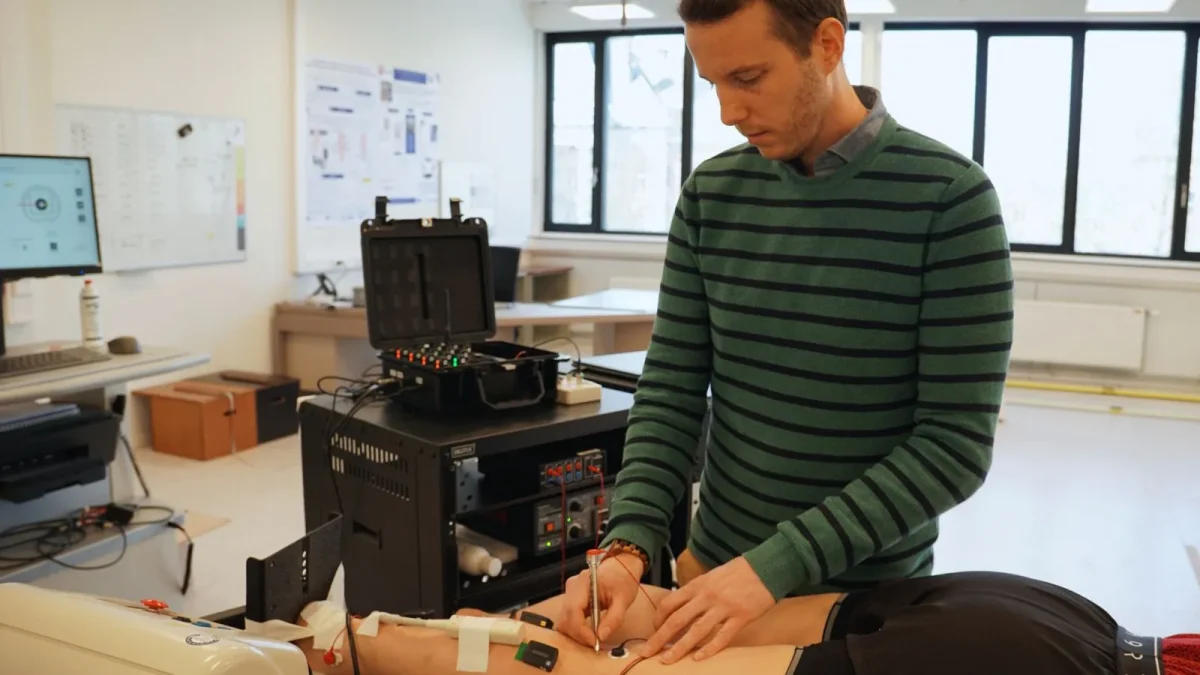
Research will often measure muscle activation through electromyography (EMG) or muscle architecture through medical imaging individually, but at the intersection of these two areas is the field of Neuromechanics. Combining EMG with imaging provides information on how muscles activate and adapt from both a mechanical perspective (fascicle length, muscle shape) and a neural perspective (activation, coordination patterns).
"Often people are either studying the anatomy, the muscle side of things, or the neurophysiology. And I think we see more and more that by combining that, we can gain additional insights rather than just collecting data on both sides separately." - Prof. Jeroen Aeles, VUB
A Lab Built for Purpose
Professor Jeroen Aeles established his research team within the MOVE research group at VUB in 2023 with a clear vision: to bridge the gap between fundamental research and real-world application. The lab's research spans a diverse array of topics, including reevaluating traditional EMG electrode placement guidelines and understanding how muscle morphology and function differ across individuals.
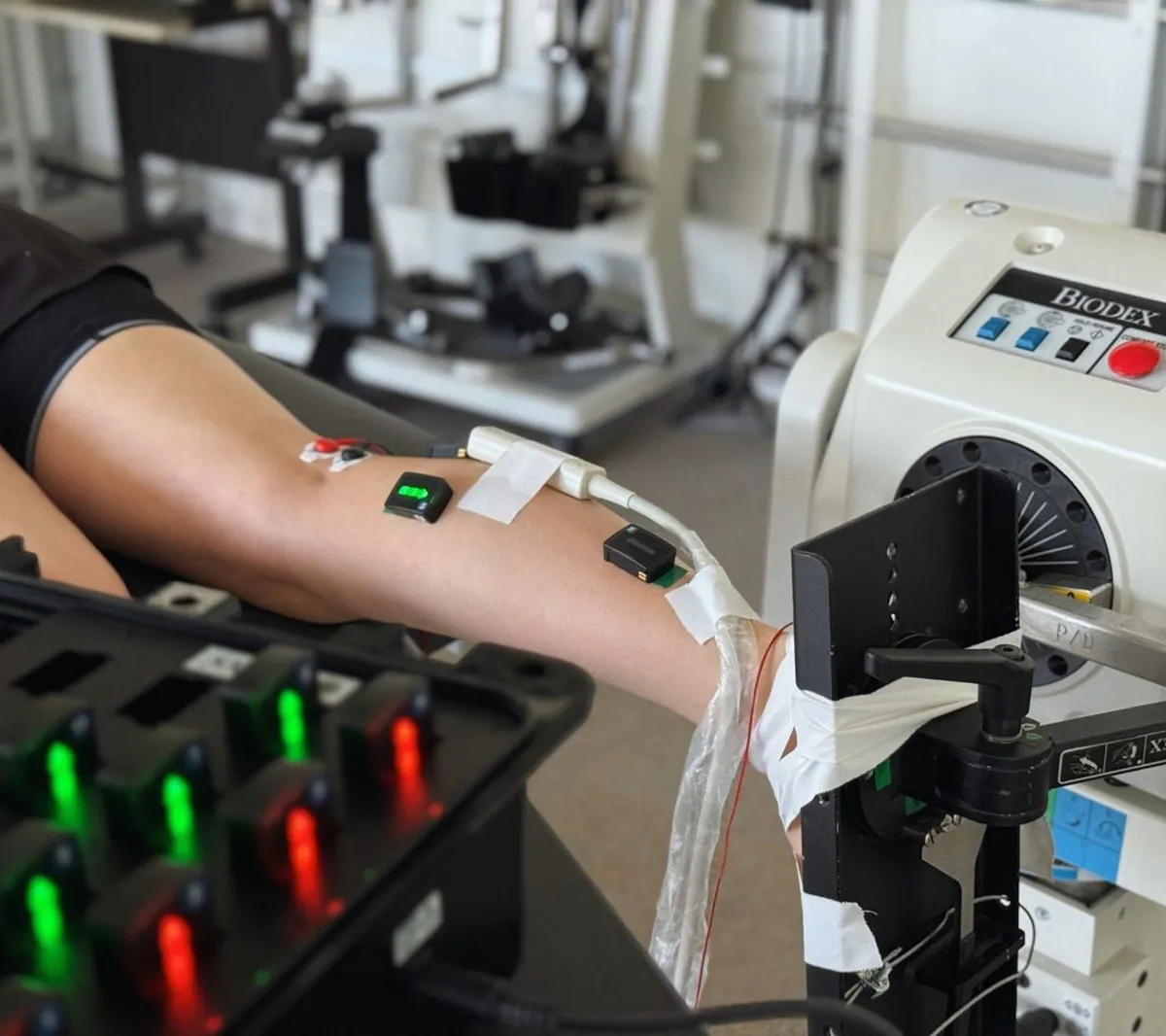
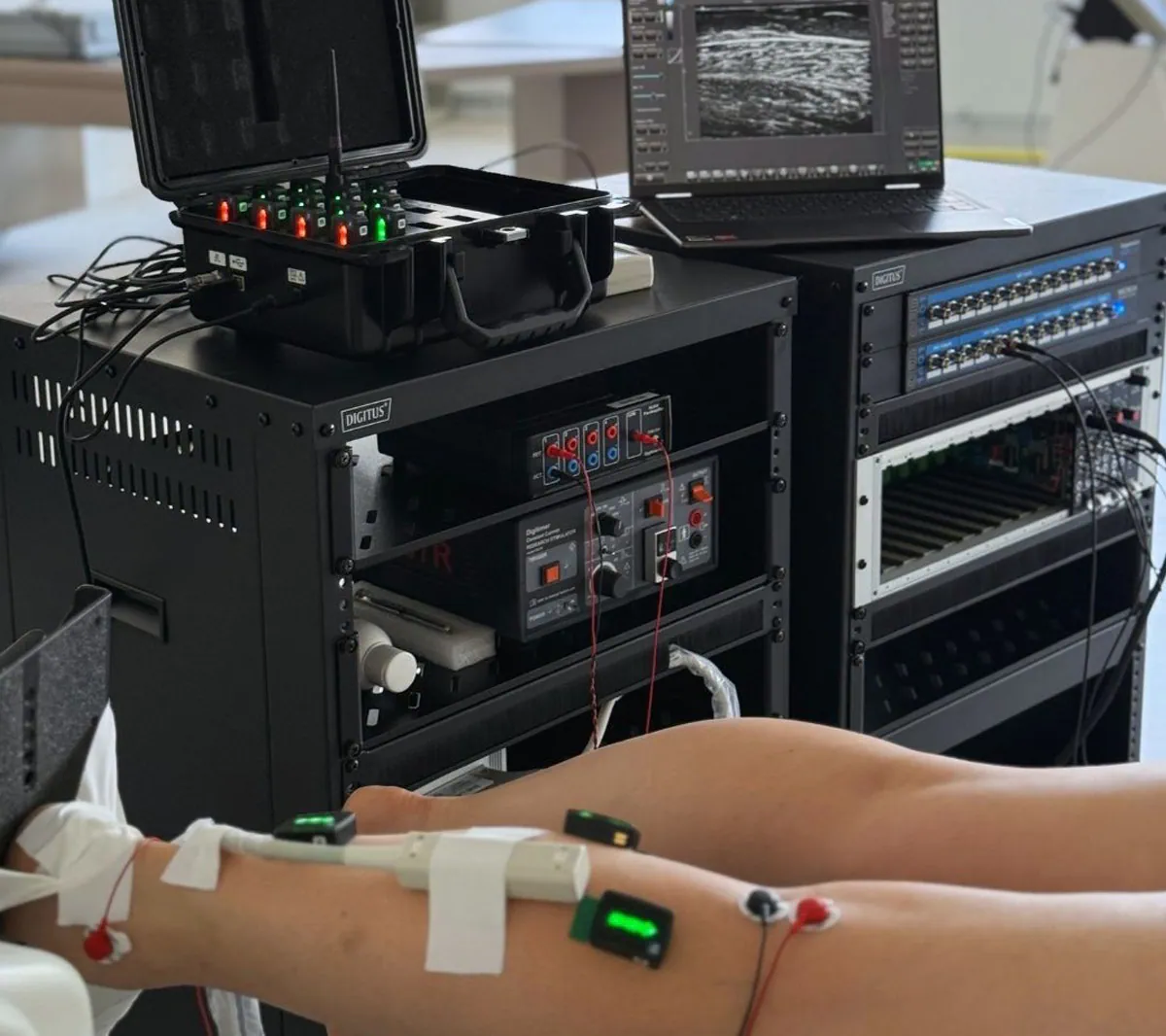
At the core of every project is a multimodal approach integrating surface EMG, ultrasound imaging, isokinetic dynamometry, motion capture, and fine-wire or high-density EMG systems. The lab uses a Delsys Trigno Avanti system, enabling real-time analysis of muscle activation and architecture during dynamic movement.
Bringing Neuromechanics Into Sport and Rehabilitation
One standout study from Jeroen's lab provided conclusive evidence that each person has a unique muscle activation signature during walking and pedalling (Aeles et al., 2021). Using Delsys surface EMG on eight lower limb muscles and applying machine learning with Layer-wise Relevance Propagation (LRP), the team showed that subtle features in EMG patterns (amplitude, timing, and coordination) were consistent within individuals but varied between them.
These activation signatures remained highly reliable across task conditions and test days at least 14 days apart, suggesting a strong physiological basis. This finding has far-reaching implications for individualised diagnostics, performance monitoring, and bioinspired exoskeletons.
"If we want to embrace this idea of personalised rehab or training, then research also needs to focus on the individual, and EMG is central to doing that."
References
Aeles, J., Horst, F., Lapuschkin, S., Lacourpaille, L., and Hug, F. (2021). Revealing the unique features of each individual's muscle activation signatures.
Source: Delsys blog.
Shall we chat about this topic?
Contact usRecent Blog Posts


.svg)

Advance Your Research
Contact NBT today for expert consultation on your neuroscience instrumentation needs.