.svg)
The Growing Importance of EMG and Human-in-the-Loop Strategies in Wearable Robotics
Human-in-the-loop methods using EMG biosignals and machine learning are transforming wearable robotics, enabling more personalized assistive devices that reduce muscle effort and device abandonment.
Key Takeaways
- Human-in-the-loop methods are becoming increasingly important in wearable robotics and assistive devices, making it possible to tailor rehabilitation to each individual and support faster recovery.
- EMG signals can be used as input to machine learning algorithms that determine the level of assistance needed to reduce muscle effort for each patient.
- Combining EMG with human-in-the-loop personalization improves the effectiveness of assistive devices and helps address the high rate of device abandonment in prosthetics and other assistive technologies.
The Concept
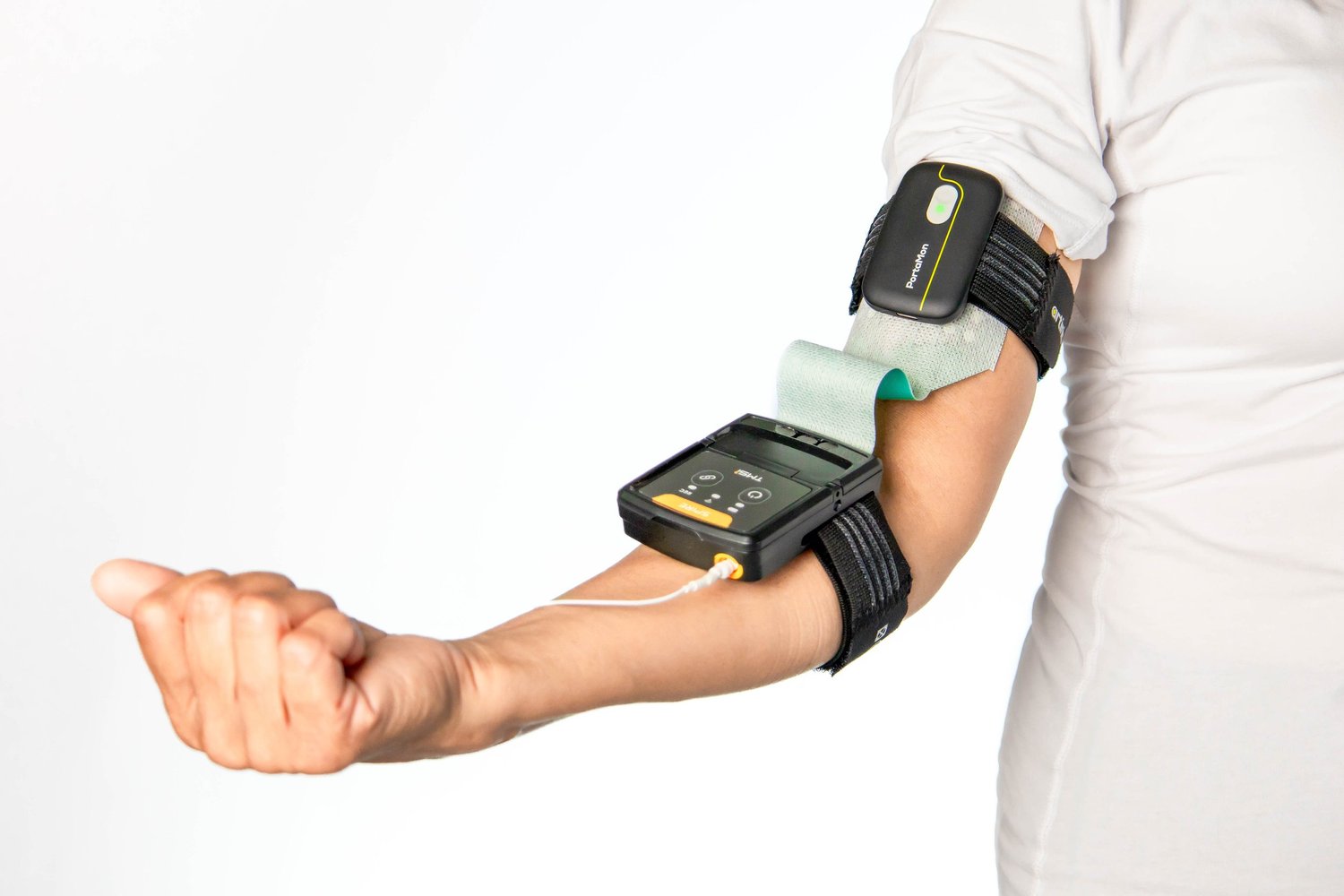
In wearable robotics and assistive device research, there's a growing fascination with a concept known as human-in-the-loop. At its core, human-in-the-loop refers to incorporating human biosignals, like EMG, and machine learning algorithms to train and optimize the performance of a device. By measuring physiological signals, the device can learn and adjust, offering more personalized assistance and significantly improving its effectiveness.
Human-in-the-loop addresses one of the biggest challenges in assistive technology: device abandonment. Many patients stop using prosthetics or exosuits because the devices are complex, unmanageable, and impractical. Incorporating real-time feedback like EMG facilitates personalization of the device, thus diminishing such barriers.
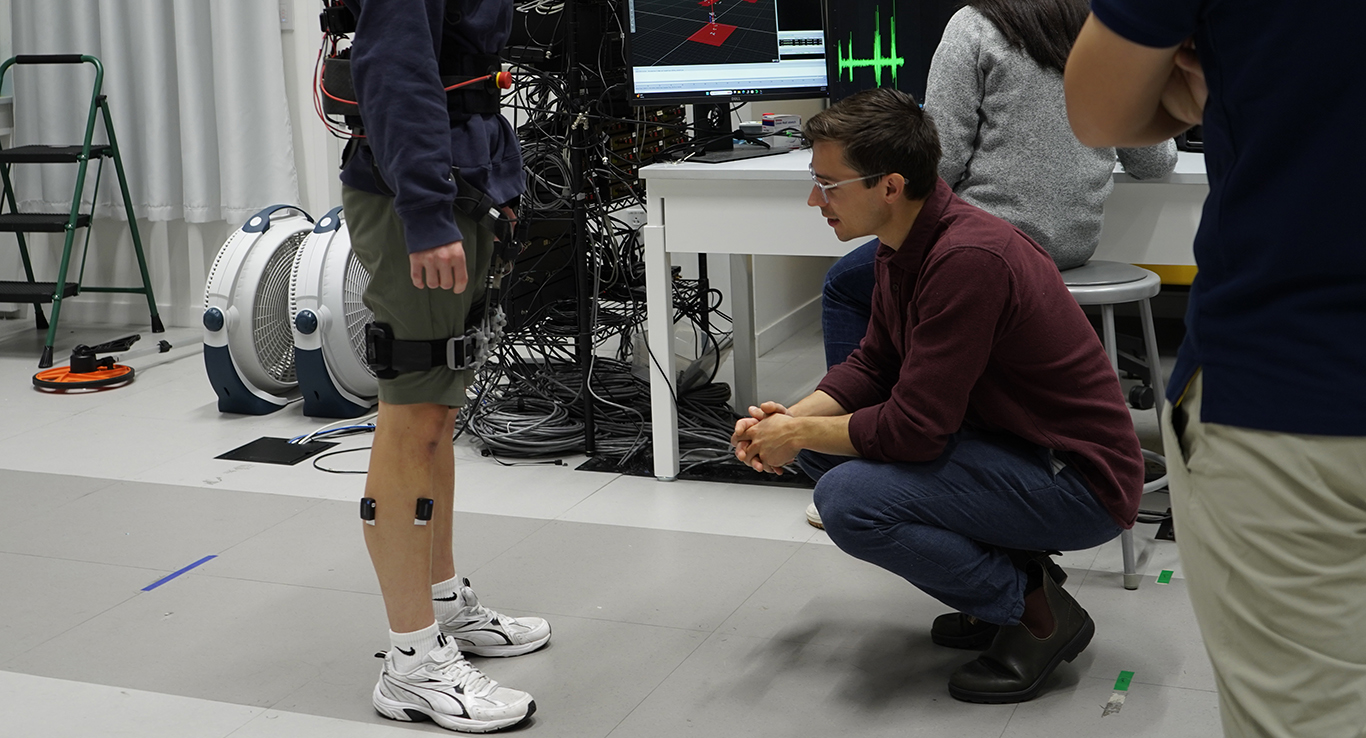
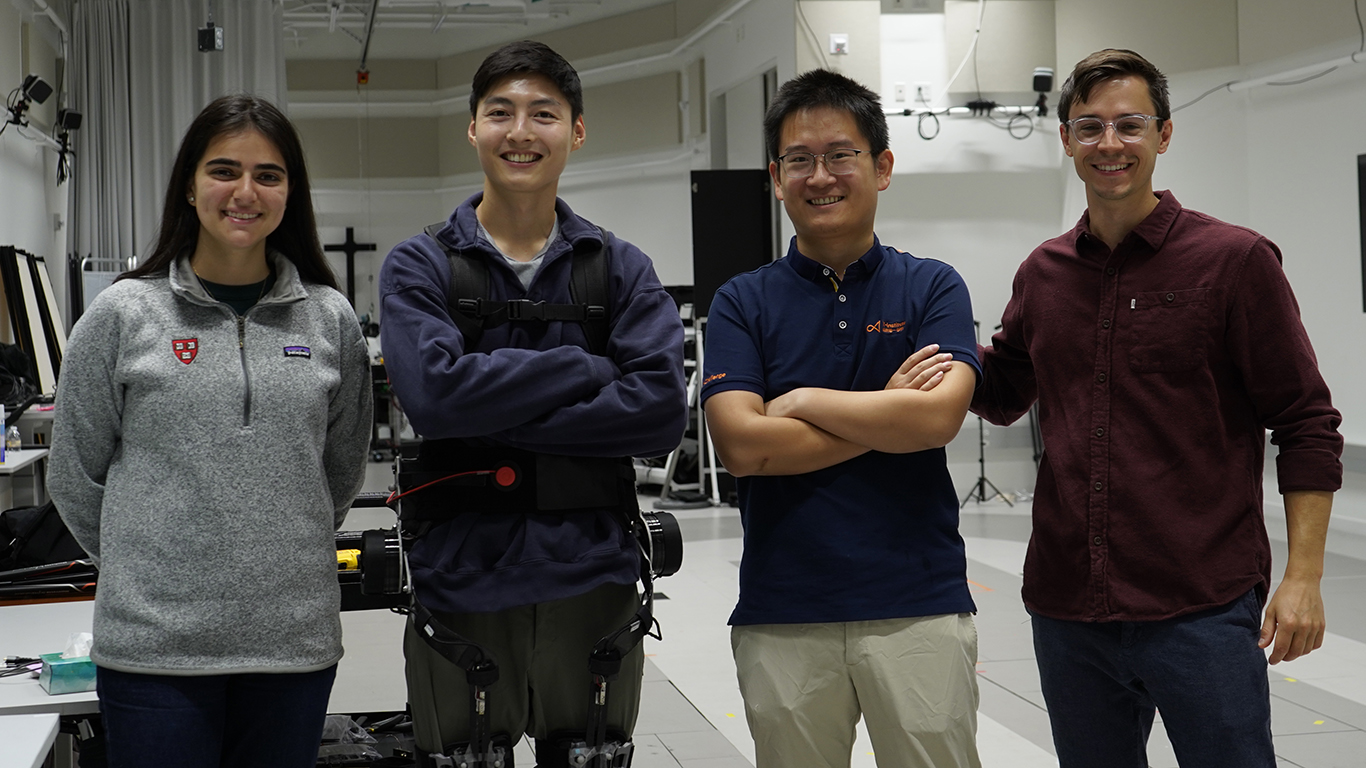
Patrick Slade and his team at the Slade Lab (Harvard John A. Paulson School of Engineering and Applied Sciences) have made human-in-the-loop a central theme of their work in wearable and assistive robotics, using Delsys EMG to track biosignals as the input modality for their algorithms.
So How Does This Work in Practice?
EMG allows researchers to evaluate muscle activity during a task and determine whether the device is successfully reducing it. Based on optimization methods, the system can then learn the optimal assistance that minimizes muscular load and apply it in future uses, creating an adaptive feedback loop. Each iteration of the optimization method makes the device more beneficial than before.
"One of the things I really like about personalizing mobility technology is determining how to make assistive devices beneficial, because people respond unpredictably to assistance. Each person's motor control and musculature are so different. Personalization helps account for these differences." - Patrick Slade, Harvard University
Project 1: The Third Arm
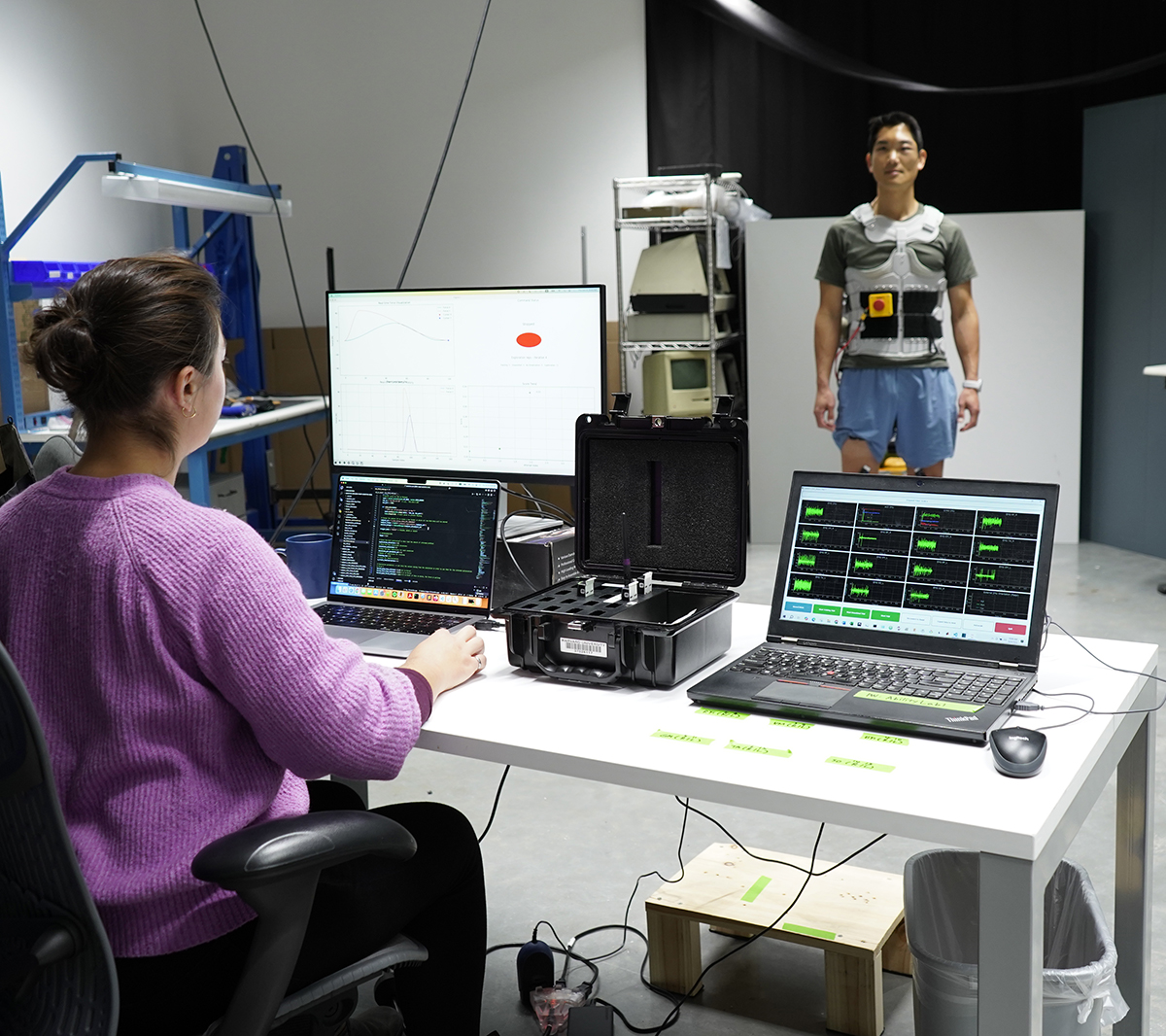
Many patients with mobility impairments require assistance for basic tasks such as sit-to-stand movements. The Slade Lab's "Third Arm" project is designed to support users during these actions, acting as an additional limb to help reduce physical effort.
In this project, Delsys EMG is a key feedback signal to generate a score that reflects the level of assistance the device provides. This score is calculated by comparing muscle activity during an unassisted sit-to-stand with that of an assisted sit-to-stand. Using this EMG-based score, the system can adapt the force needed to assist the user through a process called opportunistic optimization.
Project 2: The Hip Exoskeleton
Walking requires significant hip flexion and extension, which many patients struggle with. The Slade Lab is developing a hip exoskeleton to provide targeted assistance at the hip joint, aiming to improve mobility during walking. This project integrates IMU data and Delsys EMG to optimize the assistance provided, monitoring muscle activity in the lower limb to identify reductions in effort during assisted walking.

The Future of Human-In-The-Loop Research
The implementation of human-in-the-loop in wearable robotics has proven to be substantially beneficial, exceeding first expectations of 5% muscle activity reduction to anecdotally 40–50%. What's more, integrating these algorithms into projects is deceptively simple - requiring a small addition of code into an already built wearable device system. Its simplicity lowers barriers to entry and enables scalability across a wide variety of research in prosthetics and wearable robotics.
Human-in-the-loop is no longer optional; it is essential for the success of personalized wearable robotics and assistive technologies.
Source: Delsys blog.
Shall we chat about this topic?
Contact usRecent Blog Posts


.svg)
Advance Your Research
Contact NBT today for expert consultation on your neuroscience instrumentation needs.