.svg)
From Data Overload to Confident Interpretation: Advanced Analytics in Preclinical Telemetry
Continuous telemetry produces vast physiological datasets. Advanced analytics tools like Data Insights for Ponemah help researchers move from manual ECG review to targeted, automated, reproducible data validation.

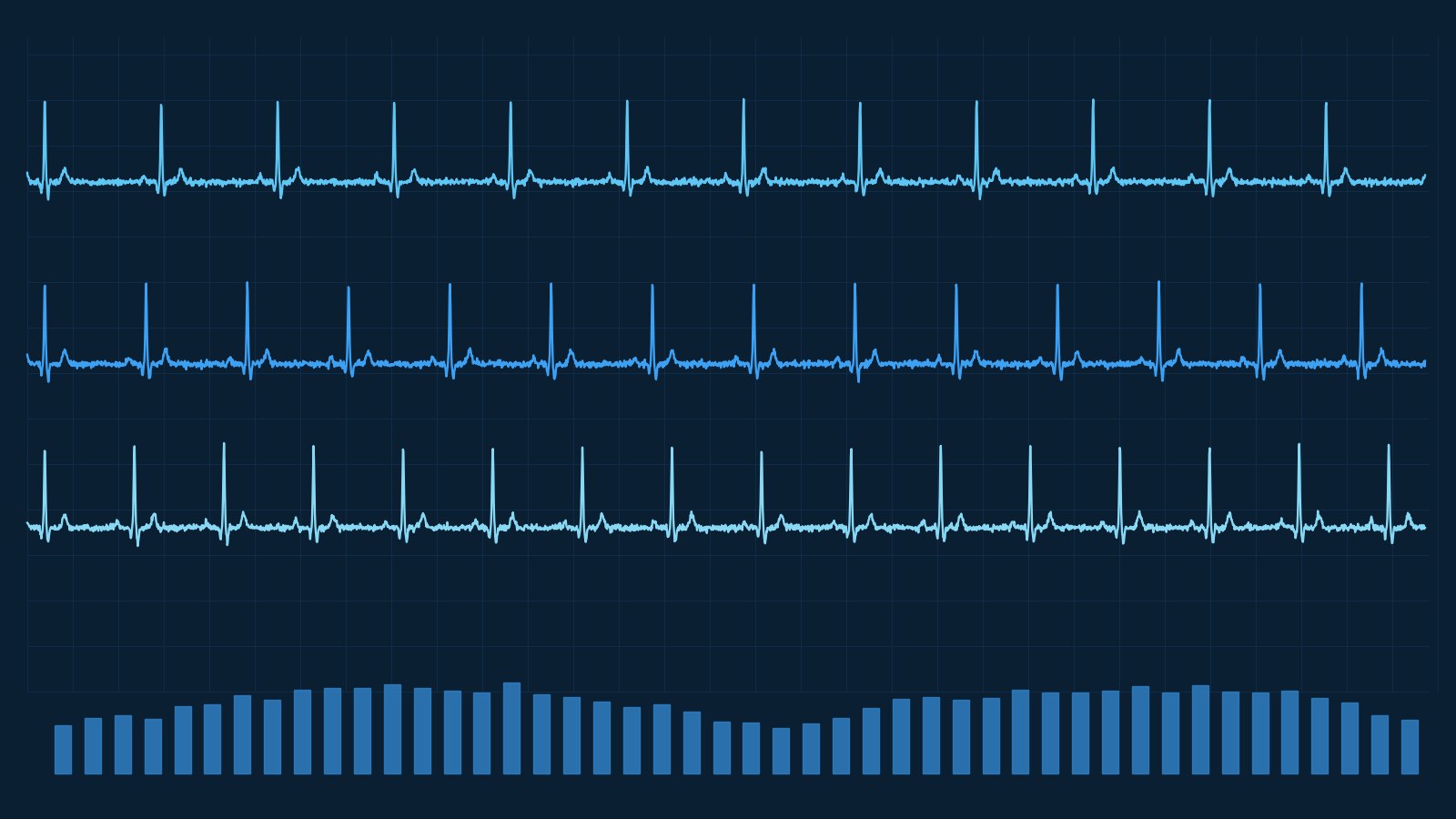
Preclinical telemetry studies generate some of the richest physiological datasets available to researchers. By enabling continuous collection of ECG, blood pressure, temperature, activity, and other signals from conscious, freely moving animals, telemetry allows physiology to be evaluated in a more natural state over minutes, hours, days, or longer. But that strength also creates a challenge: the more continuous data a study produces, the more data researchers must validate, clean, review, and interpret. In ECG-based studies, this can mean searching through large datasets for noise, artifacts, missed marks, abnormal RR intervals, arrhythmias, and other atypical events. Manual review remains important, but it can be time-consuming, labor-intensive, and difficult to standardize across analysts or studies.
The challenge of continuous telemetry data
Implantable telemetry gives researchers access to continuous physiological signals from conscious animals, making it especially valuable for cardiovascular safety, toxicology, pharmacology, neuroscience, and disease-model research. In ECG and heart rate variability (HRV) workflows, data quality is especially important. Abnormal RR intervals can result from true physiological events such as ectopic beats or arrhythmias, but they may also reflect technical issues such as noise, artifacts, or missed R-wave detection. If these segments are not identified and handled appropriately, they can influence downstream calculations and complicate interpretation. The challenge is not simply collecting more data - it is finding the meaningful information within that data while maintaining confidence in its quality and consistency.
Moving from manual review to targeted validation
Traditional telemetry review often requires analysts to manually inspect waveforms, validate marks, identify artifacts, classify abnormal events, and decide which data should be included or excluded. This process is essential but can become a bottleneck, particularly in long-duration studies or studies with many subjects. Data Insights for Ponemah is designed to help researchers focus their expertise on the sections of data that deserve attention: instead of manually searching through waveforms, users can run automated, customizable searches to expose patterns and anomalies within Ponemah datasets. This does not remove the researcher from the decision-making process - it guides expert review toward the areas where it can have the greatest impact.
Automated data validation for cleaner datasets
Data validation is one of the most important steps in telemetry analysis. Before researchers can interpret treatment effects, disease progression, autonomic function, or safety biomarkers, they need confidence that the dataset reflects real physiology rather than noise or processing errors. Advanced analytics help move from manually searching through large volumes of telemetry data to a more targeted, automated, and reproducible review process.
Source: DSI / Harvard Bioscience blog.

NEED MORE INFORMATION ABOUT THIS PRODUCT?
Send us your emailRecent Blog Posts

.svg)

Advance Your Research
Contact NBT today for expert consultation on your neuroscience instrumentation needs.