.svg)
.svg)
WPI Manual Micromanipulator
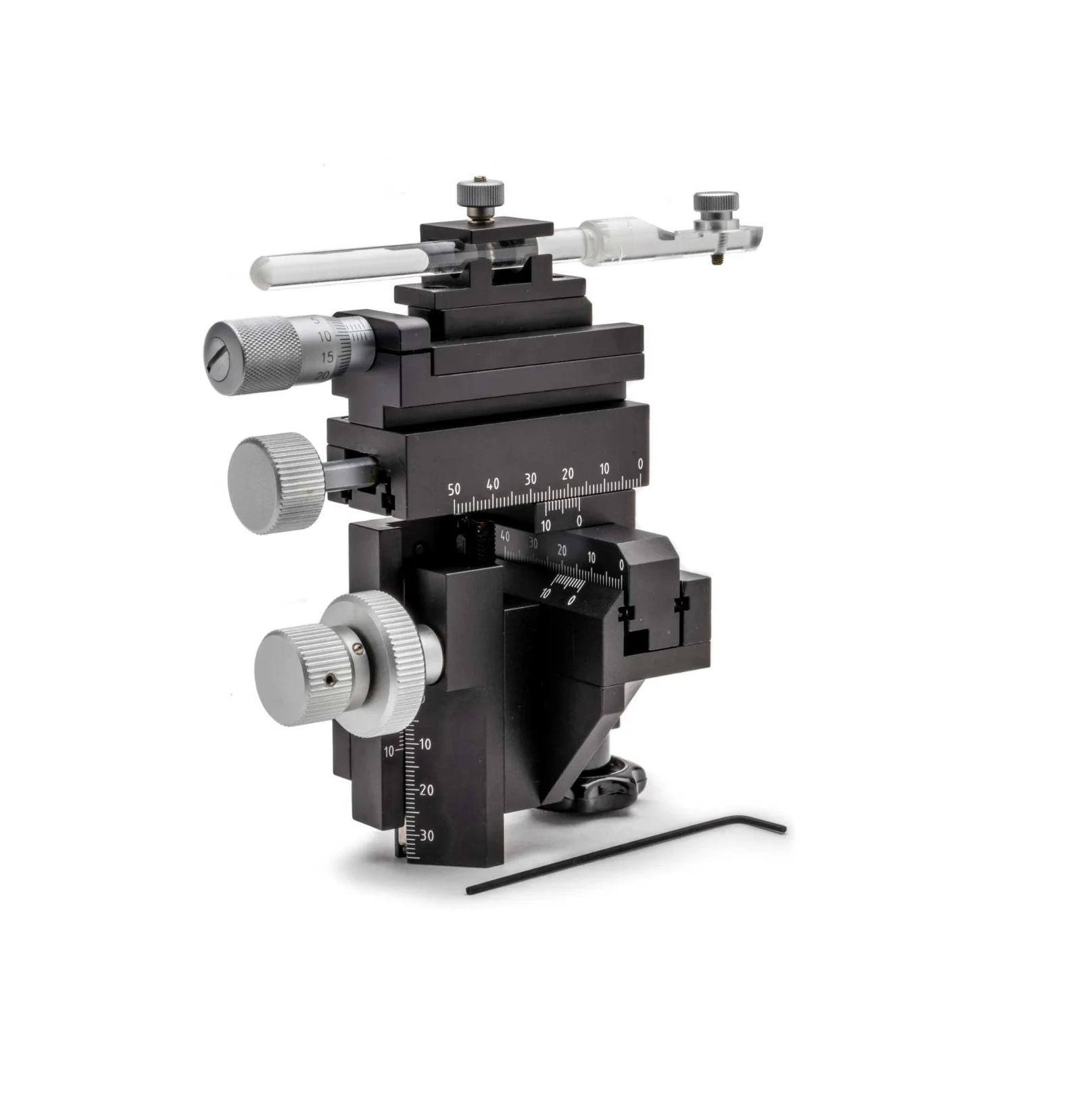
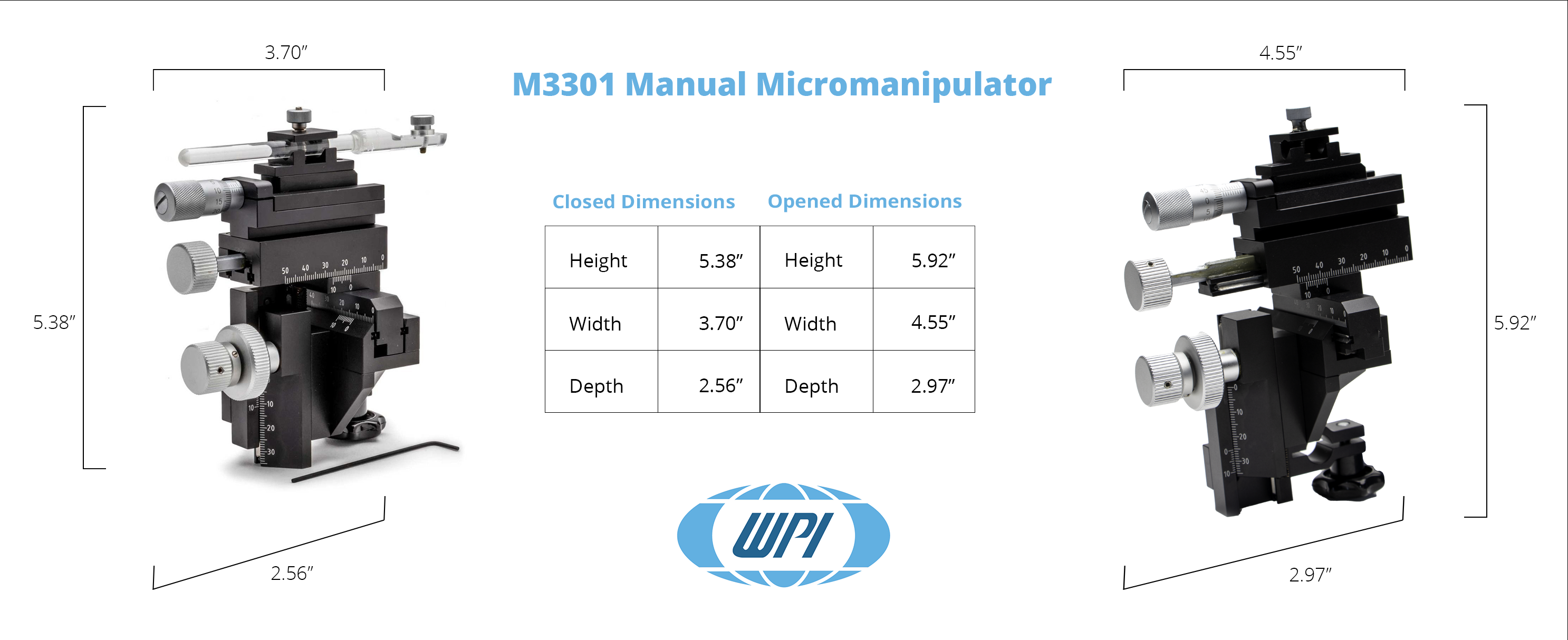
The WPI M3301 is the world's most widely used manual micromanipulator, trusted in thousands of neuroscience and cell biology labs for patch clamp recording, intracellular electrophysiology, and microinjection. Weighing just 550 g with 10 μm X-axis fine resolution and drift-free rack-and-pinion drive, it delivers precision positioning up to 250x magnification in a compact, space-saving form factor.
What is the WPI M3301 Manual Micromanipulator?
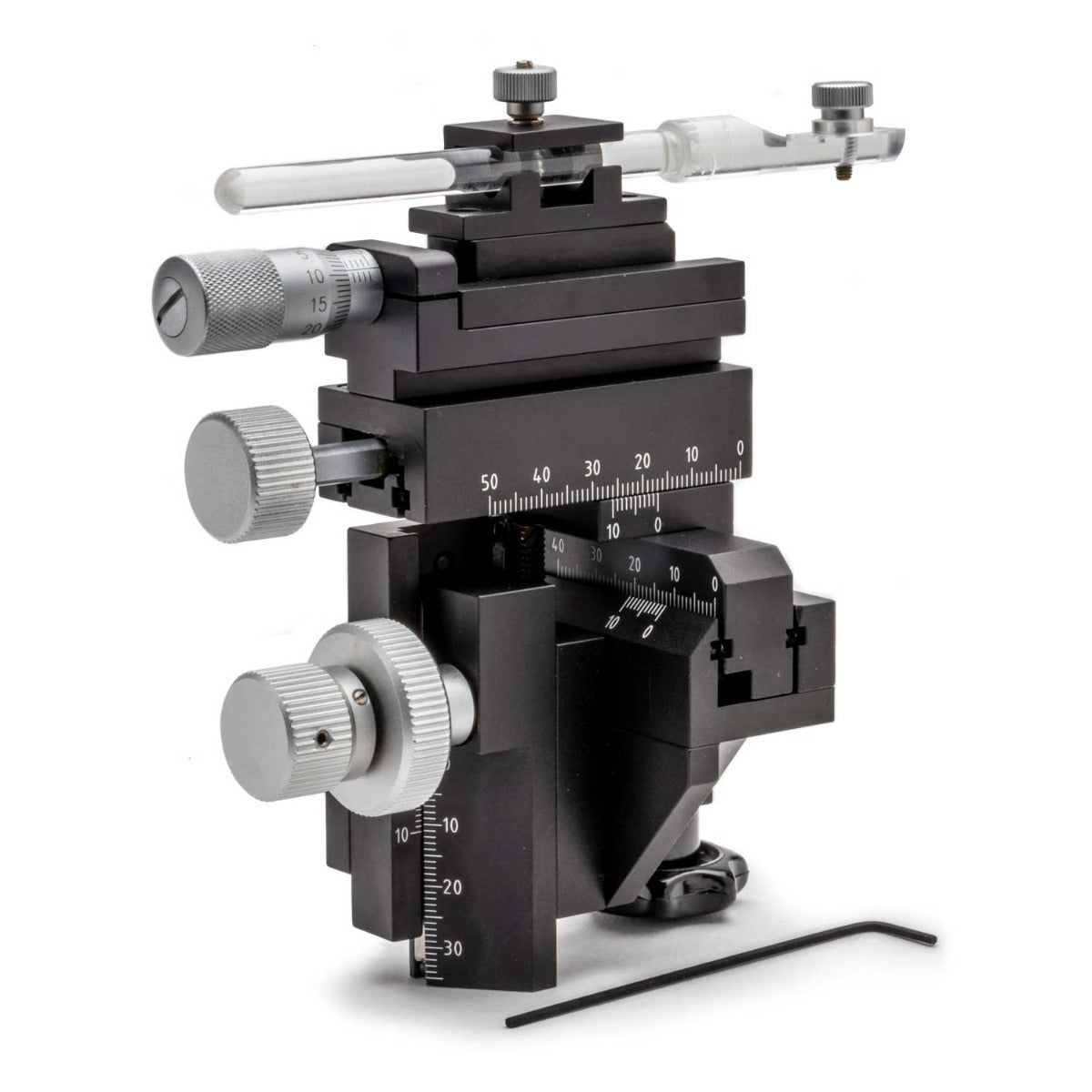
The WPI M3301 is the world's most widely used manual micromanipulator - a precision mechanical instrument designed for the fine, controlled positioning of electrodes, pipettes, and injection needles under magnification of up to 250x. Combining lightweight construction (just 550 g) with sub-10 μm positional accuracy, the M3301 has become the standard choice for patch clamp electrophysiology, intracellular recording, and microinjection setups in neuroscience and cell biology laboratories worldwide.
Its slim, space-saving design allows multiple units to be grouped tightly together on an anti-vibration table, while all control knobs cluster within an 8 cm vertical plane at the rear, allowing the researcher to manipulate positioning entirely by touch while keeping eyes on the microscope eyepiece or camera feed.
Key Features
- World's Most Popular Manual Micromanipulator: The M3301 outsells all competing manual micromanipulators globally for experiments requiring precision under 250x magnification, trusted in thousands of labs for decades.
- 10 μm X-Axis Fine Control: The X-axis fine adjustment provides a 10 mm travel range with 0.01 mm (10 μm) resolution, giving precise tip placement for single-cell recording and intracellular injection without mechanical drift.
- Drift-Free Rack-and-Pinion Drive: V-shaped guideways and cross roller bearings ensure that all axes move smoothly and repeatably without side play, backlash, sticking, or positional drift, critical for maintaining electrode position during long recordings.
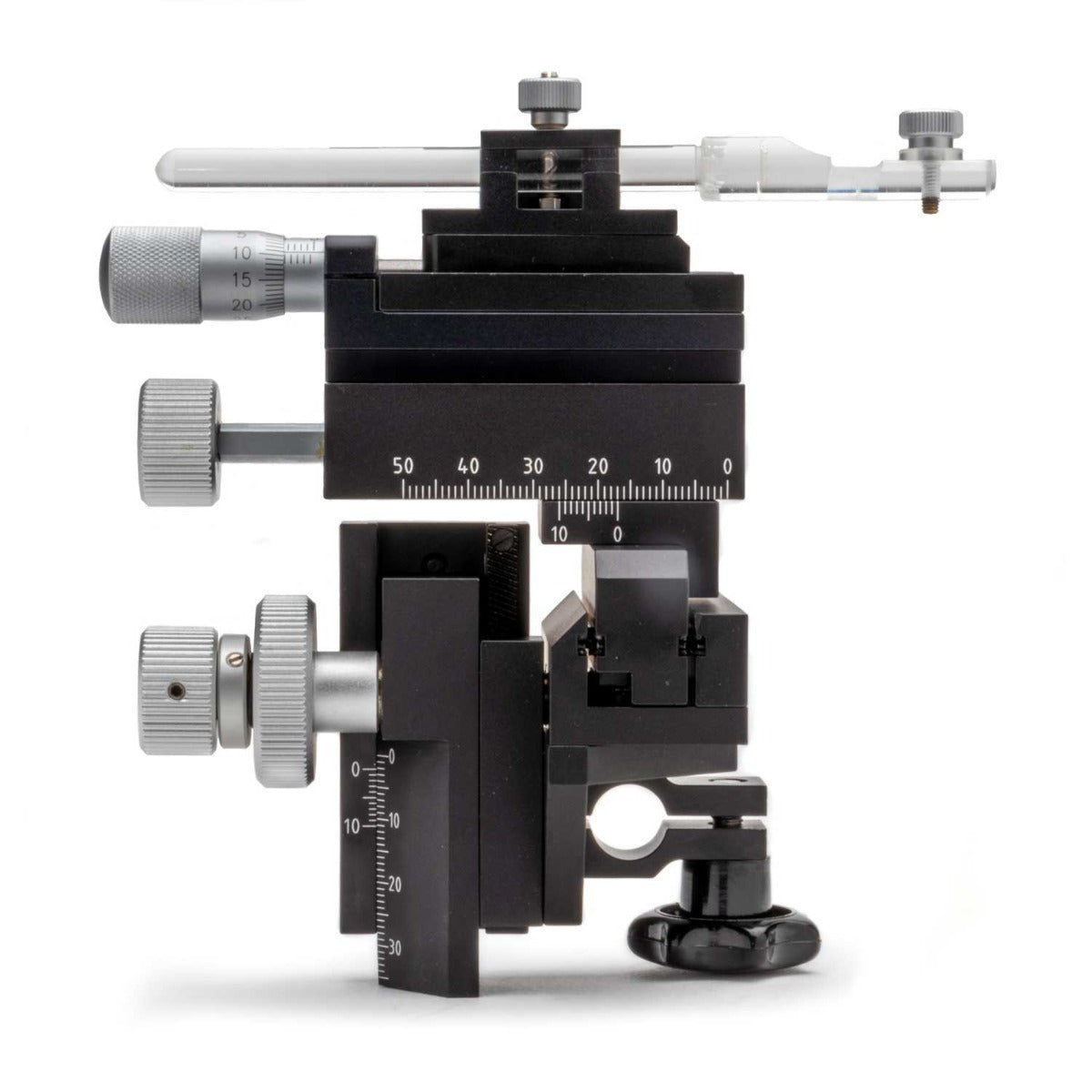
- All Controls Within Reach: Clustered in a single 8 cm vertical plane, control knobs are accessible by the experimenter's non-dominant hand without repositioning, allowing focus to remain entirely on the preparation.
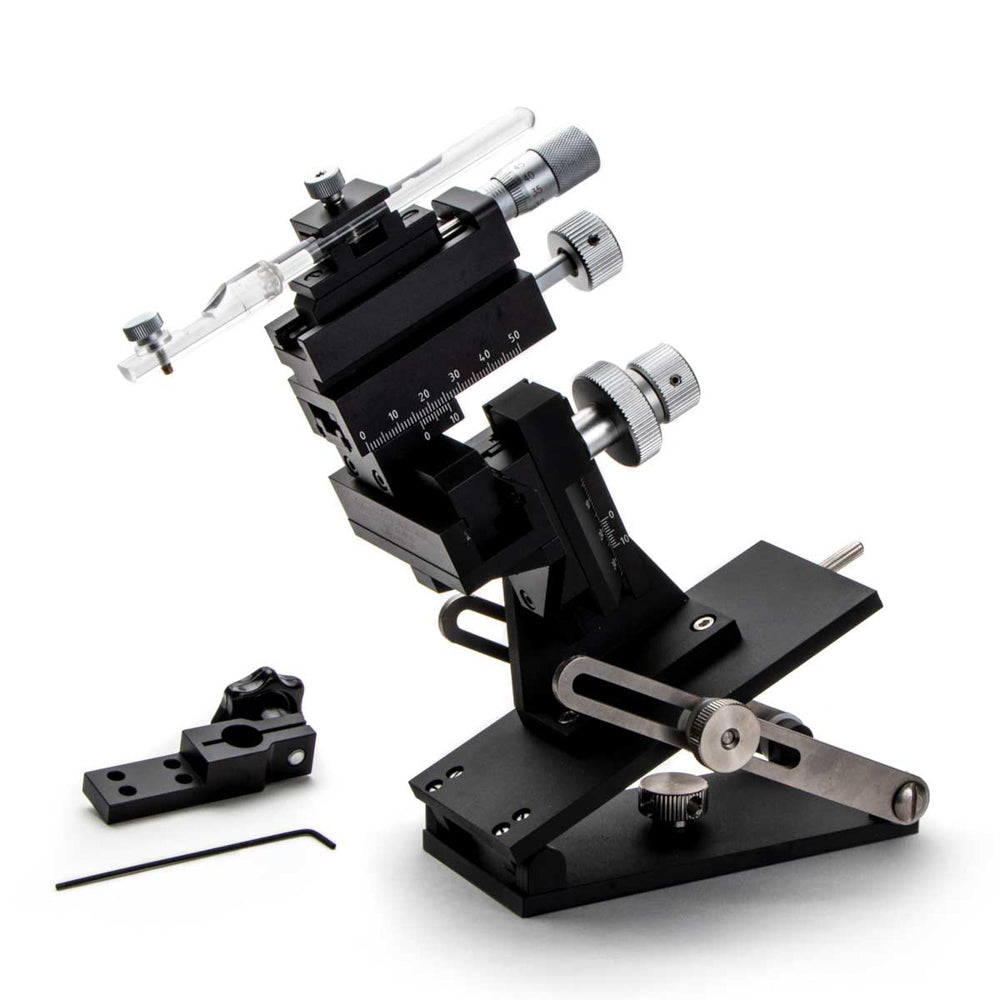
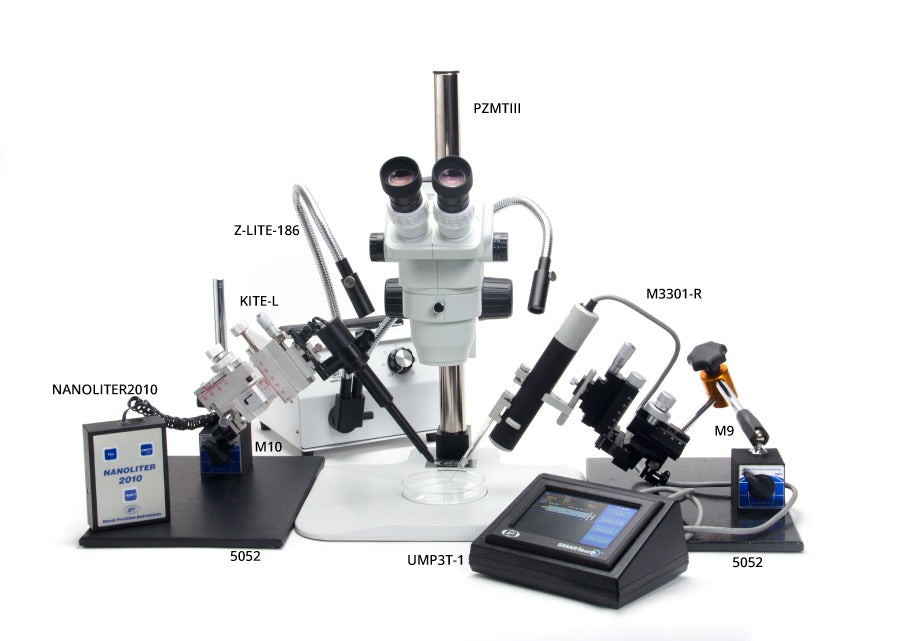
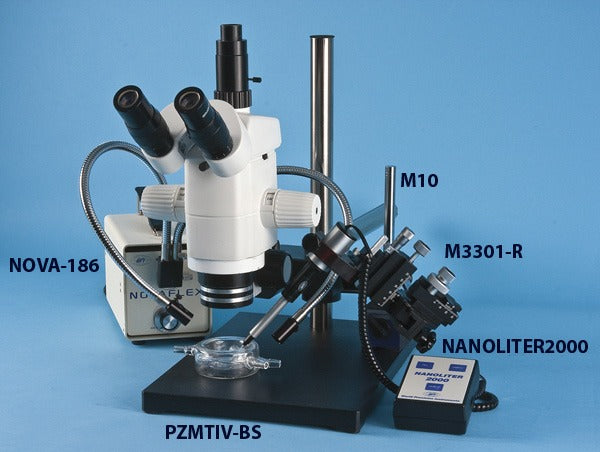
- Flexible Mounting: Compatible with M10/M10L magnetic stands, M-3 tilting base, ring clamps, or direct anti-vibration table mounting (M6 thumbscrew included). Right- and left-handed versions available.
- Vernier Scale Readout: Built-in Vernier scales allow X, Y, and Z positions to be read to 0.1 mm, with X-axis fine reading to 10 μm, enabling precise repositioning to previously mapped coordinates.
- Hardened Steel Construction: All contact parts are milled from hardened steel, ensuring long-term precision and resistance to wear in demanding daily laboratory use.
.webp)

Ordering Options
The M3301 is available in four configurations to match your bench setup and mounting preference:
| M3301R | Right-handed, no base |
| M3301L | Left-handed, no base |
| M3301-M3-R | Right-handed with M-3 tilting base (5 lb. weight not included) |
| M3301-M3-L | Left-handed with M-3 tilting base (5 lb. weight not included) |
Each unit ships with a standard 12 mm clamp (M2) and one microelectrode holder (M3301EH). Optional accessories include steel base plates (5052, 5479), magnetic stands (M9, M10, M10L, M11), additional electrode holders, and axis adjustment tools.
Typical Applications
- Patch Clamp Electrophysiology: Position glass patch pipettes onto single cells in brain slices or dissociated neuron cultures for whole-cell, cell-attached, or perforated-patch recording configurations.
- Sharp Intracellular Recording: Guide fine-tipped microelectrodes into individual neurons for current injection and voltage recording in intact tissue preparations.
- In Vivo Microinjection: Deliver precise volumes of drugs, tracers, or viral vectors to defined brain regions during stereotaxic surgery using a Hamilton syringe or pressure injection system mounted on the M3301.
- In Vitro Microinjection: Inject mRNA, DNA, morpholinos, or dyes into individual cells or embryos under an inverted microscope.
- Multi-Unit Setups: Multiple M3301 units can be positioned side-by-side on a single magnetic base plate for dual-electrode recording or paired injection/recording configurations.

Technical Specifications
| Axis | Travel Range | Resolution |
| X-axis (fine) | 10 mm | 0.01 mm (10 μm) |
| X-axis (coarse) | 37 mm | 0.1 mm |
| Y-axis | 20 mm | 0.1 mm |
| Z-axis | 25 mm | 0.1 mm |
| Instrument Weight | 550 g | |
| Shipping Weight | 3 lbs (1.4 kg) | |
| Drive Mechanism | Rack-and-pinion with V-shaped guideways and cross roller bearings | |
| Position Readout | Vernier scale (0.1 mm); X-axis fine to 10 μm | |
| Magnification Range | Up to 250x | |
| Mounting | 12 mm clamp (M2) standard; compatible with M10/M10L/M9 magnetic stands, M-3 tilting base, ring clamp, air table (M6 thumbscrew included) | |
| Handedness | Right-handed (R) and Left-handed (L) versions available | |
Ordering Codes
| M3301R | Right-handed, no base |
| M3301L | Left-handed, no base |
| M3301-M3-R | Right-handed with M-3 tilting base (weight not included) |
| M3301-M3-L | Left-handed with M-3 tilting base (weight not included) |
| VAR-3093 | Variable configuration (contact NBT for details) |
Applications
- Patch clamp electrophysiology (whole-cell, cell-attached, perforated patch, outside-out)
- Sharp intracellular electrode recording in brain slices and intact preparations
- Stereotaxic microinjection of viral vectors, tracers, and drugs in rodents
- In vitro microinjection into cells, embryos, and oocytes
- Multi-unit recording configurations with dual-electrode setups
Patch Clamp Techniques
Explore All ProductsElectro-Physiology
Explore All ProductsIn Vivo Recording
Explore All ProductsMicro-Surgery
Explore All ProductsWPI Manual Micromanipulator Publications
The WPI M3301 manual micromanipulator is extensively cited across neuroscience, developmental biology, and cell physiology literature. Researchers use it for patch clamp recordings in brain slices, stereotaxic microinjections in rodents, oocyte injections in Xenopus models, and extracellular unit recordings. Its reliability and precision have made it a laboratory standard appearing in thousands of peer-reviewed publications.
What is the WPI Manual Micromanipulator and what is it used for?
The WPI M3301 Manual Micromanipulator is the world's most widely used manual positioning device for neuroscience and cell biology. It is used for patch clamp recording, intracellular electrophysiology, microinjection, and precise electrode placement in in vitro and in vivo preparations.
What research applications is the WPI Manual Micromanipulator suited for?
The WPI Manual Micromanipulator is suited for whole-cell patch clamp, sharp electrode electrophysiology, single-unit recording, microinjection, and any application requiring stable, drift-free manual positioning of electrodes or pipettes in physiological preparations.
What are the key technical features of the WPI Manual Micromanipulator?
The WPI M3301 (catalog number: VAR-3093) provides three-axis manual positioning with fine-thread micrometers for precise submicron movements, a compact and rigid design for minimal drift, and compatibility with standard electrode holders and microelectrode mounting systems.
Is the WPI Manual Micromanipulator available in Israel with local support?
Yes. NBT Ltd distributes World Precision Instruments (WPI) products in Israel. Our team provides local support and application guidance for the WPI micromanipulator range and all WPI electrophysiology accessories.
What mounting options are compatible with the WPI Manual Micromanipulator?
The WPI Manual Micromanipulator is compatible with standard magnetic bases, post-mount systems, and WPI electrode holders, making it easy to integrate into existing electrophysiology rigs, stereotaxic frames, and in vitro recording setups.
Still have questions?
Request for Quote
Please fill in as much details as possible and we will take care of your request as soon as possible
Request for Quote
Please fill in as much details as possible and we will take care of your request as soon as possible