.svg)
.svg)
NanoFil™ Needles
Precision stainless-steel injection tips for WPI's NanoFil™ gas-tight syringe system. Available from 26G down to 36G, the smallest commercially available gauge, in blunt and 25° tri-surface beveled styles for stereotaxic, viral-vector, and ophthalmic microinjection workflows.
What are NanoFil™ Needles?
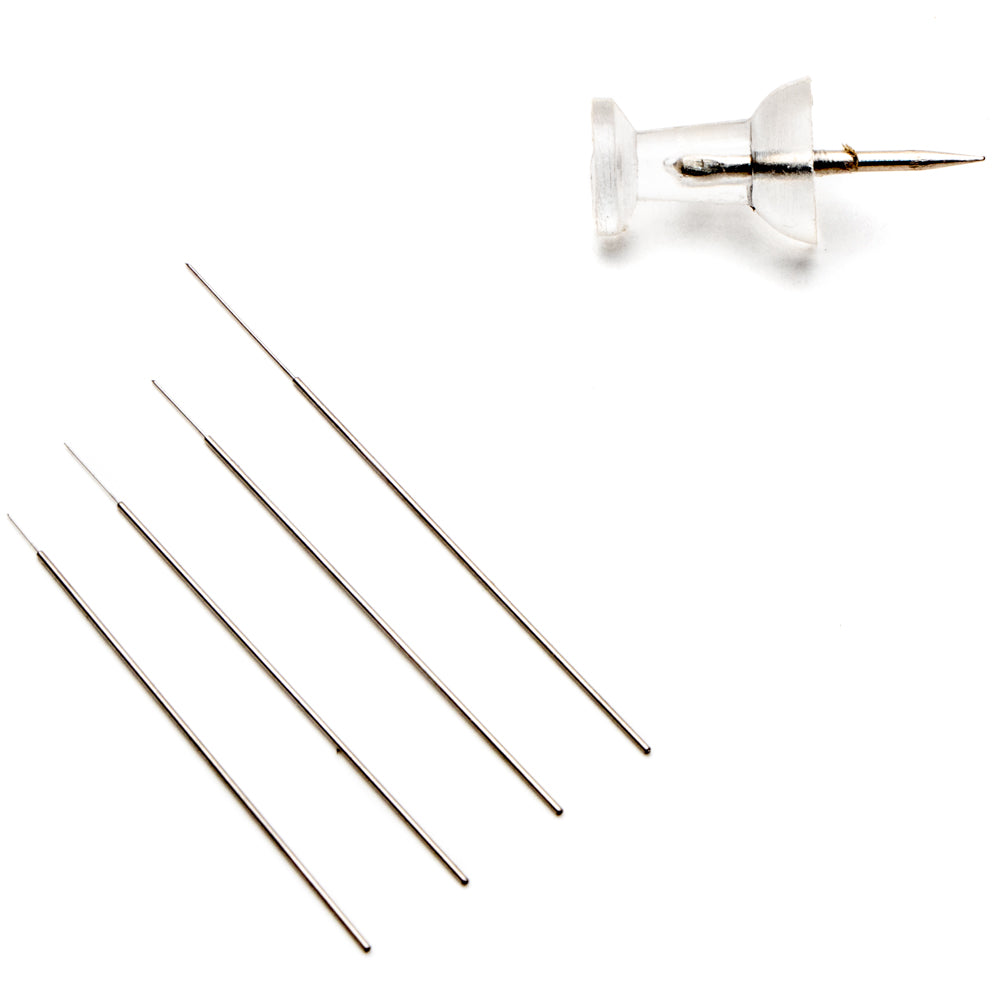
NanoFil™ needles are precision-engineered stainless-steel injection tips designed exclusively for use with WPI's NanoFil™ gas-tight syringe system. Available from 26G down to 36G, the smallest commercially available gauge, they enable accurate sub-microliter delivery in stereotaxic, viral-vector, and ophthalmic research workflows.
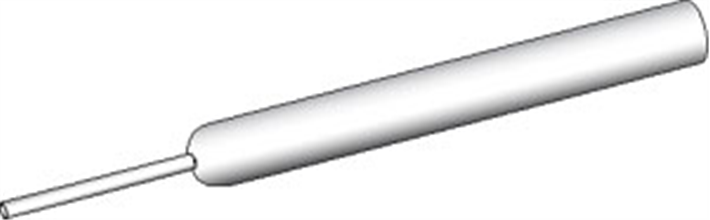
Each needle is hand-finished, individually inspected, and mounted on a 26G base to ensure mechanical rigidity and a universal fit across every NanoFil syringe in a lab's inventory. Two tip geometries are available: blunt for soft-tissue injections and uniform sample distribution, and a unique 25° tri-surface beveled tip optimised for penetration through tougher tissue with minimal mechanical damage.
Key Features
- Smallest gauge on the market: Down to 36G (110 µm OD, 35 µm ID), enabling sub-nanoliter injection accuracy by minimising diffusion at the tip.
- Patented 25° tri-surface bevel: Three converging bevel surfaces create a true point rather than a single-blade edge, reducing penetration depth, lowering insertion force, and limiting tissue trauma.
- Universal NanoFil fit: Every needle is mounted on a standard 460 µm shank, so any NanoFil needle works in any NanoFil syringe, regardless of volume.
- Quick in-experiment swaps: A patented silicone gasket on the NanoFil syringe lets you switch needle gauges mid-experiment with negligible sample loss.
- Durable handcrafted tips: Each tip is penetration-tested before leaving the factory; the tri-bevel geometry resists dulling far better than single-surface bevels.
- Blunt and beveled options: Blunt tips for soft tissue and uniform distribution, beveled tips for penetration through tougher tissue (e.g. ocular, cardiac, dermal).
.webp)

Which gauge should I choose?
The right gauge depends on the target tissue, injection volume, and sample viscosity. As a starting point:
- 26G - Front-filling the syringe; injections where speed matters more than tip footprint.
- 33G - General-purpose; comparable to Hamilton's 7762/7803 series but with a shorter, more durable tri-bevel tip.
- 34G - Intermediate option between 33G and 35G when one is too stiff and the other too fragile.
- 35G - The most popular size in WPI field trials; the best balance of strength, durability, clog resistance, and small footprint for mouse work.
- 36G - The smallest commercial gauge. Use only when absolutely necessary; the 25–50 µm tip ID clogs easily and the tip must be limited to ~3 mm length to maintain rigidity. Pre-loading with a larger needle and well-filtered samples are recommended.
Blunt or beveled - how do I decide?
Use blunt tips when injecting into soft tissue or when uniform sample distribution is the priority - the dead-ended bore prevents the directional bias a bevel can introduce. Choose beveled tips when the needle has to penetrate tougher tissue such as cornea, dura, or skin, or when reducing tissue damage at the injection site is critical.
Can I use any NanoFil needle with any NanoFil syringe?
Yes. Every NanoFil needle is mounted on a universal 460 µm shank, so all gauges are interchangeable across all NanoFil syringe volumes (10 µL and 100 µL). The patented silicone gasket on the syringe also allows mid-experiment needle swaps with negligible sample loss, useful for front-filling with 26G and then switching to a finer tip for the injection itself.
What's the difference between the 25° tri-surface bevel and a standard single bevel?
A conventional 10° single-surface bevel produces a blade-like edge, which dulls quickly and requires deeper tissue penetration to deliver sample at a target depth. WPI's 25° tri-surface bevel grinds three converging surfaces to create an actual point. The result is less penetration force, shallower required insertion depth, and a tip that holds its sharpness much longer. WPI's internal testing shows a 35G tri-bevel reduces required penetration depth by ~80% compared with a 33G single-bevel Hamilton needle.
Is the NanoFil Needles system available in Israel with local support?
Yes. NBT Ltd is the exclusive distributor of NanoFil and the full WPI microinjection range in Israel, providing local technical support, application advice on tip selection, and integration with stereotaxic and pump systems.

Technical Specifications
| Catalog Number | VAR-3184 |
| Tip Material | Stainless Steel |
| Available Gauges | 26G, 33G, 34G, 35G, 36G |
| Tip Styles | Blunt or 25° tri-surface beveled |
| Shank Outer Diameter | 460 µm (universal across all gauges) |
| Compatibility | All NanoFil™ syringe volumes (10 µL, 100 µL) |
| Packaging | Sold individually or in assortment packs (33–36G blunt or beveled set) |
Per-Gauge Dimensions
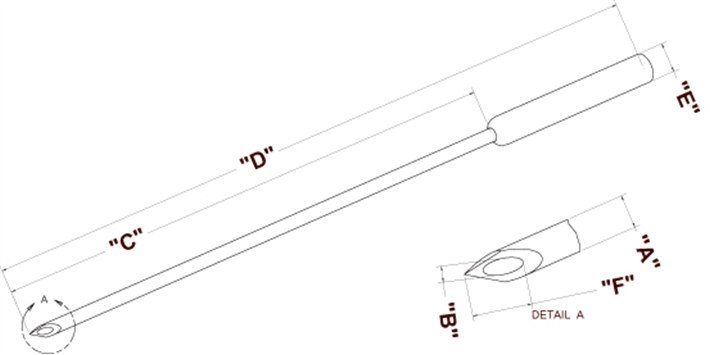
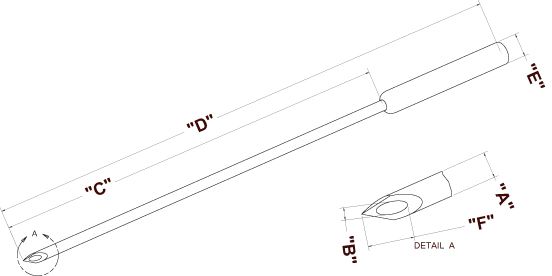
| Gauge | Tip OD | Tip ID | Tip Length | Total Length | Dead Volume |
| 26G beveled | 460 µm | 110 µm | 3 mm | 40 mm | 0.380 µL |
| 33G | 210 µm | 115 µm | 10 mm | 40 mm | 0.416 µL |
| 34G | 185 µm | 85 µm | 5 mm | 35 mm | 0.199 µL |
| 35G | 135 µm | 55 µm | 5 mm | 35 mm | 0.435 µL |
| 36G | 110 µm | 35 µm | 3 mm | 33 mm | 0.340 µL |
Applications
- Stereotaxic microinjection in rodents (cortex, hippocampus, striatum, deep nuclei)
- Viral vector (AAV, lentivirus) delivery to the brain
- Subretinal and intraocular injection for ophthalmic gene-therapy research
- Retinal pigment epithelium (RPE) delivery
- Cannulation and pathway-mapping studies
- Sub-microliter sample delivery in cardiac, dermal, and tumour models
- Ex-vivo low-volume dispensing where dead-volume losses matter
Stereotaxic Surgery
Explore All ProductsAnimal Infusion
Explore All ProductsMicro-Surgery
Explore All ProductsNanoFil™ Needles Publications
NanoFil™ needles are widely cited in stereotaxic neuroscience, subretinal gene therapy, viral vector delivery, and cardiovascular microinjection studies. Browse peer-reviewed publications referencing this product on Google Scholar.
What are NanoFil™ Needles used for?
NanoFil™ Needles are ultra-fine, low-displacement needles from World Precision Instruments designed for nanoliter-scale microinjections, most commonly stereotaxic delivery of viral vectors (AAV, lentivirus), tracers, and drugs into specific rodent brain regions with minimal tissue damage.
What needle sizes are available in the NanoFil™ line?
NanoFil™ Needles are available in a range of gauges (33G and finer) and lengths optimised for stereotaxic brain injection, subretinal injection, and other microinjection applications, all designed to fit WPI NanoFil syringes for nanoliter precision.
Are NanoFil™ Needles compatible with WPI microinjection pumps?
Yes - NanoFil™ Needles are designed for use with WPI NanoFil syringes (10 µL) and pair directly with WPI's UMP3 UltraMicroPump, Micro4 controller, and the PV850 Pressure Microinjector for fully automated, programmable nanoliter injections.
What is the catalog number for NanoFil™ Needles?
NanoFil™ Needles are available under WPI catalog number VAR-3184 and related part numbers. Contact NBT for current gauge, length, and bevel options to match your injection target and protocol.
Are NanoFil™ Needles single-use or reusable?
NanoFil™ Needles are designed for single-use to ensure tip sharpness, minimize tissue damage, and avoid cross-contamination between subjects - particularly important when delivering different viral constructs or genetic material across animals.
Still have questions?

Request for Quote
Please fill in as much details as possible and we will take care of your request as soon as possible
Request for Quote
Please fill in as much details as possible and we will take care of your request as soon as possible