.svg)
.svg)
Standard Glass Capillaries
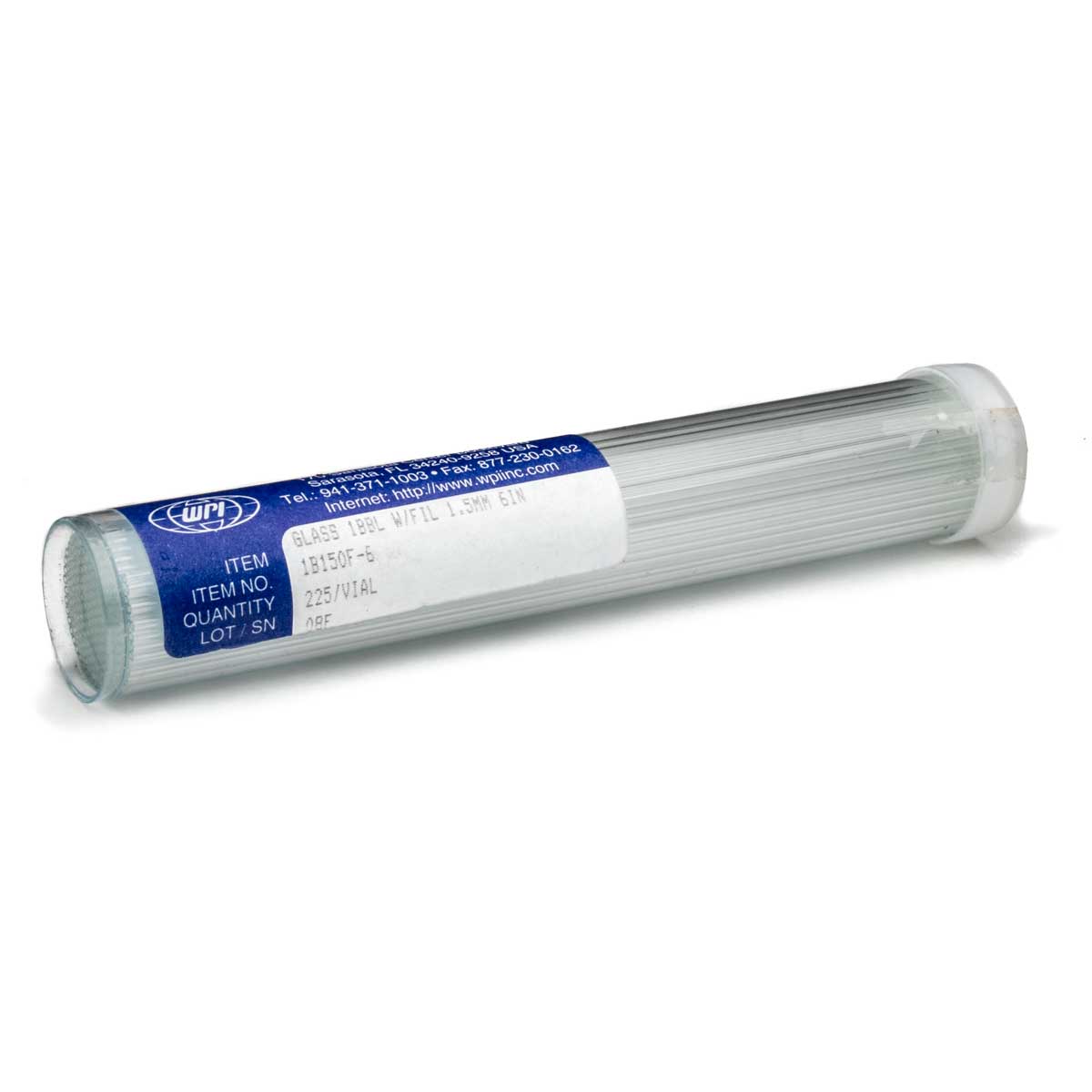
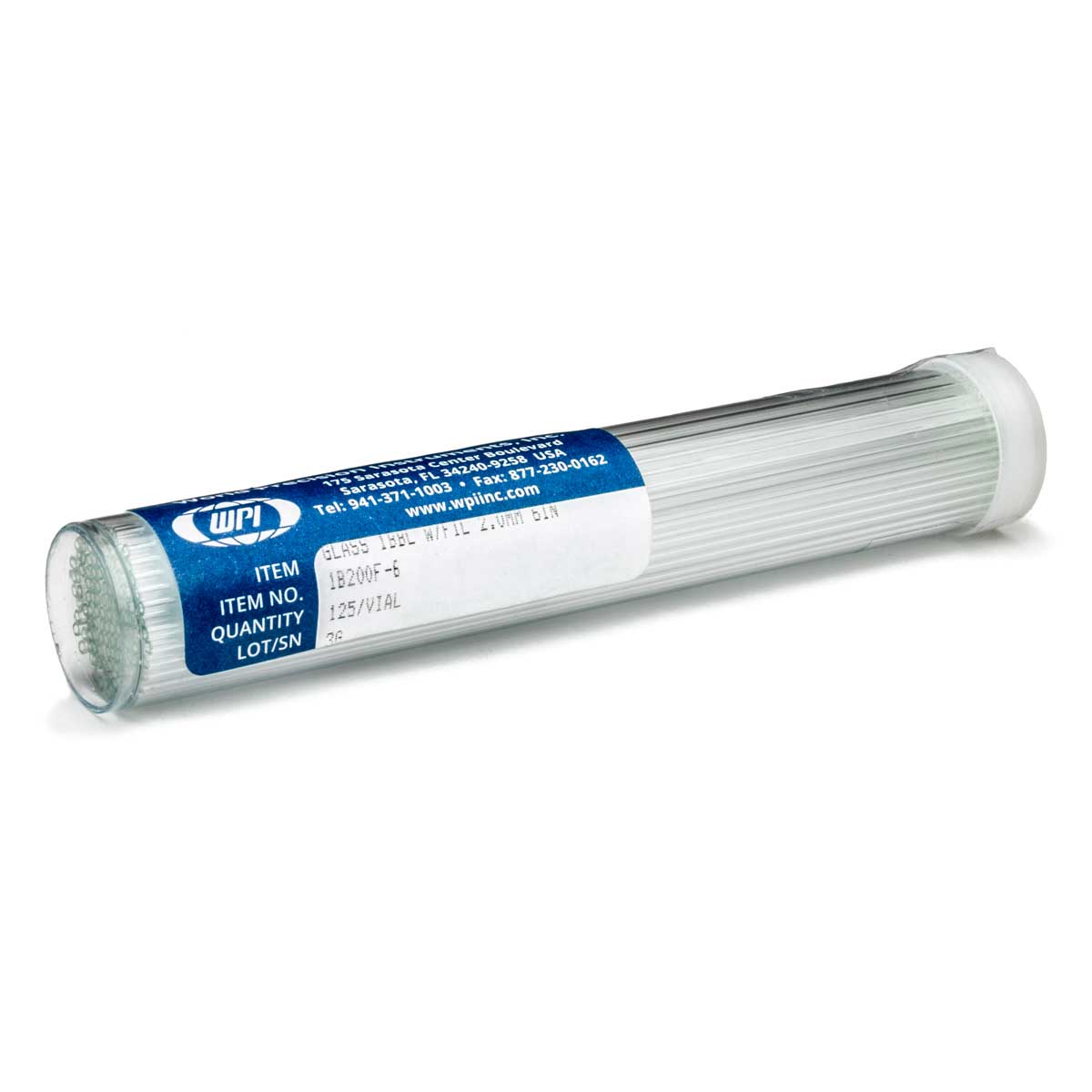
WPI Standard Glass Capillaries are high-purity borosilicate tubes for pulling precision micropipettes used in patch clamp, intracellular recording, and microinjection. Available in 1.0–2.0 mm OD and 3, 4, or 6-inch lengths, with or without internal filament, they are compatible with all standard pullers including the WPI PUL-1000.
What are WPI Standard Glass Capillaries?
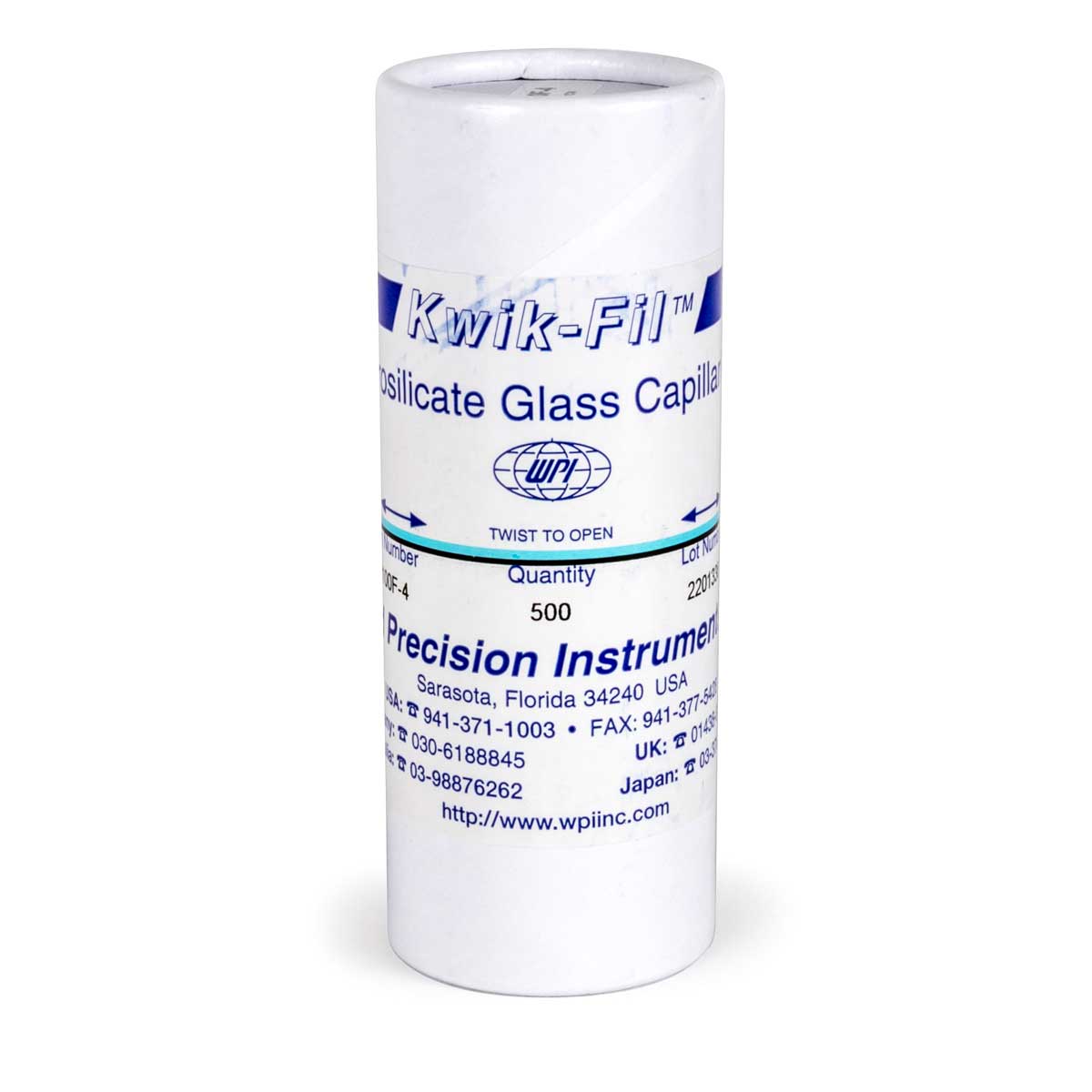
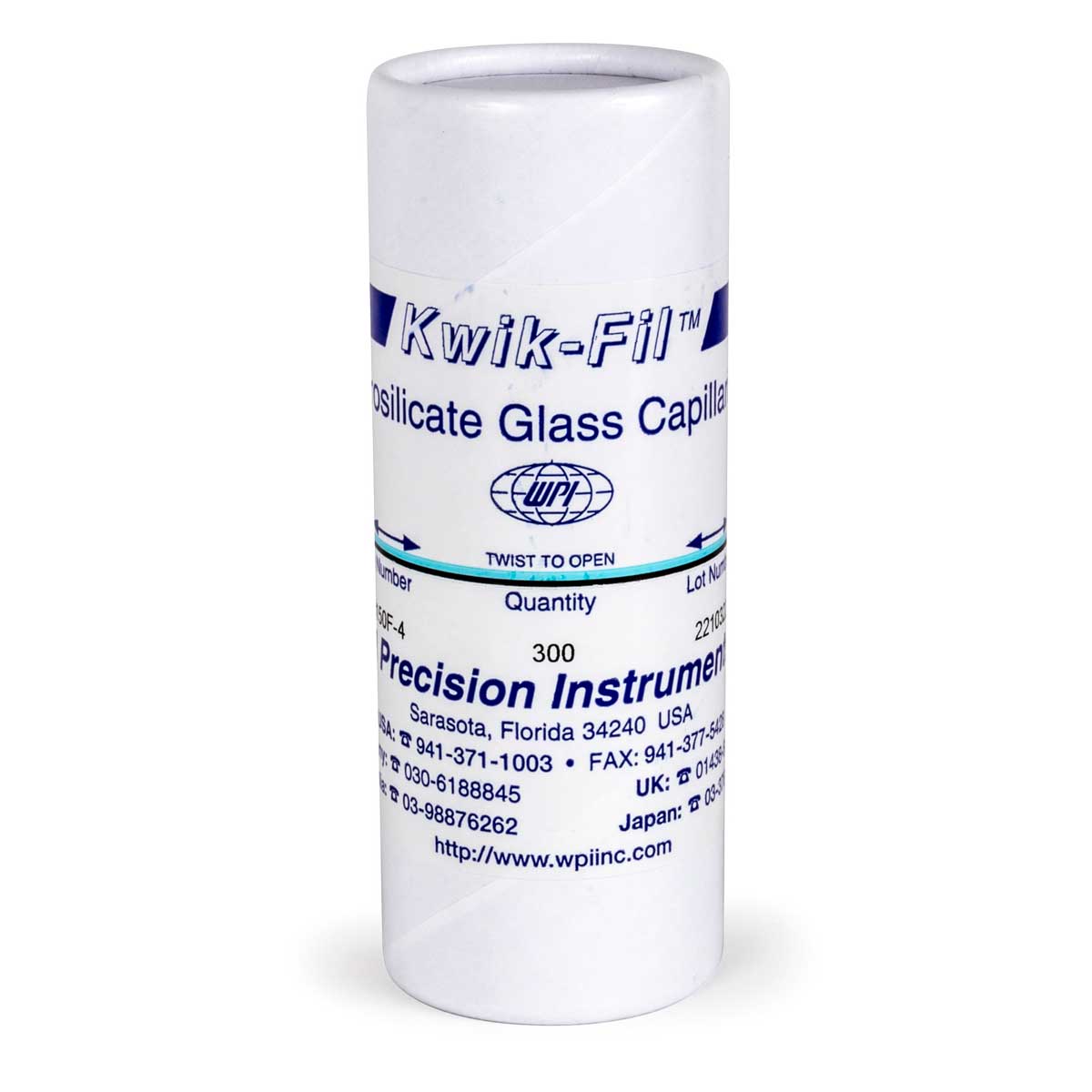
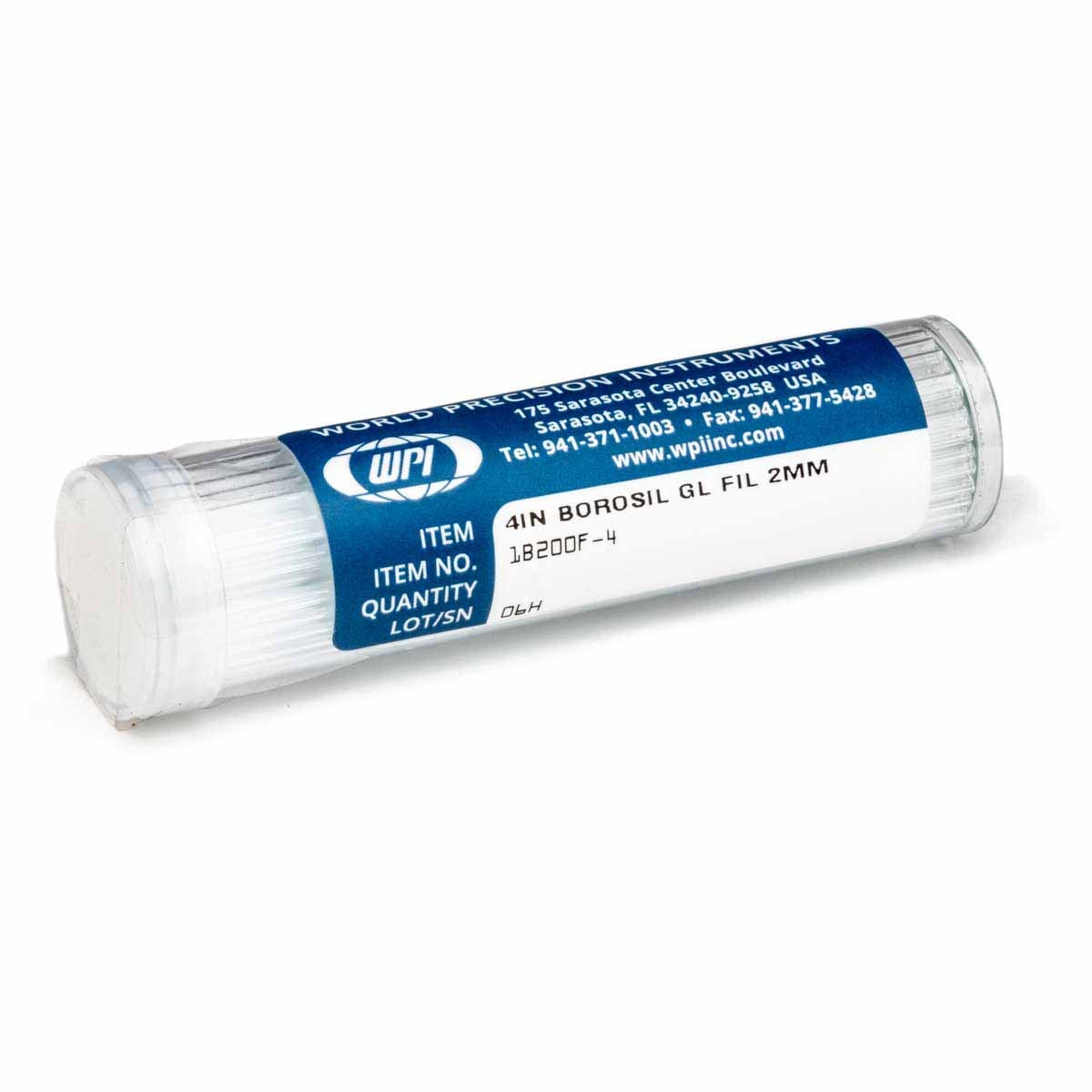
WPI Standard Glass Capillaries are high-purity borosilicate glass tubes engineered for precision micropipette fabrication. These capillaries serve as the essential raw material for pulling patch clamp pipettes, sharp electrodes, injection needles, and recording electrodes - forming the foundation of electrophysiology, microinjection, and intracellular recording workflows across neuroscience and cell biology labs.
Available in a comprehensive range of outer diameters (1.0, 1.2, 1.5, and 2.0 mm) and lengths (3, 4, and 6 inches), WPI glass capillaries are compatible with virtually all standard micropipette pullers and offer consistent wall thickness and optical clarity essential for reliable, reproducible results.
Key Features
- High-Purity Borosilicate Glass: Manufactured from premium borosilicate tubing with tight dimensional tolerances, ensuring consistent pull characteristics and minimal lot-to-lot variability critical for reproducible patch clamp and injection experiments.
- Wide Size Range: Available in 1.0, 1.2, 1.5, and 2.0 mm outer diameters across 3-, 4-, and 6-inch lengths, covering the full spectrum of pipette types from fine sharp electrodes to large injection needles.
- Filament Options: Filament-containing (F) variants feature an internal glass fiber that wicks solutions to the pipette tip by capillary action, dramatically simplifying backfilling of patch clamp electrodes and injection needles - no special tools needed.
- Universal Puller Compatibility: Designed to work seamlessly with WPI's PUL-1000 and other standard horizontal and vertical pullers, giving consistent pull geometry and tip diameter with minimal parameter adjustment.
- Ready-to-Use Cleanliness: Supplied clean and ready for immediate pulling - no pre-washing or preparation required under standard laboratory conditions.
- Bulk Packaging: Available in packs of 100 capillaries, providing excellent value for high-throughput recording or injection studies.
.webp)

Choosing the Right Capillary Size
Selecting the correct outer diameter and length depends on the application and the micropipette puller being used. As a general guide: 1.0 mm OD capillaries are ideal for very fine sharp electrodes and intracellular recording; 1.2 mm OD is the most widely used size for patch clamp whole-cell and perforated-patch configurations; 1.5 mm OD is favored for pressure injection and single-channel recordings; and 2.0 mm OD is chosen when large-bore or thick-walled pipettes are required for injection or nucleated patch applications.
Filament vs. Non-Filament
- Filament (F suffix - e.g., 1B150F-4): Contains a thin glass fiber fused to the inner wall that draws solution to the tip by capillary action. Strongly recommended for patch clamp and any application where backfilling from the tip is impractical. The filament ensures bubble-free filling every time.
- Non-Filament (no F suffix - e.g., 1B150-4): Simpler construction with no internal fiber. Preferred for applications using viscous or fluorescent internal solutions where the filament might interfere, or where pipettes are front-filled under positive pressure.
Compatibility with WPI Pullers
All WPI Standard Glass Capillaries are fully compatible with the WPI PUL-1000 horizontal puller. Simply load the capillary, select the appropriate program, and pull to your desired tip geometry. For best results with the PUL-1000, WPI recommends starting with the 1B150F-4 (1.5 mm OD, 4-inch, filament) as an all-purpose starting point.

Technical Specifications
| Material | Borosilicate glass |
| Available OD | 1.0 mm, 1.2 mm, 1.5 mm, 2.0 mm |
| Available Lengths | 3 inch (76 mm), 4 inch (102 mm), 6 inch (152 mm) |
| Filament Options | With filament (F) and without filament |
| Pack Size | 100 capillaries per pack |
| Catalog Numbers | 1B100F-3, 1B100F-4, 1B100F-6, 1B120F-4, 1B120F-6, 1B150F-3, 1B150F-4, 1B150F-6, 1B200F-4, 1B200F-6 (and non-filament equivalents) |
SKU Guide
| Catalog No. | OD (mm) | Length | Filament |
| 1B100F-3 | 1.0 | 3 inch | Yes |
| 1B100F-4 | 1.0 | 4 inch | Yes |
| 1B100F-6 | 1.0 | 6 inch | Yes |
| 1B120F-4 | 1.2 | 4 inch | Yes |
| 1B120F-6 | 1.2 | 6 inch | Yes |
| 1B150F-3 | 1.5 | 3 inch | Yes |
| 1B150F-4 | 1.5 | 4 inch | Yes |
| 1B150F-6 | 1.5 | 6 inch | Yes |
| 1B200F-4 | 2.0 | 4 inch | Yes |
| 1B200F-6 | 2.0 | 6 inch | Yes |
| VAR-1953 | Multiple | Multiple | Multiple (variety pack) |
Applications
- Patch clamp electrophysiology (whole-cell, cell-attached, perforated patch)
- Sharp intracellular electrode recording in neurons and muscle fibers
- Pressure microinjection and iontophoretic drug delivery in vivo
- Viral vector (AAV, lentivirus) and tracer delivery via stereotaxic surgery
- Single-channel recording (outside-out, inside-out patches)
- Nucleated patch recordings


Patch Clamp Techniques
Explore All ProductsElectro-Physiology
Explore All ProductsAnimal Infusion
Explore All ProductsStandard Glass Capillaries Publications
WPI Standard Glass Capillaries are widely used in electrophysiology and microinjection studies. Researchers rely on these borosilicate capillaries for fabricating patch clamp electrodes and sharp recording electrodes used in in vitro slice recordings, in vivo single-unit recordings, and stereotaxic viral injections. Their consistent optical and mechanical properties make them a standard material in neuroscience labs worldwide.
What is the Standard Glass Capillaries and what is it used for?
WPI Standard Glass Capillaries are high-purity borosilicate tubes for pulling precision micropipettes used in patch clamp, intracellular recording, and microinjection. Available in 1.0–2.0 mm OD and 3, 4, or 6-inch lengths, with or without internal filament, they are compatible with all standard pullers including the WPI PUL-1000.
What research applications is the Standard Glass Capillaries suited for?
The Standard Glass Capillaries is suited for researchers in neuroscience, behavioral science, physiology, and related life science fields. It is designed to support experimental workflows that require reliable, high-quality data acquisition and analysis.
What are the key technical features of the Standard Glass Capillaries?
The Standard Glass Capillaries (catalog number: VAR-1953) is engineered for precision performance in laboratory settings. It offers user-friendly operation, robust construction, and compatibility with standard laboratory workflows to maximize experimental efficiency and reproducibility.
Is the Standard Glass Capillaries available in Israel with local support?
Yes. NBT Ltd is the exclusive distributor of this product in Israel. Our team of scientific specialists provides full local support including installation, application training, and ongoing technical assistance for the Standard Glass Capillaries.
What accessories or systems is the Standard Glass Capillaries compatible with?
The Standard Glass Capillaries is designed to integrate seamlessly with complementary laboratory instruments and software used in its application domain. NBT Ltd can advise on compatible accessories, consumables, and system configurations to meet your specific research needs.
Still have questions?

Request for Quote
Please fill in as much details as possible and we will take care of your request as soon as possible
Request for Quote
Please fill in as much details as possible and we will take care of your request as soon as possible