.svg)
.svg)
EEG with fNIRS – Integration Guide
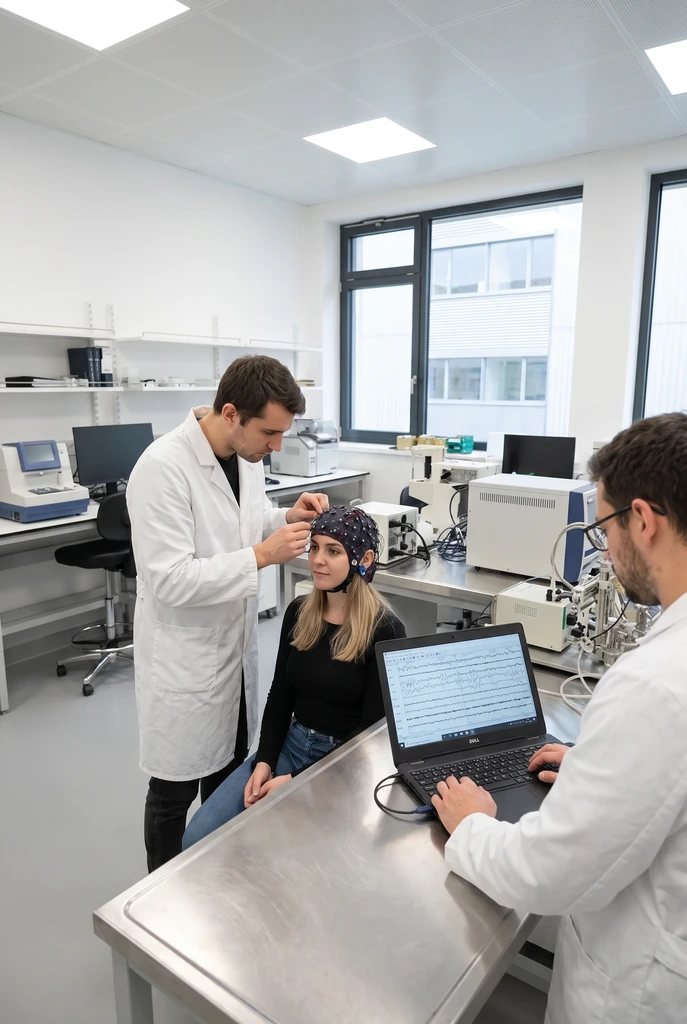
The scalp is the constraint, not the channel count. Every electrode you add costs an optode position, which forces one decision before the purchase order: which measure is primary. A guide to specifying combined EEG and fNIRS from the distributor for g.tec, NIRx and Artinis in Israel.

What this guide covers
Everyone asks about channel count. The question that decides the setup is how much scalp you have.
An fNIRS channel is a pair of optodes roughly 30 mm apart, and EEG electrodes sit on the 10-20 positions. Both want the same head. Every electrode you add costs you an optode position, which forces one decision before the purchase order: which measure is primary.
The two routes
- EEG primary. g.SENSOR fNIRS adds 8 fNIRS channels to the g.Nautilus, g.USBamp or g.HIamp you already own. One device, one clock, nothing to synchronise
- fNIRS primary. NIRSport2, NIRScout or an Artinis Brite, with the EEG electrodes placed into the fNIRS cap and the optodes fitted between them
- Both at high density. Combined optode and electrode holders, which exist only for certain EEG systems
The guide also covers which direction the interference runs between the two systems, what the cap has to do, and when short separation channels are worth the budget.
Read the full guide: EEG with fNIRS, and the fight for space on the scalp
.webp)

fNIRS
Explore All ProductsCognitive Neuroscience
Explore All ProductsBrain-Computer Interface Research
Explore All ProductsCan I record EEG and fNIRS from one device?
Yes, if EEG is the primary measure. g.SENSOR fNIRS adds 8 fNIRS channels to a g.Nautilus, g.USBamp or g.HIamp, so both signals are recorded by the same amplifier. One clock, and nothing to synchronise afterwards.
How do optodes and electrodes share the same head?
Electrodes go on the 10-20 positions and optodes go in between, because electrodes are smaller and easier to place. An fNIRS channel is a pair of optodes about 30 mm apart, and that spacing sets the depth you are sensitive to, so it is not negotiable.
What if the optode template will not fit between my electrodes?
Break the template into smaller sub-templates, or reduce the number of EEG channels. For high density on both at once you need combined holders that take an electrode and an optode in the same position, and those are only available for certain EEG devices.
Do the two systems interfere with each other?
fNIRS is optical, so it does not disturb the EEG. The electronics in the optodes can. Artinis reports that lowering skin-electrode impedance minimises it and that with low enough impedance it goes away, so the fix is the preparation you should be doing anyway.
Do I need short separation channels?
If the effect you are chasing is small, yes. Short channels measure scalp blood flow rather than cortex, so you can regress it out of the long channels. Budget for them at the start, because retrofitting means rethinking the whole optode layout.
Still have questions?
Related Products:
Request for Quote
Please fill in as much details as possible and we will take care of your request as soon as possible
Request for Quote
Please fill in as much details as possible and we will take care of your request as soon as possible