.svg)
.svg)
CMA 270 Refrigerated Fraction Collector
The CMA 270 Refrigerated Fraction Collector is designed to collect microliter volume fractions typical of microdialysis.

- Fractions cooled down to +5 degree Celsius
- Collection of 40 samples or alternatively 2*20 samples
- Use of well-known CMA 300 μl vials and caps
- Collection in sealed vials!
- Connects to probe by standard Tubing Adapters and FEP tubing
- Small footprint
- Low noise level for minimal disturbance
- Simple and straight forward handling
.webp)

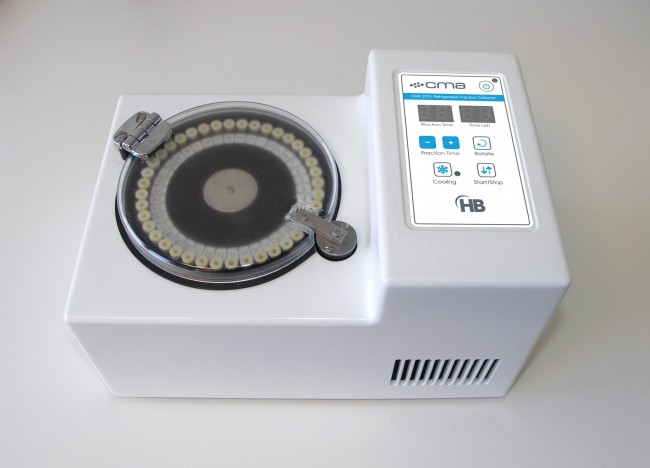
The CMA 270 Refrigerated Fraction Collector specially designed to collect microliter volume fractions typical of microdialysis. It has thermoelectric cooling down to +5 °C and the fractions can be collected in sealed vials. Both are important considerations for the prevention of evaporation and chemical degradation. The capacity of the collector is 40 vials of 300 μL each. Collection of 40 samples (single cannula) or alternatively 2 x 20 samples (dual cannula). Collection time can be set to 1-99 minutes. The CMA 270 Refrigerated Fraction Collector is designed for ease of use.
- Fractions cooled down to +5 degree Celsius
- Collection of 40 samples or alternatively 2*20 samples
- Use of well-known CMA 300 μl vials and caps
- Collection in sealed vials!
- Connects to probe by standard Tubing Adapters and FEP tubing
- Small footprint
- Low noise level for minimal disturbance
- Simple and straight forward handling
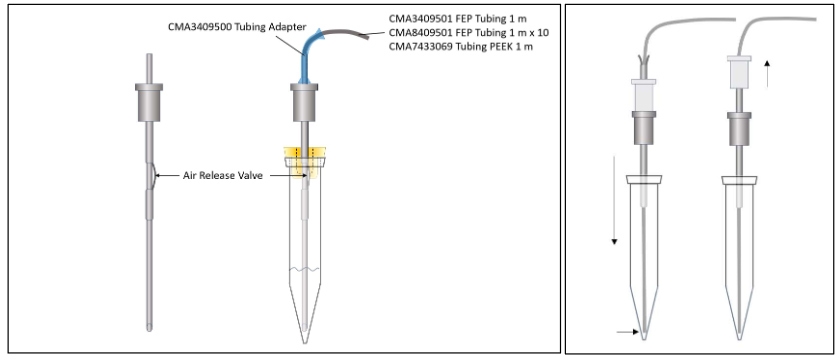
Several different types of collection cannulas. Standard Fraction Collection Needle is made of stainless steel. The steel is treated to prevent oxidation of labile compounds in the perfusate. The Fraction Collection Needle is equipped with an air release valve makes it possible to collect the dialysate into capped vials using re/sealing caps. When collecting in open vials the FEP Tubing Cannula can be used. The FEP tube is inserted into cannula and secured by raising the white knob.
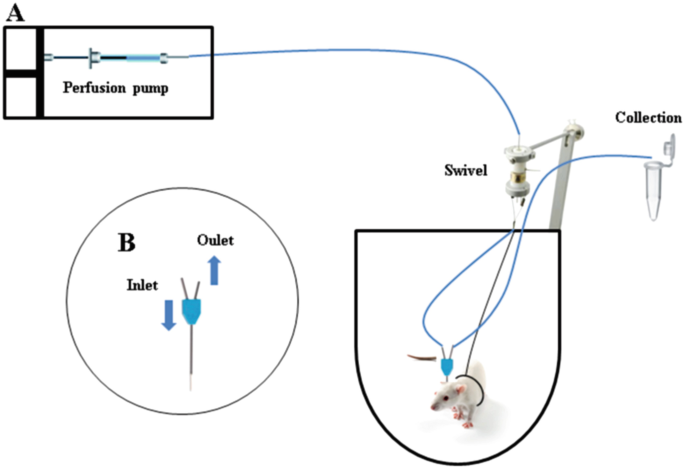
Animal Infusion
Explore All ProductsCMA microdialysis publications
Academic publications and research studies utilizing CMA microdialysis systems for in vivo neurochemical monitoring, sourced from Google Scholar.
What is the CMA 270 Refrigerated Fraction Collector used for?
The CMA 270 Refrigerated Fraction Collector is used in microdialysis experiments to automatically collect and refrigerate dialysate fractions, preserving sample integrity for subsequent neurochemical analysis by HPLC or LC-MS.
Why is refrigeration important in microdialysis fraction collection?
Refrigerated fraction collection prevents degradation of labile neurochemicals such as monoamines and neuropeptides between collection and analysis. The CMA 270 maintains samples at low temperature from the moment of collection.
How many fractions can the CMA 270 collect per experiment?
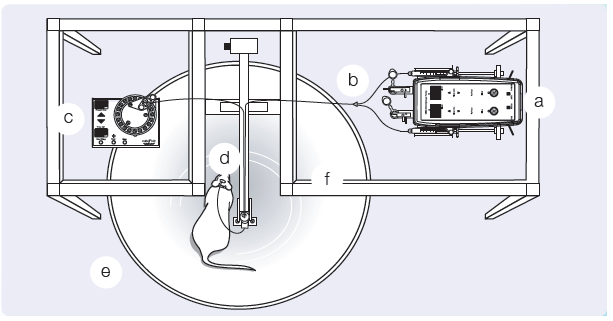
The CMA 270 accommodates multiple vials in its carousel system, supporting long-duration experiments with short collection intervals. This enables high temporal resolution monitoring of neurochemical dynamics in freely moving animals.
Is the CMA 270 compatible with standard microdialysis probe and pump setups?
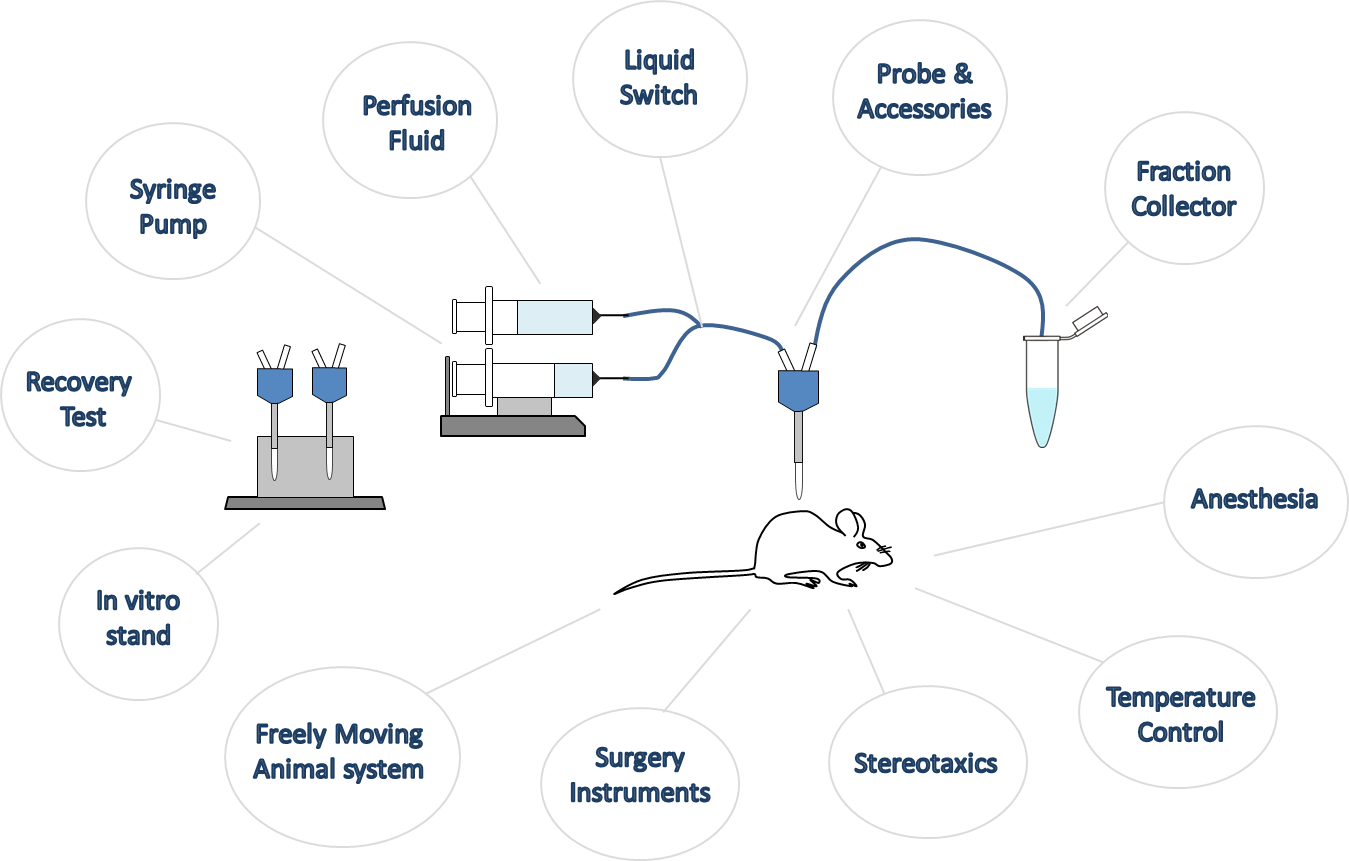
Yes. The CMA 270 integrates directly with CMA infusion pumps, probes, and tubing within a complete microdialysis system, offering reliable, automated sample handling that reduces manual intervention during experiments.
What collection interval can the CMA 270 achieve?
The CMA 270 supports collection intervals as short as a few minutes, enabling high temporal resolution monitoring of neurochemical dynamics. Interval settings are configurable to match the kinetics of fast or slowly changing analytes in the experiment.
Still have questions?
Request for Quote
Please fill in as much details as possible and we will take care of your request as soon as possible
Request for Quote
Please fill in as much details as possible and we will take care of your request as soon as possible