.svg)
.svg)
AMTI Side-by-Side Instrumented Treadmill
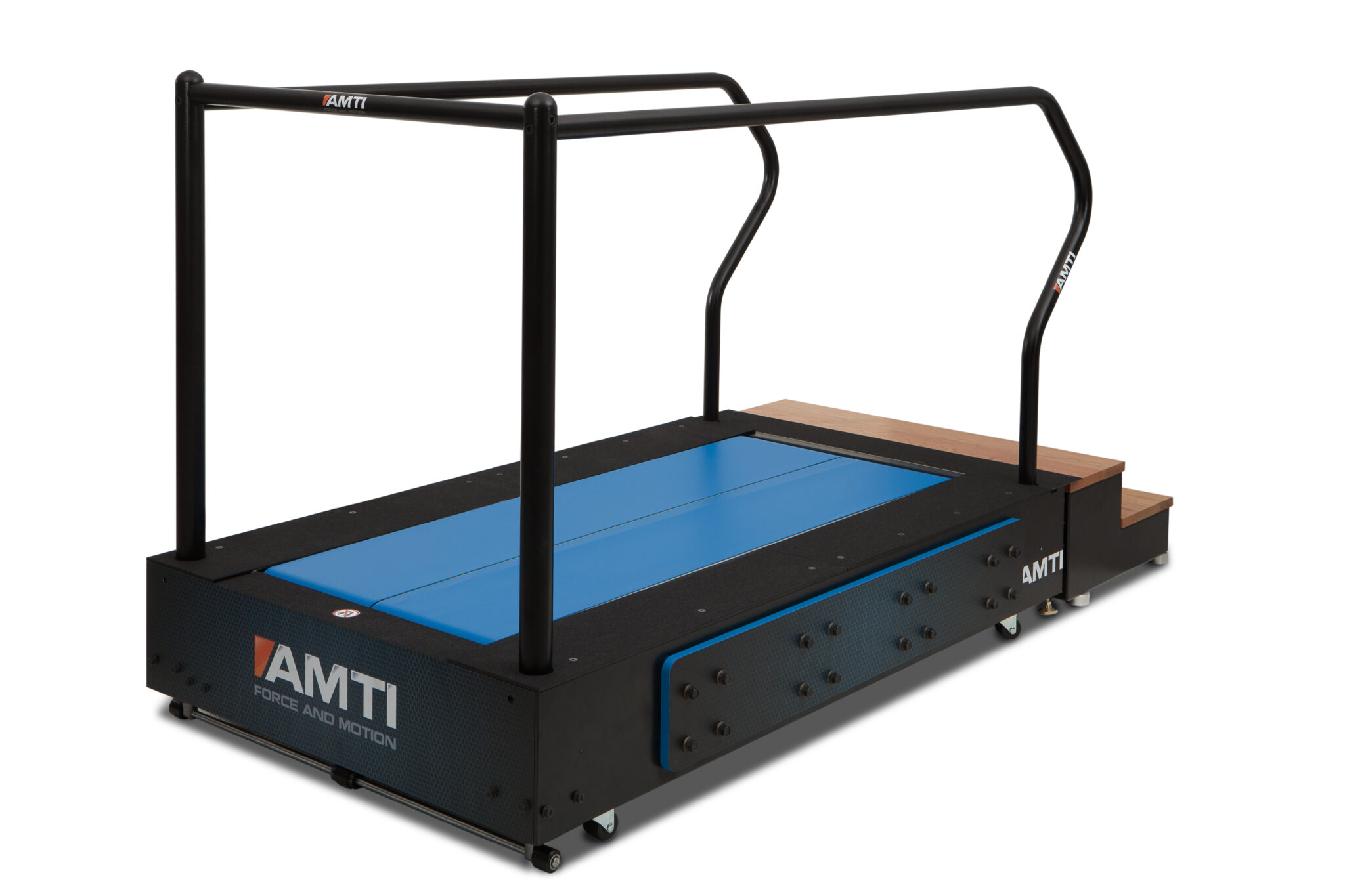
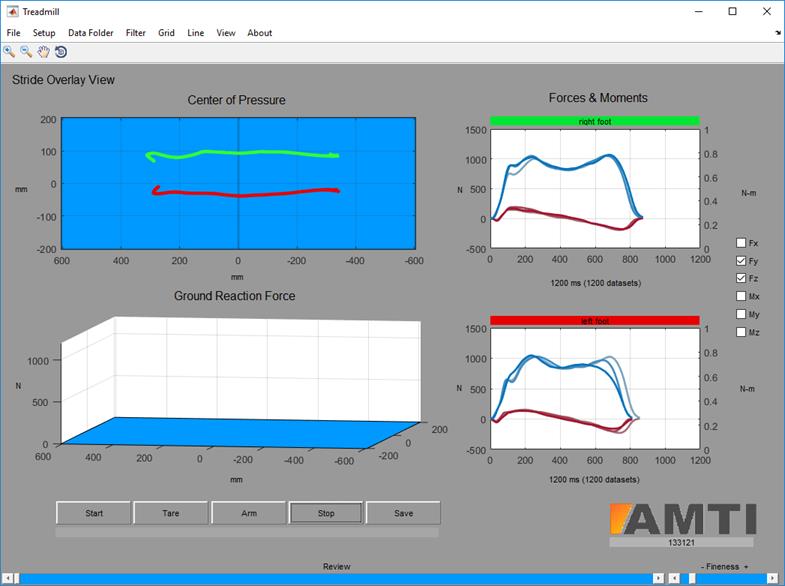
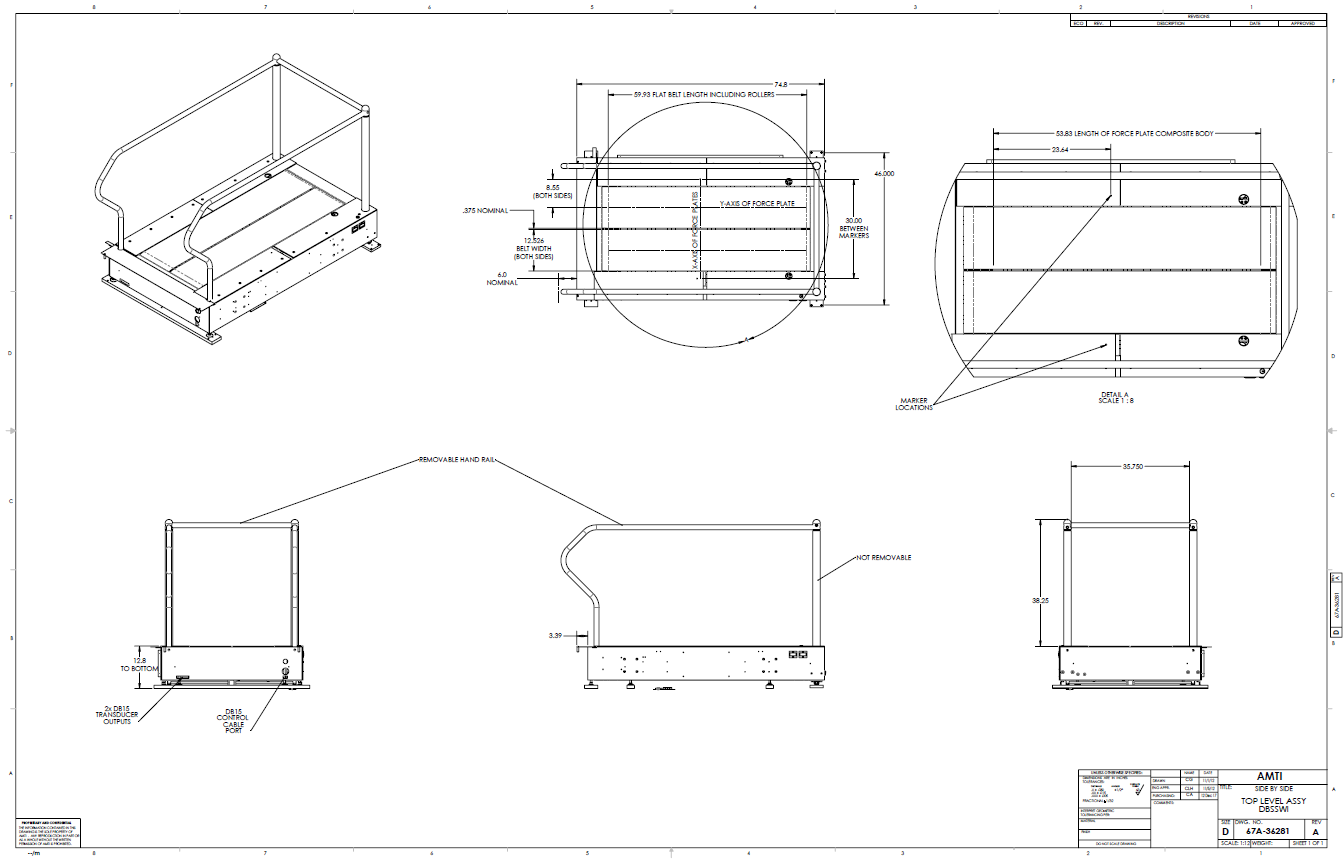
The AMTI Side-by-Side Instrumented Treadmill places two independent force-measuring belts next to each other, allowing each foot to walk on its own instrumented surface simultaneously. With six-component force platforms sampling at up to 10,000 Hz, this system captures the precise ground reaction forces needed for bilateral gait analysis, balance research, and rehabilitation science where left-right symmetry comparisons are essential.
What is the AMTI Side-by-Side Instrumented Treadmill?
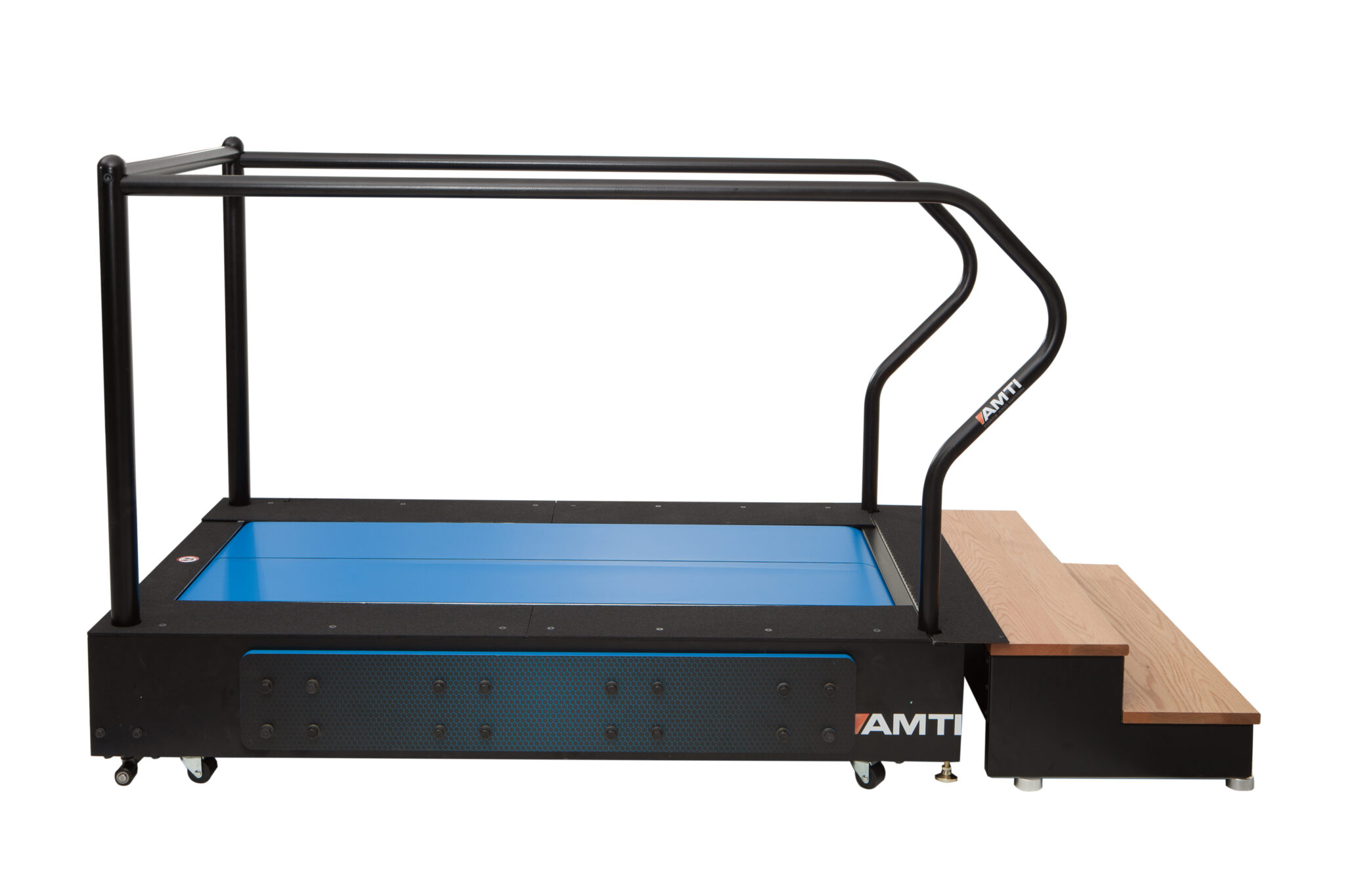
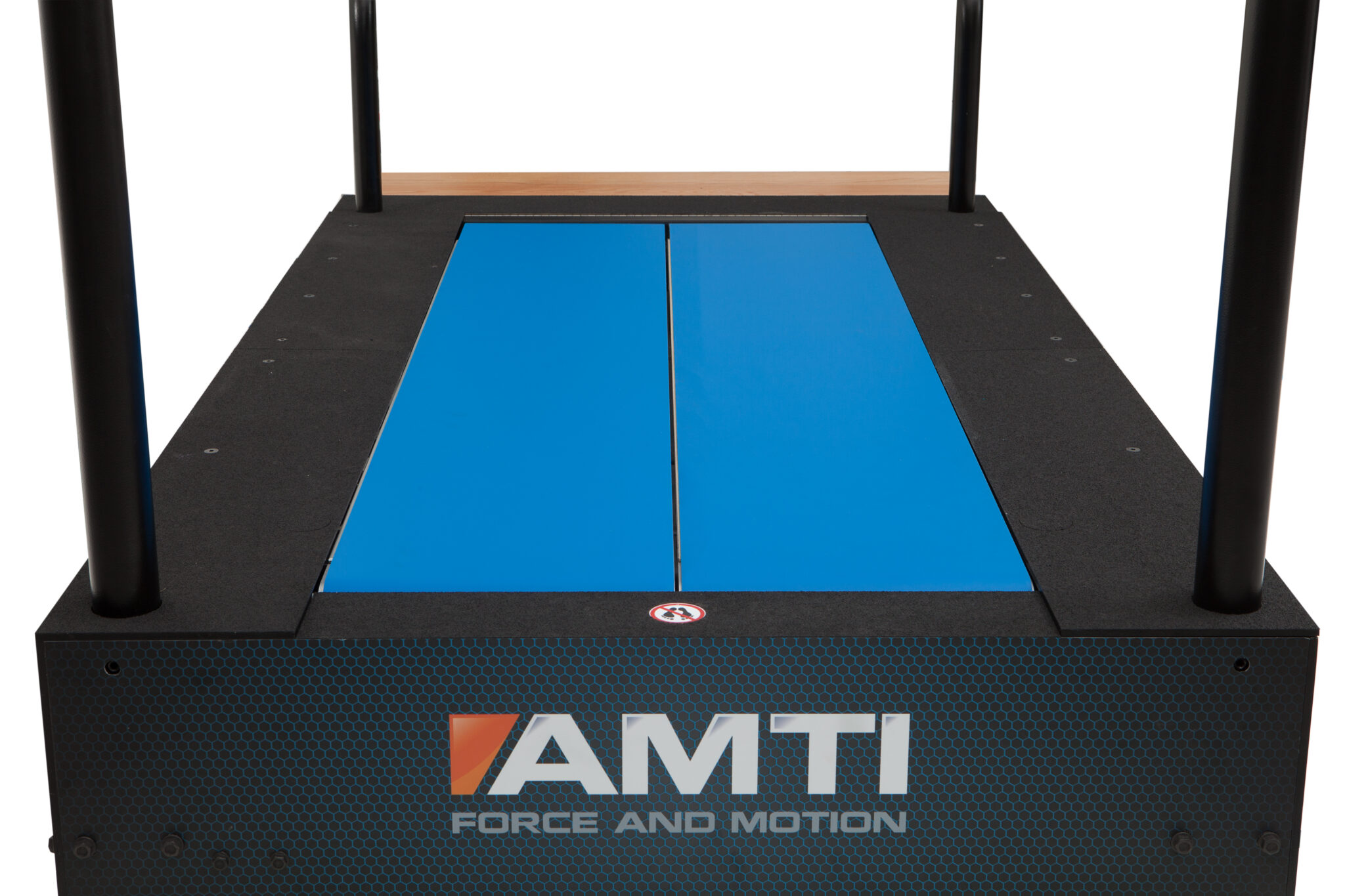
The AMTI Side-by-Side Instrumented Treadmill is a split-belt force-sensing treadmill designed for gait research requiring independent left and right belt control. Featuring two belts separated by a 7 mm longitudinal gap, each belt can run at a completely independent speed, making this system the gold standard for stroke rehabilitation research, motor adaptation studies, and asymmetric gait protocols.
A six-axis AMTI force plate is integrated under each belt, measuring all three forces (Fx, Fy, Fz) and moments (Mx, My, Mz) generated by the subject. The design supports speeds up to 20 km/h and inclinations up to 25% grade, with a reinforced frame delivering a 120 Hz structural natural frequency for clean, artifact-free data.
Key Features
- Independent Belt Speed Control: Each belt can run at a different speed, enabling split-belt protocols for stroke rehabilitation, gait retraining, and locomotor adaptation studies.
- Dual Six-Axis Force Platforms: Each belt is fully supported by an integrated AMTI force plate (Fx, Fy, Fz, Mx, My, Mz), with 8800 N vertical and 4500 N horizontal capacity per plate.
- Reversible Belts with Inclination: Supports 0–25% grade (14°) inclination with reversible belt direction for uphill and downhill testing under asymmetric conditions.
- Ships Fully Assembled: Arrives complete with all software pre-loaded on an AMTI-supplied PC, ready for immediate use in your laboratory or motion capture suite.
- Above Ground or In-Floor Installation: Available as a standard above-ground model with access stairs, or as a recessed pit model flush with the floor for seamless capture volume integration.
- USB Digital Integration: Simple plug-and-play USB connection compatible with all major motion capture software platforms.
- Continuous Multi-Stride Data Collection: Collect data across multiple footfalls in rapid succession, enabling efficient and comprehensive gait datasets even in small lab spaces.
.webp)

Technical Specifications
| Force Plate Type | Dual integrated six-axis force plates |
| Vertical Force Capacity | 8800 N (2000 lb) |
| Horizontal Force Capacity | 4500 N (1000 lb) |
| Force Plate Natural Frequency | 300 Hz (Fx, Fy) |
| Linearity | ±0.2% full scale output |
| Hysteresis | ±0.2% full scale output |
| Working Surface (Each Belt) | 152 × 32 cm (60" × 13") |
| Total Working Surface | 152 × 64 cm (60" × 26") |
| Belt Gap | 7 mm between belts |
| Belt Speed | 0–20 km/h (0–12 mph), independently controlled per belt |
| Inclination | 0–25% grade (0–14°) |
| Belt Direction | Reversible (forward and reverse) |
| Non-Inclined Belt Height | 30 cm (12") |
| Overall Dimensions | 203 × 114 × 128 cm (80" × 45" × 50") |
| Weight | 400 kg (880 lb) |
| Structure Natural Frequency | 120 Hz |
| Power Requirements | 208 VAC, 3-phase, WYE connected, 20-Amp twist lock receptacle |
| Data Interface | Digital USB |
| Software | Pre-loaded on AMTI-supplied PC |
| Installation Options | Above ground or in-floor (pit) |
Applications
- Stroke rehabilitation and split-belt gait retraining
- Motor adaptation and locomotor learning studies
- Asymmetric gait analysis
- Clinical gait assessment with differential limb loading
- Running and walking biomechanics research
- Prosthetics and orthotics evaluation under variable loading conditions
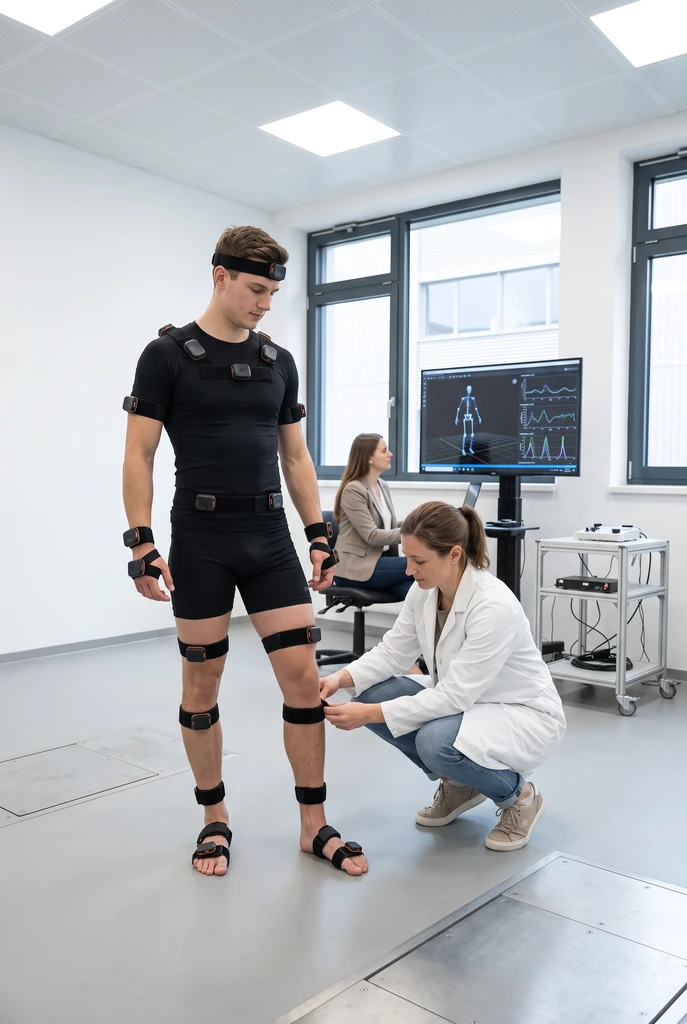
Sports and Performance research
Explore All ProductsMarkerless Motion Tracking
Explore All ProductsSide-by-Side Instrumented Treadmill Publications
AMTI's side-by-side split-belt treadmill is extensively cited in stroke rehabilitation and motor adaptation research. Published work includes split-belt locomotor adaptation studies, post-stroke gait asymmetry correction, neuroplasticity in locomotion, and bilateral ground reaction force analysis during asymmetric walking.
What is the AMTI Side-by-Side Instrumented Treadmill and what is it used for?
The AMTI Side-by-Side Instrumented Treadmill places two independent force-measuring belts next to each other, allowing simultaneous measurement of each foot's ground reaction forces during walking or running. It is used for gait analysis, rehabilitation research, and sports biomechanics.
What research applications is the AMTI Side-by-Side Instrumented Treadmill suited for?
The AMTI Side-by-Side Instrumented Treadmill is suited for bilateral gait analysis, balance assessment, rehabilitation research, fall prevention studies, and athletic performance analysis requiring independent left/right foot force data at natural walking speeds.
What force components does the AMTI Side-by-Side Instrumented Treadmill measure?
Each belt of the AMTI Side-by-Side Instrumented Treadmill measures all six force and moment components (Fx, Fy, Fz, Mx, My, Mz) simultaneously and independently, enabling complete bilateral ground reaction force analysis during treadmill locomotion.
Is the AMTI Side-by-Side Instrumented Treadmill available in Israel with local support?
Yes. NBT Ltd is the distributor of AMTI instrumented treadmills in Israel. Our team provides installation, configuration, application training, and ongoing technical support for the complete AMTI biomechanics product line.
What speed range does the AMTI Side-by-Side Instrumented Treadmill support?
The AMTI Side-by-Side Instrumented Treadmill supports a wide speed range to accommodate both slow therapeutic walking and faster running speeds, making it versatile for clinical rehabilitation and sports performance research applications.
Still have questions?
Related Products:
Request for Quote
Please fill in as much details as possible and we will take care of your request as soon as possible
Request for Quote
Please fill in as much details as possible and we will take care of your request as soon as possible