.svg)
A Pocket Laboratory for Functional Neuroimaging: Validating WearCAAT with Mobile EEG and fNIRS
Rokowski and colleagues (2026) validate WearCAAT, a cross-platform mobile app that turns a phone or tablet into a pocket laboratory for neuroimaging, running cognitive tasks while synchronising EEG and fNIRS data over Lab Streaming Layer.
A new instrument validation study published in JMIR Neurotechnology takes a step toward portable cognitive neuroscience. Rokowski, Izzetoglu, Gomero and Holtzer introduce WearCAAT, the Wearable Cognitive Assessment and Augmentation Toolkit, a cross-platform mobile application that runs a battery of established neurocognitive tasks on consumer iOS and Android devices while streaming time-stamped behavioural events to external EEG and fNIRS systems through the Lab Streaming Layer (LSL).
The motivation will be familiar to anyone working in mobile brain-and-body imaging. Smartphones and tablets are everywhere, but most existing task batteries either lack neuroimaging integration or require deep engineering effort to extend. WearCAAT is built as a Bring-Your-Own-Device platform so that researchers without app-development expertise can deploy validated cognitive paradigms in clinics, homes, and community settings.
Study design
The team enrolled 57 healthy young adults (ages 18 to 30) from Villanova University. Each participant completed an abbreviated battery of 11 cognitive tasks built into WearCAAT: psychomotor vigilance, visual oddball, go/no-go, N-back, Stroop, Flanker, Wisconsin card sorting, verbal memory recognition, Bluegrass, and resting-state recordings. Each task lasted 4 minutes, with a 30-second rest between tasks.
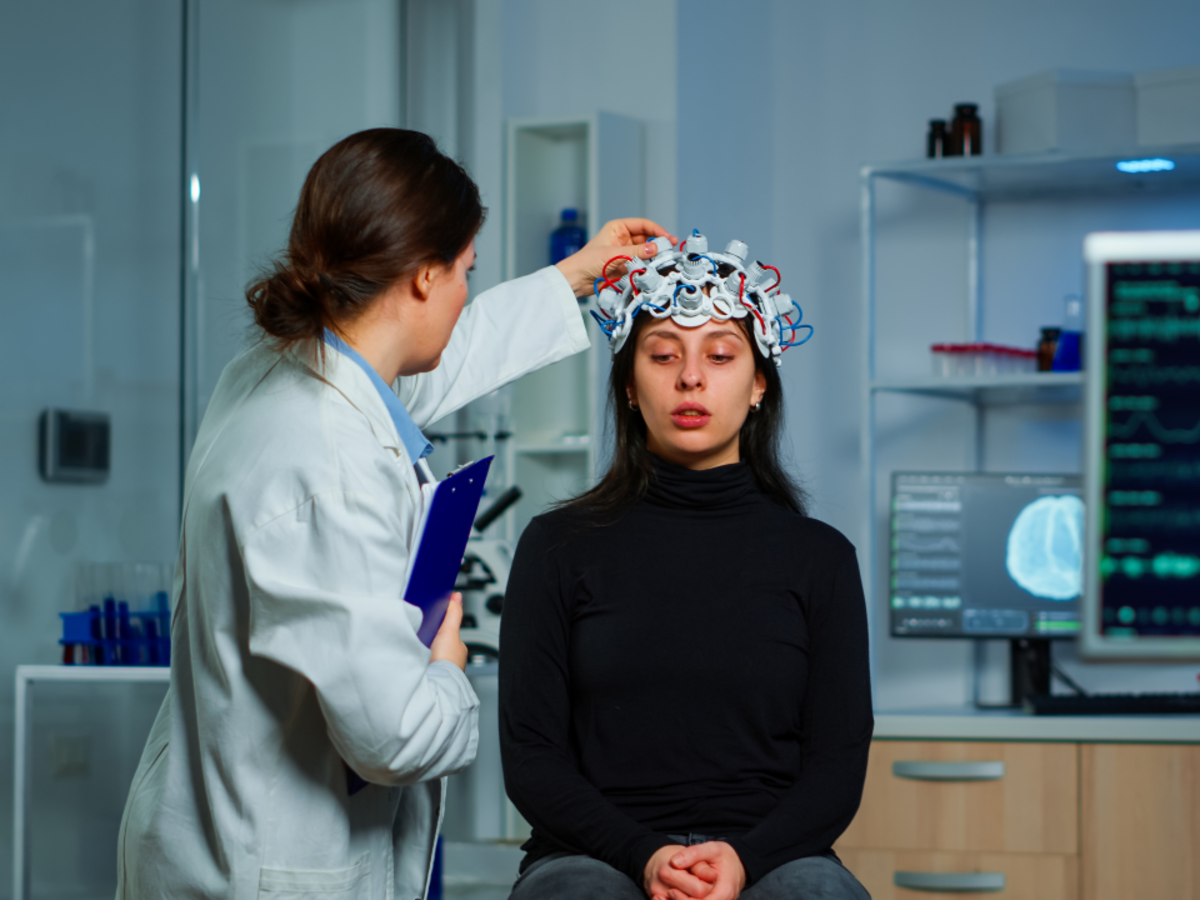
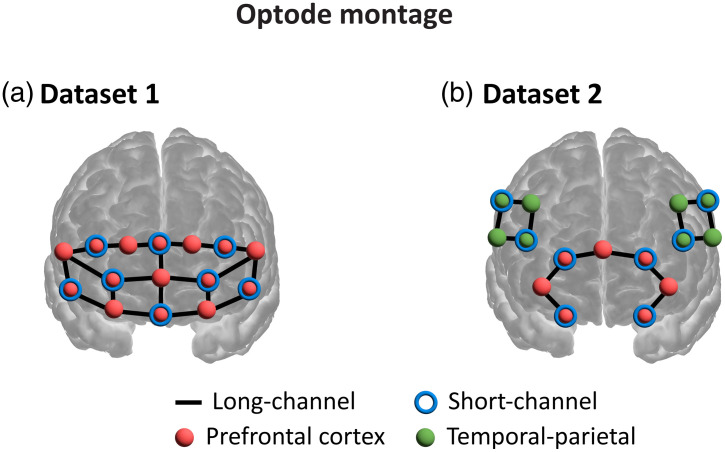
Throughout the session, participants wore a hybrid wireless multimodal cap combining a NIRx NIRSport2 fNIRS system (51 channels: 43 long and 8 short separations) with a Smarting mBrainTrain 32-channel wireless EEG, configured according to the modified 10-20 layout provided by NIRx. fNIRS and EEG signals, together with task events from the iPad, were streamed wirelessly into a single LSL recording session and stored as XDF files, giving one synchronised multimodal dataset.
The validation paradigm: visual oddball
The authors focused their analysis on the visual oddball task because it has well-documented behavioural, electrophysiological and hemodynamic signatures. Participants tapped one of two on-screen buttons in response to frequent standard ("OOOOO") or infrequent target ("XXXXX") stimuli. The team set three predictions: longer response times to targets than standards; a larger P300 ERP component to targets over midline regions; and a positive HbO increase in the right prefrontal cortex on target trials.
Results
All three predictions were borne out:
- Behaviour: mean response time to target stimuli was 718 ms (SD 148) versus 542 ms (SD 122) for standards, a highly significant difference (Wilcoxon Z = 6.33, P < .001, r = 0.87). Accuracy was high for both conditions.
- EEG: a clear P300 deflection appeared over Cz (peak ~356 ms, ~3.54 μV for targets) and Pz (peak ~296 ms, ~2.72 μV for targets), substantially larger than standard-trial amplitudes.
- fNIRS: average HbO in the right prefrontal cortex showed a typical hemodynamic response peaking around 9 seconds after target onset, with no comparable rise for standard trials.
On the usability side: no app crashes, no data loss, no participant dropouts, and no usability complaints across the full battery.
What the study shows
The paper demonstrates the technical validity of a synchronised mobile EEG and fNIRS workflow running on commercial hardware. That puts cognitive assessment in clinics, homes and community settings rather than only in a shielded lab room. The authors note that WearCAAT will be made available through the Google Play and Apple App stores, with further task validation and older-adult comparisons planned as next steps.
The NIRSport2 system used in this study is part of NIRx Medical Technologies' fNIRS portfolio, built for portable, wearable neuroimaging and for concurrent EEG recording of the kind reported here.
Citation: Rokowski P, Izzetoglu M, Gomero L, Holtzer R. A Pocket Laboratory for Functional Neuroimaging Research Using Mobile Visual Oddball, Multimodal Electroencephalography, and Functional Near-Infrared Spectroscopy Imaging: Instrument Validation Study. JMIR Neurotechnology 2026;5:e78217. doi: 10.2196/78217

NEED MORE INFORMATION ABOUT THIS PRODUCT?
Send us your emailRecent Blog Posts

.svg)

Advance Your Research
Contact NBT today for expert consultation on your neuroscience instrumentation needs.