.svg)
The Microfluidic Pressure Controller Landscape in 2026
Dolomite Microfluidics was discontinued in 2026. A look at the pressure-based flow controllers still on the market and how to choose between them.
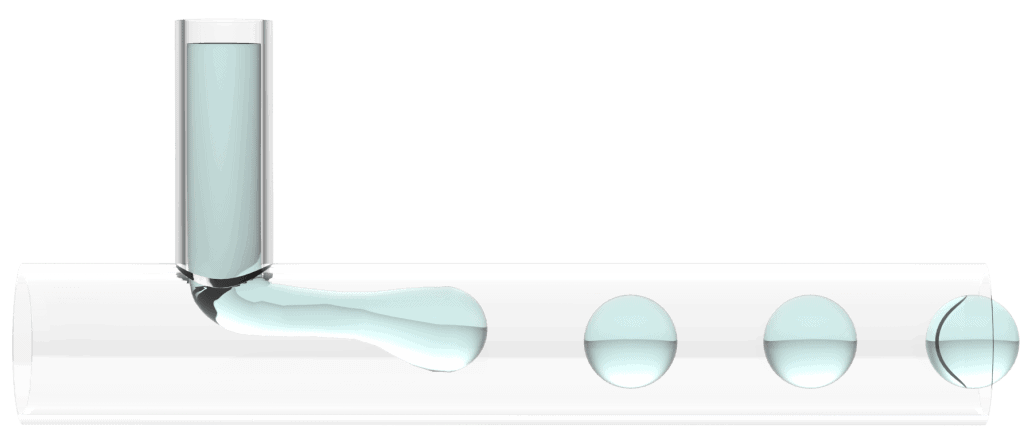
In March 2026, Unchained Labs announced the discontinuation of the entire Dolomite Microfluidics product line. Hundreds of research teams worldwide run Dolomite instruments (the Mitos P-Pump, Quad Pump, µEncapsulator, and Telos platform) and they are now left with a practical question: what now?
This is an assessment of the microfluidic pressure controller market as it stands, written for researchers who have to decide what to do next.
What Happened to Dolomite Microfluidics?
Dolomite Microfluidics was founded in Cambridge, UK, as part of Blacktrace Holdings. Unchained Labs acquired Blacktrace in 2023, gaining control of both Dolomite Microfluidics and Dolomite Bio. Dolomite Bio continues to operate. The microfluidics instrumentation division was shut down, and spare parts, consumables, and technical support will become progressively unavailable over the next two years.
The Pressure Controller Landscape in 2026
With Dolomite gone, the two principal manufacturers of research-grade microfluidic pressure controllers are Elveflow and Fluigent, both based in France. Pressure-based flow control has become the preferred method for high-precision microfluidic experiments, largely replacing syringe pumps where flow stability, fast response and continuous operation are needed.
Five Specifications That Determine Experimental Success
1. Flow Stability
Flow stability is the single most important parameter for reproducibility, expressed as a percentage of full scale (% FS). Flow variations as small as 0.1% produce measurable differences in droplet diameter. For single-cell encapsulation or nanoparticle synthesis, the target is stability below 0.01% FS. The OB1 MK4 pressure controller achieves 0.005% FS - currently the best published value for a commercial microfluidic controller.
2. Number of Independent Channels
Many experiments require simultaneous control of multiple fluid lines. The Mitos P-Pump offered 2 independent channels. The OB1 MK4 provides up to 4 channels, each independently configurable for pressure or vacuum.
3. Response Time
Switching between reagents, modulating droplet size in real time, running sequential injections: all of these come down to response time. Syringe pumps typically take seconds to minutes. Pressure controllers operate in the 10 to 100 ms range.
4. Sensor Integration and Closed-Loop Control
A pressure controller sets pressure; a flow sensor measures the resulting flow rate. Closed-loop control delivers the highest experimental precision. When controller and sensors are designed as one system, the feedback loop is built in, which cuts setup complexity and error.
5. Software and Automation
Modern microfluidic research increasingly requires automated protocols. An open SDK (Python, LabVIEW, MATLAB, C++) lets you build the workflow you need, integrate with microscopes or spectrometers, and repeat a protocol exactly.
For Researchers Currently Using Dolomite Instruments
If your lab operates a Mitos P-Pump, µEncapsulator, or Telos system, moving to a different platform does not mean replacing your entire setup. Dolomite glass chips use standard microfluidic connectors and work with any pressure-based controller including the Elveflow OB1. Most transitions take a few weeks, including delivery, setup, and protocol validation. For many researchers the move is also a performance upgrade.
Written and reviewed by Imen Bourassine, Data Science & AI Engineering, Elvesys/Elveflow. Originally published on elveflow.com.

NEED MORE INFORMATION ABOUT THIS PRODUCT?
Send us your emailRecent Blog Posts


.svg)
_quality(80).webp)
Advance Your Research
Contact NBT today for expert consultation on your neuroscience instrumentation needs.