.svg)
Wearables That See PTSD Coming: Circadian Instability After Mass Trauma
A new study in Translational Psychiatry from the University of Haifa finds that circadian instability, measured passively with wearables in the months after the October 7th Supernova festival attack, predicts which survivors go on to develop clinically significant PTSD.
.jpg)

A new study published in Translational Psychiatry by Noa Magal, Ophir Netzer, Eden Eldar, Noga Mandelblit, Nitsan Sagi, Michal Oren, Roy Salomon and Roee Admon asks whether the body's daily rhythms, measured passively in real life, can predict who will still be struggling with post-traumatic symptoms months later.
The team works at the School of Psychological Sciences and the Integrated Brain and Behavior Research Center at the University of Haifa. They built the study around the October 7th, 2023 terror attack on the Supernova music festival in Israel, where survivors witnessed life-threatening trauma at a scale with few precedents in the modern PTSD literature.
Study design
The researchers followed 211 survivors of the Supernova festival attack and a matched comparison group of 113 participants for a full month, three to six months after the event. Nobody came into a lab. Every measurement came from consumer-grade wearable sensors, which tracked continuously:
- Sleep-wake patterns across days and nights
- Physical activity levels and timing
- Heart rate 24 hours a day
PTSD symptom severity was assessed with the Posttraumatic Checklist for DSM-5 (PCL-5) at three time points: before the recording month, immediately after, and again at follow-up eight to eleven months after the attack.
Quantifying circadian instability
The team computed two indices of how stable each participant's daily rhythms were. Behaviourally, the interday stability (IS) index of the sleep-wake cycle, which is how consistent a person's daily sleep pattern is from one day to the next. Physiologically, cosinor models fitted to each participant's heart-rate data, and from those the variance of the daily HR phase, meaning the timing of the daily heart-rate peak.
Results
Three findings stood out:
- Survivors showed measurable circadian disruption. Compared with controls, trauma survivors had less stable day-to-day sleep-wake cycles, greater variability in the timing of their daily heart-rate peaks, and a higher rhythm-adjusted resting heart rate.
- Circadian instability predicted later PTSD. Within the survivor group, those with more irregular sleep rhythms and elevated heart rate three to six months after the event were significantly more likely to present with clinically significant PTSD at the 8 to 11 month follow-up.
- The effect held after controlling for early severity. Sleep instability remained a predictor of follow-up PTSD even after accounting for initial PTSD symptom severity, so the circadian measures carry information the symptom questionnaires do not.
54% of trauma survivors in this cohort still exceeded the clinical threshold for PTSD nearly a year after the attack.
The clinical problem
Most people who live through a major trauma recover. A fraction develop chronic symptoms, and there is no scalable way to tell the two groups apart early. Self-report questionnaires need the person to seek care and to report their own state accurately, and in the aftermath of severe trauma neither of those holds.
What this study points at is that the wearables many people already own, fitness trackers, smartwatches, sleep monitors, may carry a passive and continuous measure of who is at greatest risk. Sleep-wake regularity and circadian heart-rate dynamics come out of existing devices with no input at all from the user. That makes them a candidate for early screening in the months after a traumatic event, when support and intervention would do the most good.
The authors go further and treat circadian regulation as a therapeutic target in its own right. If rhythm stability is part of how recovery works and not only a sign of it, then light therapy, sleep stabilisation and behavioural scheduling could be delivered early and at scale through the same wearable platforms used for the monitoring.
Measuring outside the lab
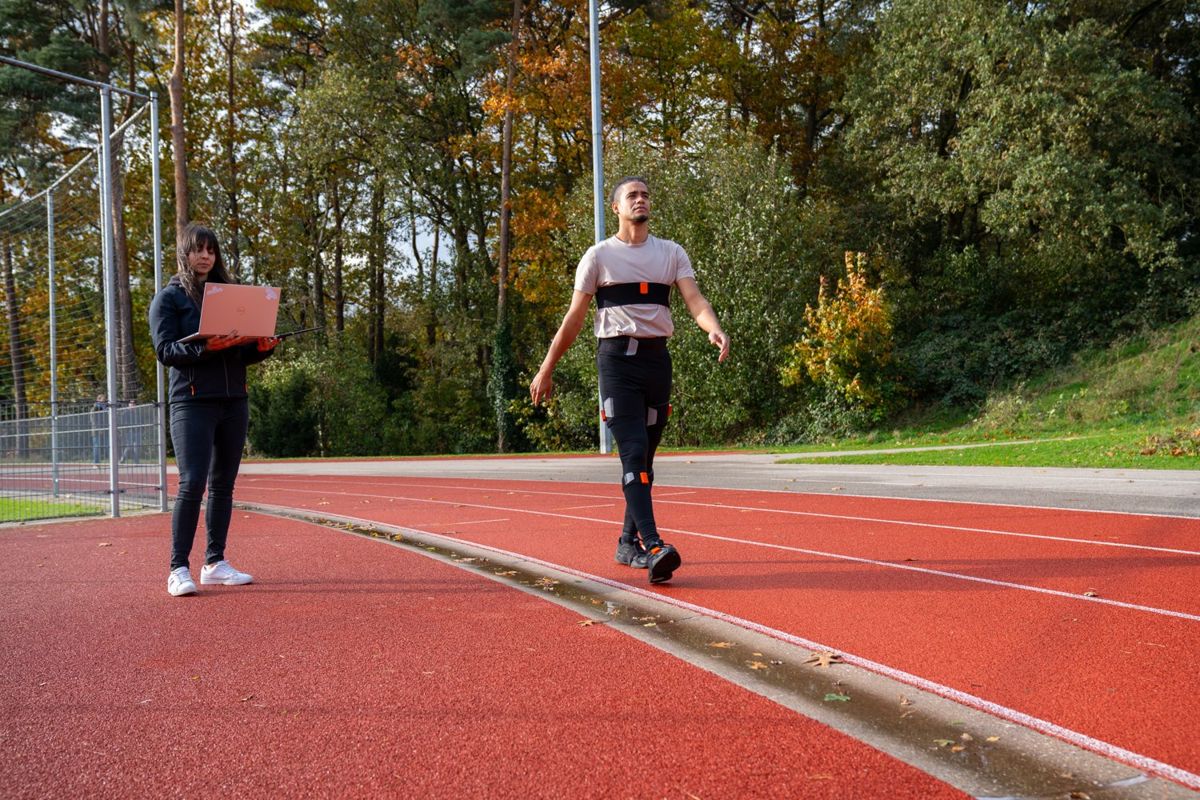
For the wider life-sciences community the paper is also a demonstration of how much comes out of ecologically valid measurement. Magal et al. collected no lab data. Every signal came from participants going about their daily lives. Translational psychiatry, biomechanics and physiology have all been limited by the gap between a controlled lab paradigm and how the body behaves in the world, and this is one way to close it.
Citation: Magal N, Netzer O, Eldar E, Mandelblit N, Sagi N, Oren M, Salomon R, Admon R. Circadian instability predicts PTSD symptom severity following mass trauma. Translational Psychiatry. Preprint: 10.1101/2025.03.19.25324240

NEED MORE INFORMATION ABOUT THIS PRODUCT?
Send us your emailRecent Blog Posts

.svg)

Advance Your Research
Contact NBT today for expert consultation on your neuroscience instrumentation needs.