.svg)
The Right to Walk: Motion Capture in Clinical Rehabilitation at the Centre des Massues
A rehabilitation centre in Lyon runs a Qualisys gait lab alongside an immersive virtual environment, and uses both daily for treatment, rehabilitation and injury prevention. The team also uses the data to argue for routine musculoskeletal check-ups.
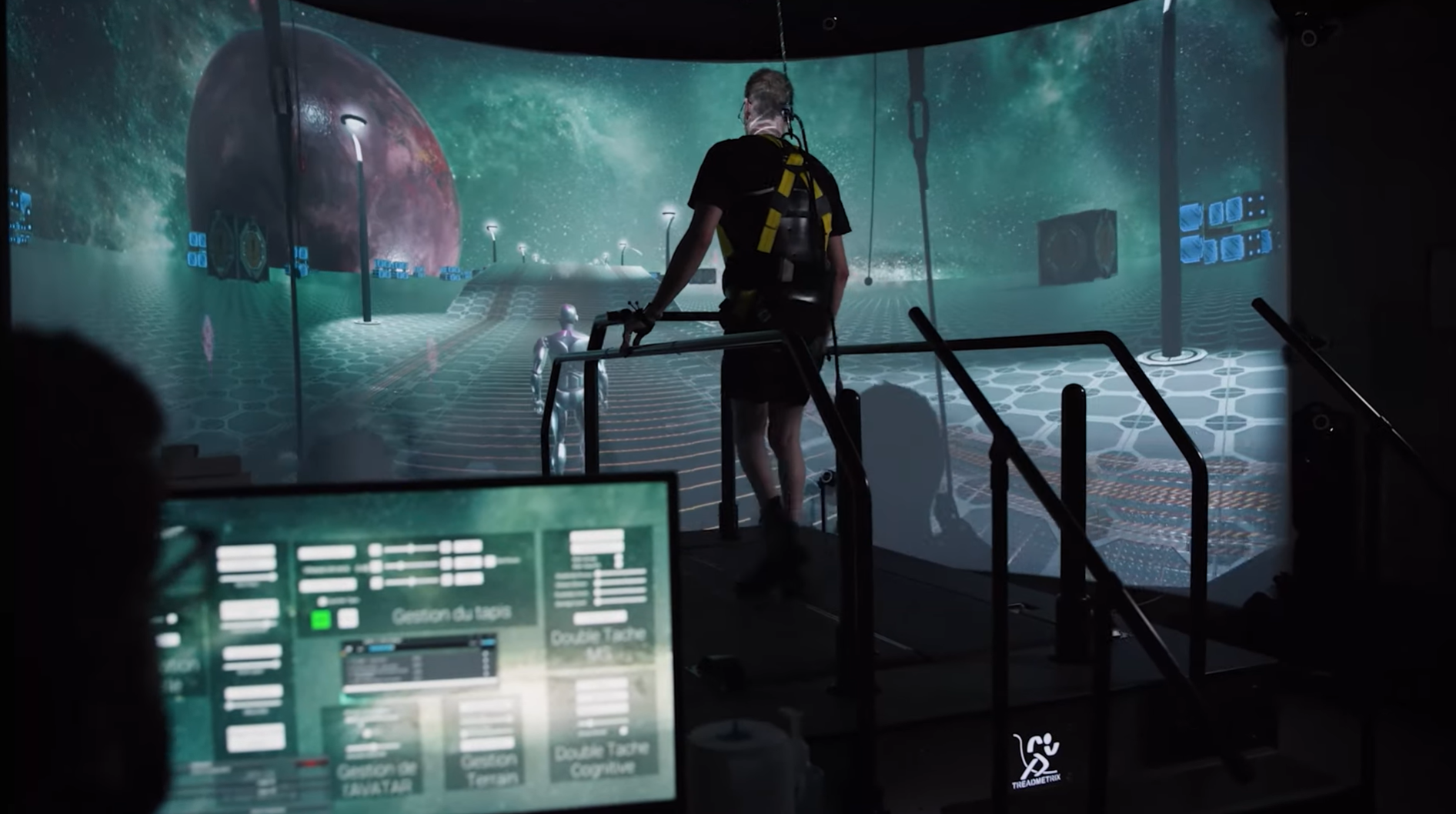
Walking looks simple. It is not. It depends on an intricate interplay of systems, and the smallest disruption to any of them (through accident, illness or disability) can turn mobility into a daily obstacle. In the European Union, roughly two in five people live with physical limitations that affect their mobility and, in turn, their ability to work and take part in community life.
A recent customer story on the Qualisys site looks at how one rehabilitation centre is using motion capture to change that picture.

Where innovation meets rehabilitation
The Centre des Massues, part of La Croix Rouge Française in Lyon, is a leading rehabilitation centre for patients with musculoskeletal conditions. A Qualisys motion capture system is a core part of its clinical work, used daily to support treatment, rehabilitation and injury prevention.
The centre's setup includes a gait lab built around Miqus cameras, a separate immersive lab also using Miqus cameras, and additional mobile cameras for flexible use. In the immersive lab, patients move through virtual environments that replicate real-life scenarios, which lets the team design life-like conditions and collect biomechanical data that reflects how someone actually moves outside the clinic.
What the clinicians say
Hovannes Agopyan, PhD, a biomechanics engineer, leads the work in the immersive lab. "Working with gait labs is really important when it comes to analyzing movement and detecting impairments", he notes in the article. He also singles out responsiveness as the thing that matters most in a supplier relationship - being able to get an answer when a question or a problem comes up mid-study.
Dr Emmanuelle Chaleat-Valayer, a medical doctor with a PhD at the centre, frames the goal in broader terms: the point of the treatment and care is improved social participation. "Mobility is one of the levers, not the only one, but one of them, to promote social participation," she says.
Her second point is arguably the more interesting one for the field. She argues these tools should not be reserved for rehabilitation after something has already gone wrong: "I think we must now integrate these tools into prevention, using such technologies in preventive care." The centre advocates for regular musculoskeletal check-ups to support long-term health - essentially treating gait analysis the way we already treat blood pressure screening.
Validation and partnership
According to Nicolas Long of Trinoma, Qualisys' partner on the project, the system combines established measurement methods with rigorous validation standards. Close collaboration with the gait labs themselves is what makes impairment detection reliable in practice.
For over 30 years Qualisys motion capture has supported the clinical community in research and diagnostics, and the pace of development in the technology has opened new routes in treatment, rehabilitation and injury prevention. Despite decades of research, plenty of pieces are still missing in our understanding of the biomechanics and neurology of human movement, which is exactly why labs like this one matter.
NBT supplies Qualisys motion capture systems in Israel, including Miqus and Arqus cameras, QTM analysis modules and clinical gait workflows. Get in touch to discuss a gait or movement lab.
Source: Qualisys Stories.
NEED MORE INFORMATION ABOUT THIS PRODUCT?
Send us your emailRecent Blog Posts

.svg)

Advance Your Research
Contact NBT today for expert consultation on your neuroscience instrumentation needs.