.svg)
The Power of Portability: Using fNIRS in Naturalistic Settings
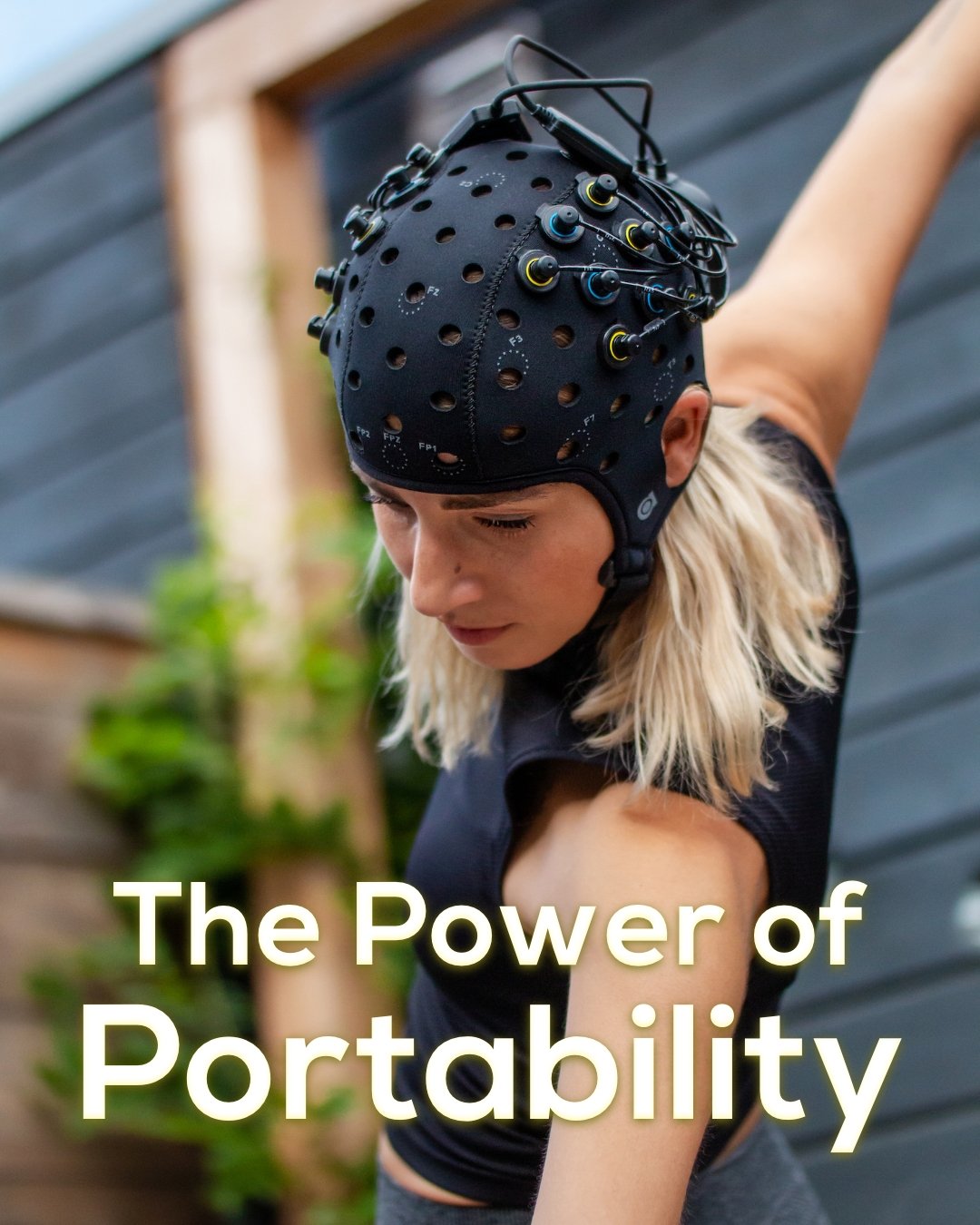
Neuroscience is moving out of the lab. fNIRS is portable, easy to run and holds up under movement, which makes it workable in education, sports, clinics and daily life.
Why Naturalistic Research Matters
Conducting neuroscience studies in real-world environments is becoming increasingly important, as it can give novel and relevant insights into human behavior and neural mechanisms in daily life. Compared to other neuroimaging techniques, fNIRS comes with technical advantages (portability, ease of use, and insensitivity to motion artifacts) making it ideal for naturalistic settings outside the lab.
Setting 1: Education and Neural Development
When investigating (neural) development of toddlers, children, and adolescents, research in naturalistic settings can lead to novel insights and enhanced relevance regarding real-world behavior. Schools, playgrounds, and family environments present unique opportunities to study learning and development in context. fNIRS has been successfully used to study classroom learning, social interactions, and cognitive development in children without the constraints of a laboratory environment.
Setting 2: Sports and Performance
Athletes and coaches benefit from understanding neural mechanisms during actual training and competition, not just laboratory simulations. Portable fNIRS systems like the Artinis Brite allow researchers to measure prefrontal and motor cortex activity during exercise and sport-specific tasks, providing insights into cognitive load, decision-making under fatigue, and skill acquisition in ecologically valid environments.
Setting 3: Clinical and Everyday Applications
In clinical neuroscience, naturalistic studies allow researchers to observe patient behavior and neural function in the environments they actually inhabit - home, workplace, and community settings. This is particularly valuable for conditions such as ADHD, mild cognitive impairment, and Parkinson’s Disease, where lab-based assessments may not capture real-world functional deficits.
Artinis Solutions for Naturalistic Research
Artinis offers a range of portable, wireless fNIRS devices perfect for out-of-the-lab research:
- Brite family: Multi-channel systems measuring up to 27 channels in a portable, wearable format, ideal for comprehensive brain coverage in the field
- Brite Frontal: Dedicated headband for prefrontal measurements with minimal setup time
- OctaMon/PortaMon/PortaLite: Compact, single-location devices for targeted muscle or brain measurements during exercise or daily activities
All Artinis systems support wireless data acquisition and are designed for use with any participant population, including children, elderly, and clinical groups.
Source: Artinis blog.

Shall we chat about this topic?
Contact usRecent Blog Posts

.svg)


Advance Your Research
Contact NBT today for expert consultation on your neuroscience instrumentation needs.