.svg)
.svg)
RotaRod for Rats
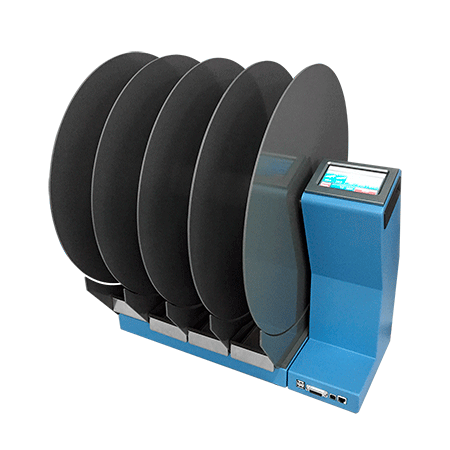
The Ugo Basile RotaRod for Rats is the gold-standard instrument for assessing motor coordination, balance, and neuromuscular function in laboratory rats. Building on the same platform as the RotaRod for Mice, it features four independent test lanes sized for rats, and supports constant, accelerating, reverse ramp, and custom speed protocols, delivering highly reproducible motor performance data across models of neurological disease, pain, and pharmacological intervention.
What is the RotaRod for Rats?
The Ugo Basile RotaRod for Rats (catalog number 47750) is the original gold-standard instrument for assessing motor coordination, balance, and neuromuscular function in laboratory rats. Building on the same proven design as the mouse version, based on the Dunham and Miya method (1957), the rat RotaRod accommodates four animals simultaneously across four wider lanes, with a larger 6 cm rod diameter scaled for rat anatomy.
The device measures latency to fall from the rotating rod, providing an objective, reproducible endpoint for motor performance. All rotation modes (constant, accelerating ramp, reverse ramp, custom ramp, and rocking) are programmable via the included XPad PC software, and data is exported directly to CSV.
Key Features
- Four Simultaneous Test Lanes: Four rats can be tested in a single session, each in its own lane, maximising experimental throughput while maintaining independent data capture.
- 6 cm Rod Diameter: Scaled for rat anatomy, the larger diameter ensures natural grip and gait during testing, producing ecologically valid motor performance data.
- 30 cm Fall Height: Greater fall distance compared to the mouse version accommodates the larger body size of rats while keeping the system safe.
- Speed Range 3–80 RPM: Full-spectrum speed control in 1 RPM increments supports both slow constant-speed trials and rapid accelerating ramp protocols.
- Multiple Rotation Modes: Constant, ramp, reverse ramp, custom ramp, and rocking modes enable diverse experimental designs without additional equipment.
- Touch-Screen Interface: The 4.3-inch touch screen allows glove-compatible on-device protocol control.
- XPad PC Software & CSV Export: Custom ramp protocols are programmed via XPad, with direct USB export to CSV for downstream statistical analysis.
- Optional Accessories: Rod enlargers and the Complex Wheel add-on extend the experimental flexibility of the platform.
.webp)

Research Applications
The RotaRod for Rats is the reference standard for motor function assessment in rat models of neurological disease, drug toxicity, and rehabilitation. Its larger lane width and rod diameter make it ideal for studies requiring the greater body mass and strength of rats, and its compatibility with the full range of XPad ramp protocols allows researchers to tailor challenge intensity to their specific model.
- Neurological Disease Models: Standard endpoint in rat models of Parkinson’s disease, Huntington’s disease, multiple sclerosis, cerebellar ataxia, and ALS, providing longitudinal tracking of motor decline or therapeutic rescue.
- Pharmacological Screening: Widely used to detect CNS-active compounds that produce motor sedation or ataxia as side effects, making it a critical safety assessment in preclinical drug development.
- Spinal Cord Injury: Motor recovery after spinal cord contusion or hemisection is commonly tracked using the rat RotaRod as a sensitive, objective endpoint.
- Neurotoxicology: Acute and chronic exposure to neurotoxic substances (ethanol, organophosphates, heavy metals) produces measurable rotarod impairment, enabling dose–response characterisation.
- Neurotrauma & Stroke: Recovery of forelimb and hindlimb coordination after cortical lesions or ischaemic stroke is tracked across rehabilitation timecourses.
- Motor Learning: Repeated accelerating-ramp trials over sessions reveal inter-session motor learning rates, distinguishing baseline performance from training-dependent cortical plasticity.

Technical Specifications
| Catalog Number | 47750 |
| Rod Diameter | 6 cm |
| Rod Width (Lane Width) | 8.7 cm |
| Number of Lanes | 4 (rats) |
| Fall Height | 30 cm |
| Speed Range | 3–80 RPM (1 RPM increments) |
| Rotation Modes | Constant, ramp, reverse ramp, custom ramp, rocking |
| Touch Screen | 4.3 inches |
| Data Export | USB to CSV |
| Connectivity | TTL input/output |
| Power Requirement | 100–240 VAC, 50–60 Hz, 40 W max |
| Sound Level | <60 dB(A) |
| Operating Temperature | 10–40°C |
| Total Weight | 15 kg |
| Dimensions (W × D × H) | 55 × 46 × 57 cm |
| Software Included | XPad PC software |
| Warranty | 12 months + 12 months upon registration |
Applications
- Motor coordination and balance assessment in rats
- Neurological disease model phenotyping (Parkinson’s, MS, ALS, Huntington’s, ataxia)
- Analgesic and sedative drug screening
- Neurotoxicology endpoints
- Spinal cord injury and stroke motor recovery studies
- Motor learning assessment across repeated trials

Motor Functions
Explore All ProductsAnalgesia
Explore All ProductsRotaRod Publications
The RotaRod test was first described by Dunham & Miya (1957) and later refined by Jones & Roberts (1968) for accelerating protocols. It remains one of the most widely used assessments of motor coordination and balance in rodent models of neurological disease, pain, aging, and drug action.
What is the RotaRod for Rats and what is it used for?
The Ugo Basile RotaRod for Rats (Cat. 47750) measures how long a rat remains on a rotating rod before falling, providing an objective, quantitative endpoint for motor coordination and balance. Based on the Dunham and Miya method, it is used in neurological disease models (Parkinson's, ALS, multiple sclerosis), pain research, drug screening, neurotrauma recovery, and transgenic rat phenotyping.
What rotation modes does the RotaRod for Rats support?
The RotaRod supports five rotation modes: constant speed, accelerating ramp, reverse ramp, custom ramp, and rocking (back-and-forth). All modes are programmable via the included XPad PC software, allowing researchers to design complex, reproducible protocols.
How many rats can be tested simultaneously?
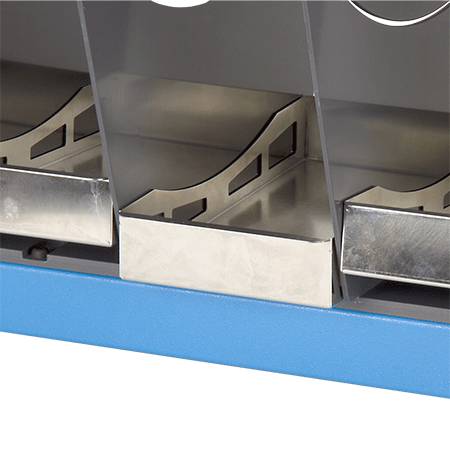
The RotaRod for Rats accommodates four rats simultaneously, each in its own independent lane separated by flanges. This allows high-throughput behavioral assessment within a single session, significantly reducing experiment time.
Is the RotaRod for Rats available in Israel with local support?
Yes. NBT Ltd is the exclusive distributor of Ugo Basile products in Israel. Our team of scientific specialists provides full local support including installation, application training, and ongoing technical assistance for the RotaRod for Rats.
What accessories are available for the RotaRod for Rats?
Rod Enlargers (Cat. 47750-325/326) increase the drum diameter and change surface texture for additional experimental complexity. The Complex Wheel (Cat. 47750-327) replaces the standard rod with an irregular-bar wheel for motor skill learning studies. Both accessories are available through NBT Ltd.
Still have questions?
Request for Quote
Please fill in as much details as possible and we will take care of your request as soon as possible
Request for Quote
Please fill in as much details as possible and we will take care of your request as soon as possible