.svg)
.svg)
RotaRod for Mice
The Ugo Basile RotaRod for Mice is the original gold-standard instrument for assessing motor coordination, balance, and neuromuscular function in laboratory mice. With over 6,200 peer-reviewed citations, it supports constant, accelerating, and complex ramp protocols across five simultaneous test lanes, delivering reproducible, high-throughput motor data that is directly comparable to the global body of published rotarod literature.
What is the RotaRod for Mice?
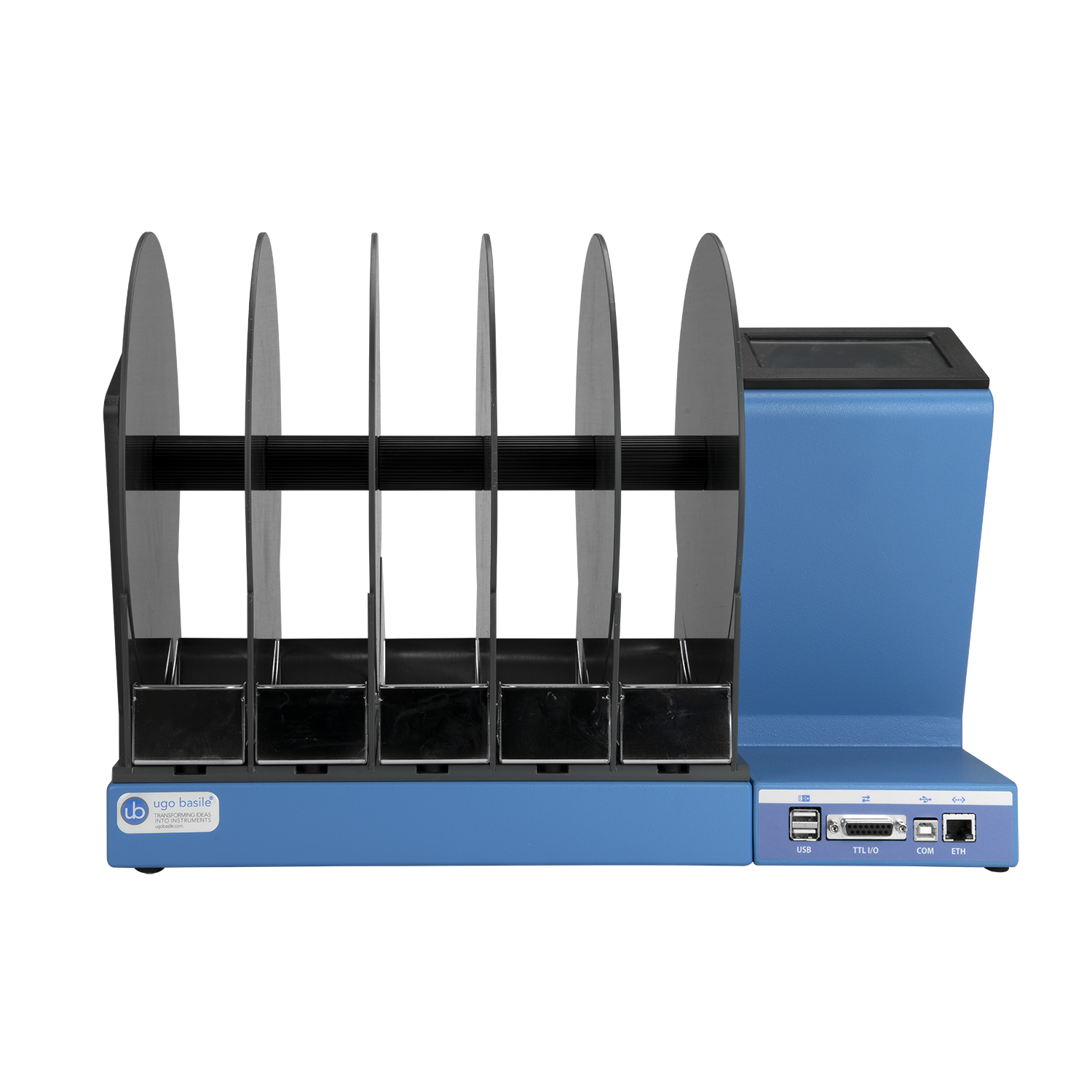
The Ugo Basile RotaRod for Mice (catalog number 47650) is the original and gold-standard instrument for assessing motor coordination, balance, and neuromuscular function in laboratory mice. Based on the Dunham and Miya method (1957), this device has accumulated over 6,200 citations in the peer-reviewed literature, making it the most widely validated motor coordination assessment tool in preclinical research.
The RotaRod measures how long a mouse remains on a rotating rod before falling, providing an objective, quantitative measure of motor performance. It accommodates five mice simultaneously across five independent lanes, allowing high-throughput behavioral assessment. The device supports a wide range of rotation protocols (constant speed, accelerating ramps, reverse ramps, custom ramps, and rocking) all programmable via the included XPad PC software.
Key Features
- Five Simultaneous Test Lanes: A single session accommodates five mice at once, separated by flanges, dramatically increasing experimental throughput without compromising data quality.
- Wide Speed Range (3–80 RPM): Adjustable in 1 RPM increments, the RotaRod covers the full spectrum from slow constant-speed trials to rapid accelerating-ramp protocols, supporting diverse experimental designs.
- Multiple Rotation Modes: Constant, ramp, reverse ramp, custom ramp, and rocking modes enable researchers to tailor motor challenge complexity to their specific model, drug, or intervention.
- Touch-Screen Control Interface: The integrated 4.3-inch touch screen provides intuitive, on-device protocol control without requiring a PC at the bench.
- XPad PC Software: Custom acceleration profiles and complex ramp protocols are programmed via the included software, with data exported directly to CSV for downstream analysis.
- TTL Input/Output: Full TTL connectivity allows synchronization with electrophysiology recording systems, video tracking, or other behavioral equipment.
- Stainless-Steel Trip Box: The fall-detection trip box is fully autoclavable for between-animal sterilization, meeting rigorous biosafety protocols.
- Optional Accessories: Rod enlargers for rat compatibility and a Complex Wheel accessory for enhanced challenge sensitivity are available, extending the platform's experimental flexibility.
.webp)

Research Applications
The RotaRod is an indispensable tool across a broad range of preclinical research disciplines. Its sensitivity to motor deficits, its reproducibility, and its compatibility with pharmacological, genetic, and lesion-based models make it one of the most versatile instruments in the behavioral neuroscience laboratory.
- Neurological Disease Models: The RotaRod is the reference standard for quantifying motor impairment in mouse models of Parkinson’s disease, multiple sclerosis, amyotrophic lateral sclerosis (ALS), Huntington’s disease, and cerebellar ataxia. Progressive motor decline can be tracked longitudinally across weeks or months.
- Analgesic and Sedative Drug Screening: Because sedation or motor side-effects impair rotarod performance, the test is used routinely in pharmacological screens to flag CNS-active compounds that compromise motor control - a critical safety step in analgesic drug development.
- Gene Knockout and Transgenic Studies: Motor phenotyping of genetically modified mice is a standard application, providing quantitative baseline data against which behavioral rescue experiments are compared.
- Neurotoxicology: Exposure to neurotoxic substances such as ethanol, organophosphates, or heavy metals produces measurable rotarod impairment, making the device a sensitive endpoint in toxicological assessments.
- Neurotrauma and Stroke Recovery: Recovery of motor function after cortical injury, spinal cord lesions, or ischemic stroke is tracked across rehabilitation timecourses using the RotaRod’s consistent, objective fall-latency endpoint.
- Motor Learning: By running animals through repeated accelerating-ramp trials, researchers can assess the rate of motor learning over sessions, distinguishing baseline performance from training-dependent improvements.
The Original RotaRod - A Legacy of Scientific Rigor
First developed by Ugo Basile based on the Dunham and Miya (1957) method, the RotaRod has accumulated over 6,200 peer-reviewed citations. This unparalleled citation record reflects not only the instrument’s scientific validity but also the consistency and reproducibility that researchers require when building on decades of prior literature. Choosing the original Ugo Basile RotaRod ensures that your results are directly comparable to the global body of published rotarod data.

Technical Specifications
| Catalog Number | 47650 |
| Rod Diameter | 3 cm |
| Rod Width (Lane Width) | 5.8 cm |
| Number of Lanes | 5 (mice) |
| Fall Height | 16 cm |
| Speed Range | 3–80 RPM (1 RPM increments) |
| Rotation Modes | Constant, ramp, reverse ramp, custom ramp, rocking |
| Touch Screen | 4.3 inches |
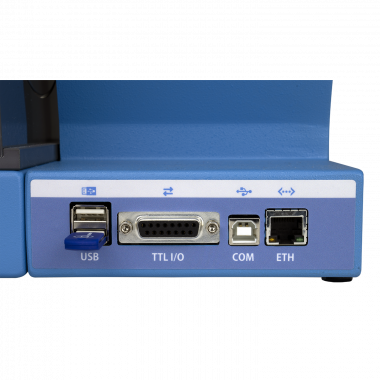
| Data Export | USB to CSV |
| Connectivity | TTL input/output |
| Power Requirement | 100–240 VAC, 50–60 Hz, 40 W max |
| Sound Level | <60 dB(A) |
| Operating Temperature | 10–40°C |
| Total Weight | 11 kg |
| Dimensions (W × D × H) | 46 × 28 × 33 cm |
| Packing Dimensions | 70 × 36 × 46 cm |
| Warranty | 12 months + 12 months upon registration |
| Software Included | XPad PC software |
Applications
- Motor coordination and balance assessment in mice
- Neurological disease model phenotyping (Parkinson’s, MS, ALS, Huntington’s, ataxia)
- Analgesic and sedative drug screening
- Neurotoxicology endpoints
- Neurotrauma and stroke motor recovery studies
- Motor learning assessment across repeated trials
- Gene knockout and transgenic mouse motor phenotyping
Motor Functions
Explore All ProductsAnalgesia
Explore All ProductsRotaRod for Mice Publications
The Ugo Basile RotaRod (47650) is one of the most widely cited instruments in preclinical neuroscience, with over 6,200 publications using it to assess motor coordination, balance, and neuromuscular function. Studies span neurological disease models (Parkinson’s, ALS, MS, ataxia), analgesic drug screening, neurotrauma recovery, and transgenic mouse phenotyping, establishing the RotaRod as the gold standard endpoint for motor function in small animal research.
What is the RotaRod for Mice and what is it used for?
The Ugo Basile RotaRod for Mice (catalog number 47650) is the original gold-standard instrument for assessing motor coordination, balance, and neuromuscular function in laboratory mice. Based on the Dunham and Miya method (1957), it measures how long a mouse remains on a rotating rod before falling, providing an objective, quantitative endpoint for motor performance. It is used across neurological disease models, drug screening, neurotrauma recovery, and transgenic mouse phenotyping.
What rotation modes does the RotaRod support?
The RotaRod supports five rotation modes: constant speed, accelerating ramp, reverse ramp, custom ramp, and rocking (back-and-forth). All modes are programmable via the included XPad PC software, allowing researchers to design complex, reproducible protocols tailored to their specific experimental model.
How many animals can be tested simultaneously?
The RotaRod for Mice accommodates five mice simultaneously, each in its own independent lane separated by flanges. This allows high-throughput behavioral assessment within a single session, significantly reducing experiment time without compromising data quality.
Is the RotaRod for Mice available in Israel with local support?
Yes. NBT Ltd is the exclusive distributor of Ugo Basile products in Israel. Our team of scientific specialists provides full local support including installation, application training, and ongoing technical assistance for the RotaRod for Mice.
What accessories are available for the RotaRod for Mice?
A range of accessories is available to extend the RotaRod's capabilities. Rod enlargers allow compatibility with rats and large rats. The Complex Wheel accessory replaces the standard rod with a textured wheel that increases task difficulty and improves sensitivity for detecting subtle motor deficits. Both accessories are available through NBT Ltd.
Still have questions?
Request for Quote
Please fill in as much details as possible and we will take care of your request as soon as possible
Request for Quote
Please fill in as much details as possible and we will take care of your request as soon as possible