.svg)
.svg)
Hot Bead Sterilizer - Analog
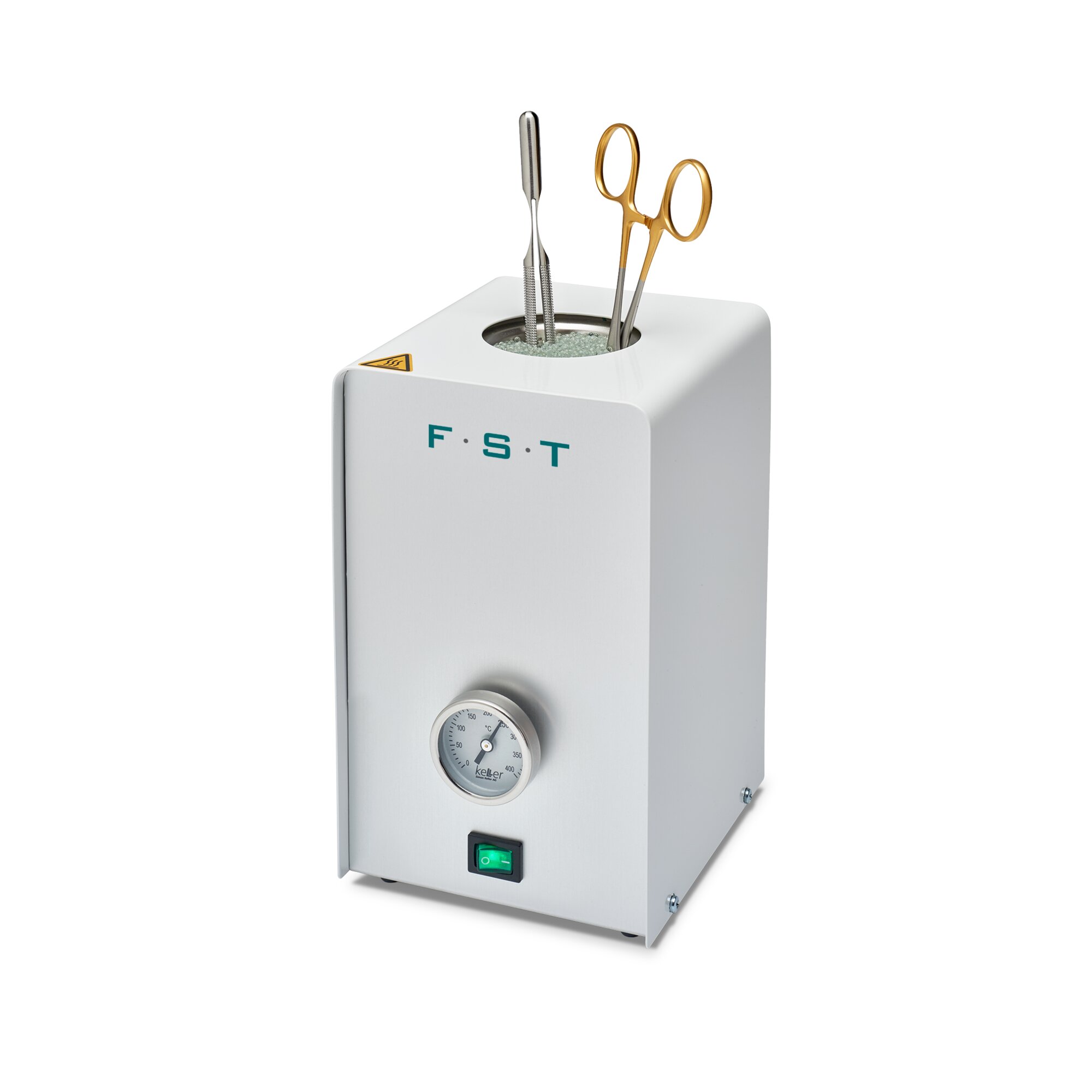
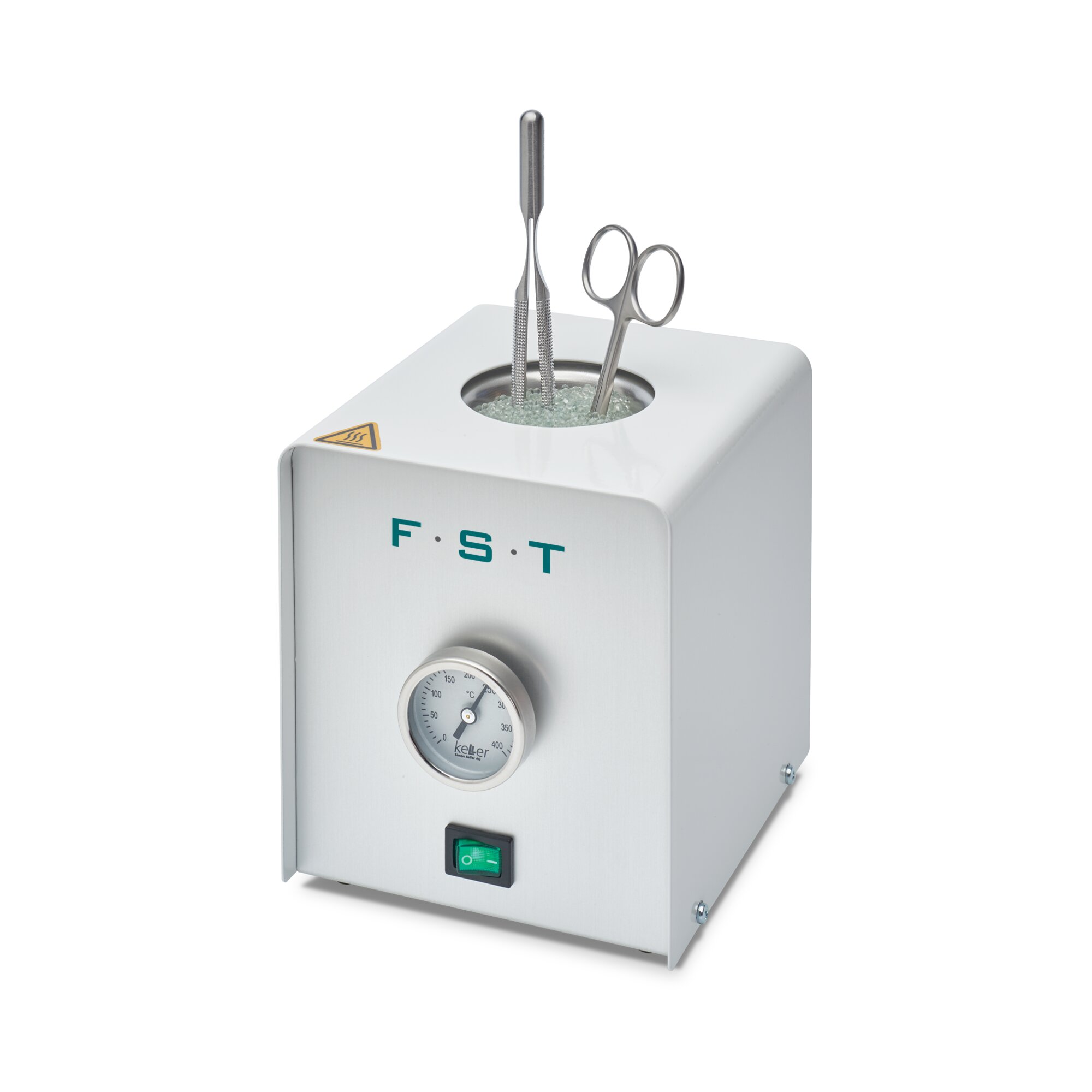
Glass beads at 240 to 270 degrees C, 15 to 20 minutes from cold, then about 20 seconds of contact per instrument tip. No gas, no flame, no chemicals, and it can stand inside a laminar flow hood. This is the deep well sterilizer: 4 cm across, 14 cm deep, 175 ml of beads, against 8 cm and 100 ml on the 18000-45. Tips are meant to sit at least half an inch below the bead surface, so depth is what you are buying. It keeps instrument tips sterile between animals inside one surgical session. The set is autoclaved first.
What is the Hot Bead Sterilizer?
A well of small glass beads held at 240 to 270 degrees C by a thermostat. The working end of a clean instrument goes into the beads, stays about 20 seconds, comes out and cools. Heat does the killing. Nothing is added to the instrument and nothing has to be aired out afterwards, which is why the sterilizer can stand next to you inside a laminar flow hood while you work.
From cold it takes 15 to 20 minutes to reach temperature. The thermostat holds it there, so it stays ready through a morning of surgery.
18000-50 is the deep well version. The well is 4 cm across and 14 cm deep and holds 175 ml of beads. The 18000-45 has the same 4 cm opening, 8 cm of depth and 100 ml. Depth is what the extra money buys. Instrument tips are meant to sit at least half an inch below the bead surface, and a long needle holder in a shallow well does not get there without the handle going in too.
Where it does not belong
A hot bead sterilizer is not a primary sterilization method. The set is cleaned and autoclaved before the session starts, and the beads keep the tips sterile between animals inside that session. Florida State's IACUC policy is explicit about the limits: up to five rodents on one instrument set, no more than three or four instruments in the well at a time, no procedures with gross contamination such as GI surgery, and no hollow instruments, because the beads only reach the outside surface.
Debris insulates. Anything caught in the grooves of a forceps, the box lock of a needle holder or the hinge of a scissors keeps the heat off the metal underneath, so an instrument that is not visibly clean goes back to the sink before it goes into the beads.
Tips come out at bead temperature. Fifteen seconds is the stated minimum cool down and a full minute is sometimes needed. A 250 degree tip does more damage to tissue than the contamination you were worried about.
Key Features
- 240 to 270 degrees C, thermostatically maintained
- 15 to 20 minutes from cold to working temperature
- About 20 seconds of bead contact per instrument tip
- Deep well: 4 cm diameter, 14 cm depth, 175 ml of beads
- No gas, no flame, no chemicals, and safe inside a laminar flow hood
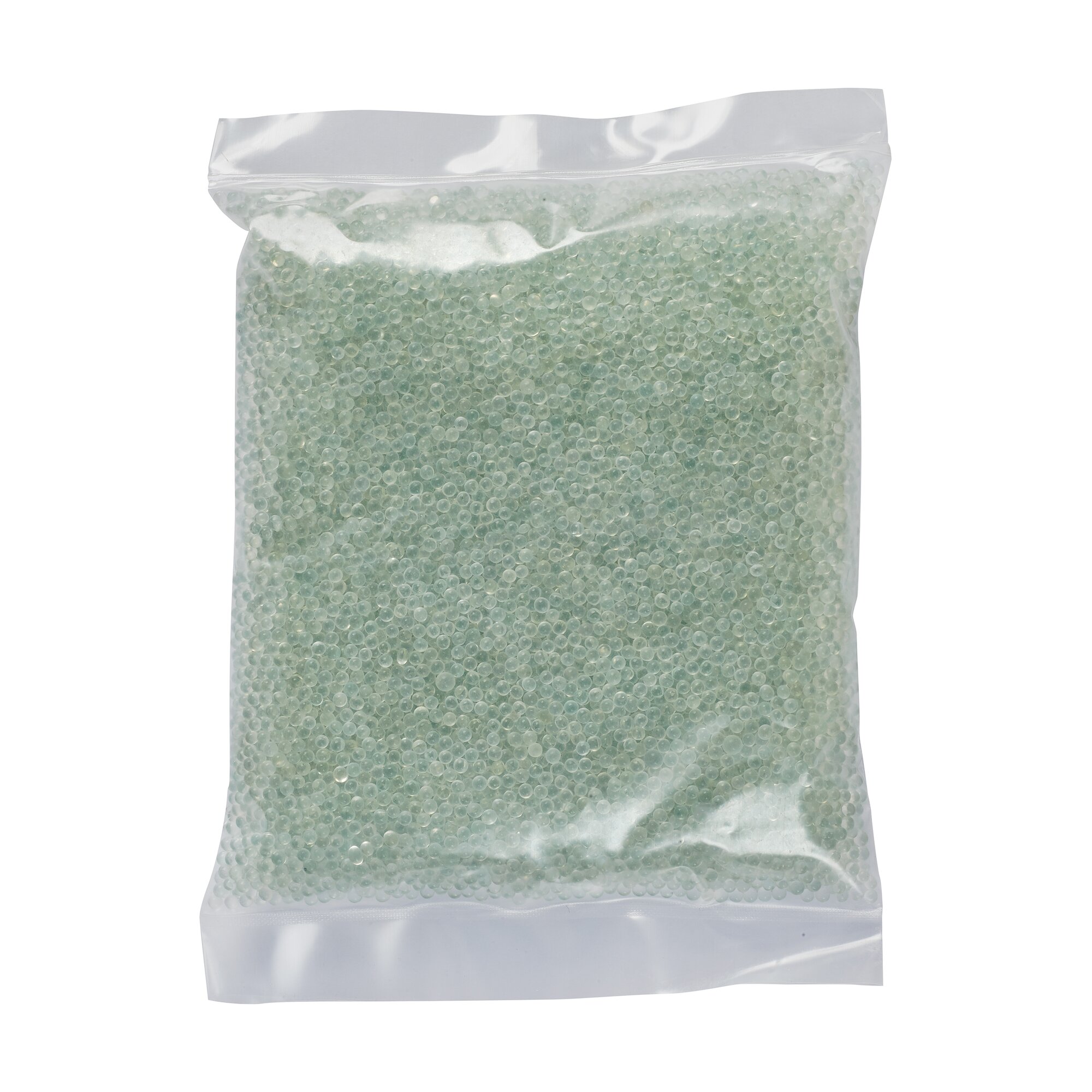
- Beads are a replaceable consumable, 18000-46, 2.3 mm, 150 g
.webp)

| Catalog number | 18000-50 |
| Operating temperature | 240 to 270 degrees C (464 to 518 F) |
| Warm up time from cold | 15 to 20 minutes |
| Contact time per tip | approx. 20 seconds |
| Well diameter | 4 cm |
| Well depth | 14 cm |
| Well volume | 175 ml |
| Outer dimensions | 20.5 x 12.5 x 13.5 cm |
| Net weight | 2070 g |
| Beads | Glass, 2.3 mm, replacement pot 18000-46, 150 g |
| Shallow well alternative | 18000-45, 8 cm depth, 100 ml, 1530 g |
Applications
- Rodent survival surgery, re-sterilizing instrument tips between animals
- Microsurgery and stereotaxic implant work
- Tissue culture, inside a laminar flow hood

Micro-Surgery
Explore All ProductsGlass Bead Sterilization Publications
Studies and surgical guidelines covering glass bead sterilizers for re-sterilizing instrument tips between animals in rodent survival surgery, sourced from Google Scholar.
What is the Hot Bead Sterilizer 18000-50?
A thermostatically controlled well of glass beads held at 240 to 270 degrees C. An instrument tip goes into the beads for about 20 seconds and comes out sterile. 15 to 20 minutes from cold to working temperature. The well is 4 cm across, 14 cm deep and holds 175 ml of beads.
18000-50 or 18000-45?
Same temperature, same 4 cm opening, different depth. 18000-50 gives 14 cm and 175 ml. 18000-45 gives 8 cm and 100 ml, and costs less. Tips are meant to go at least half an inch below the bead surface with three or four instruments in the well at most. For a full surgical set with long needle holders and scissors, take the deep well. If the session is fine forceps and spring scissors only, the 18000-45 is enough and I would not sell you the bigger one.
Can it replace the autoclave?
No. IACUC guidance treats hot bead sterilizers as a way to re-sterilize tips between animals within one session, after the set has already been cleaned and autoclaved. Florida State's policy caps it at five rodents per session, excludes procedures with gross contamination such as GI surgery, and excludes hollow instruments, because the beads only reach the outside surface.
What has to happen before and after the tips go in?
Before: clean them. Debris in the grooves of a forceps, the box lock of a needle holder or the hinge of a scissors insulates the metal and the heat does not reach it. After: the tips come out at bead temperature and need 15 seconds at minimum before they touch tissue, sometimes a full minute.
Is it available in Israel with local support?
Yes. NBT is the Fine Science Tools distributor in Israel. Beads are a consumable, 18000-46, 2.3 mm, 150 g. Order a spare pot together with the sterilizer.
Still have questions?
Request for Quote
Please fill in as much details as possible and we will take care of your request as soon as possible
Request for Quote
Please fill in as much details as possible and we will take care of your request as soon as possible