.svg)
.svg)
g.Nautilus Research
g.Nautilus RESEARCH is a wearable EEG headset for research applications only
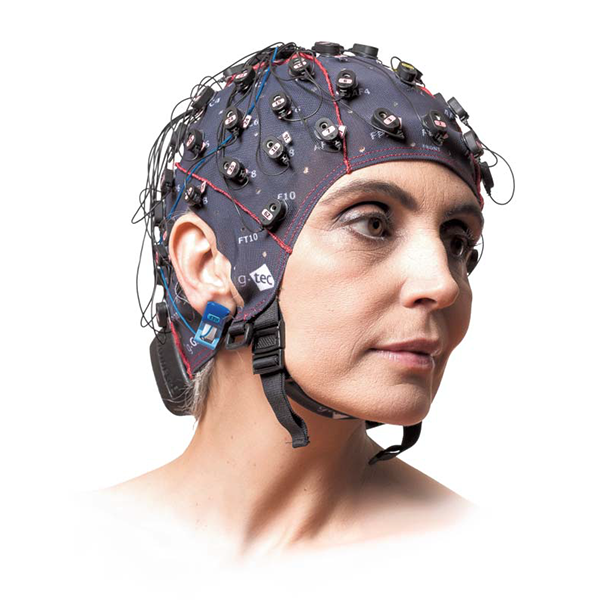
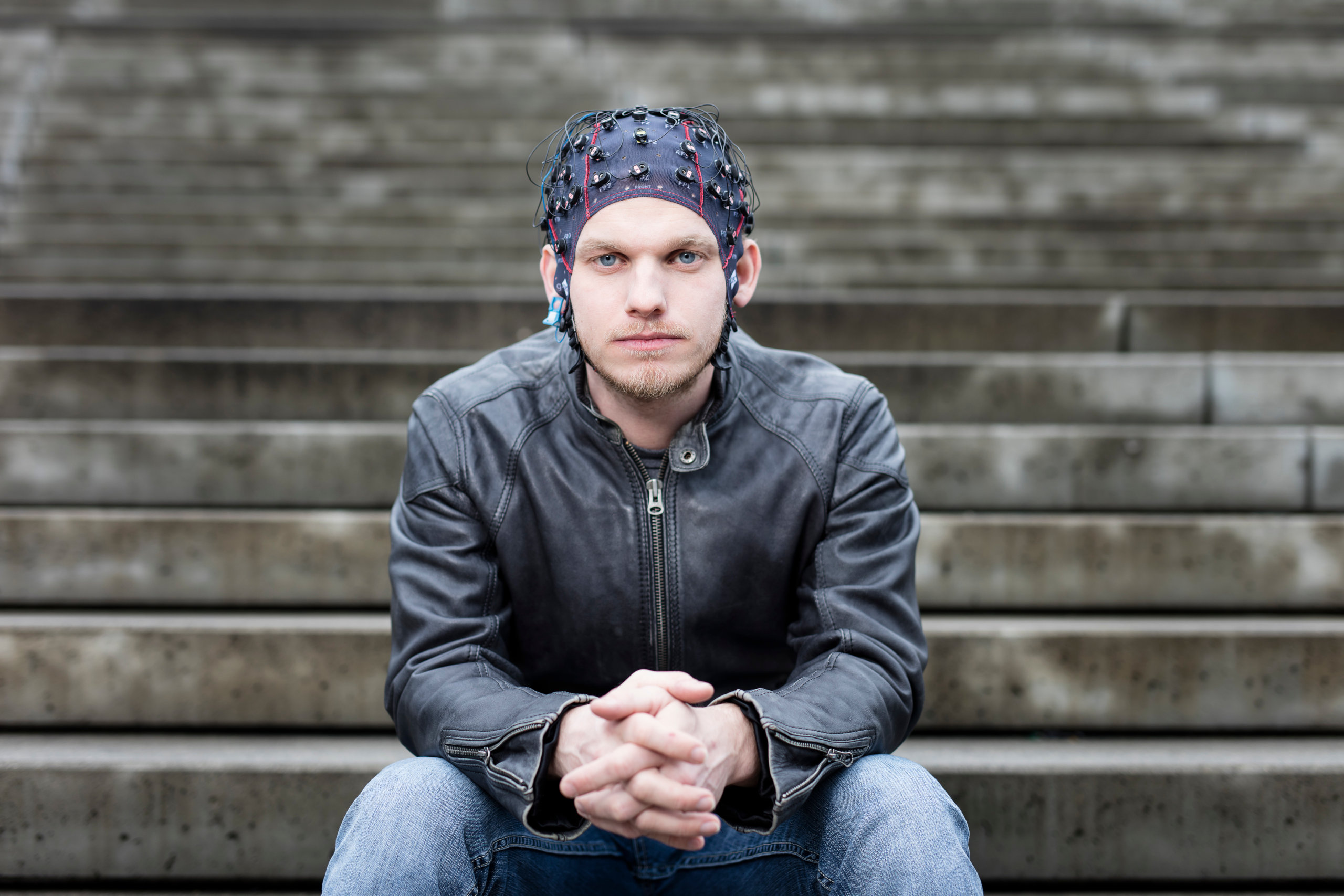
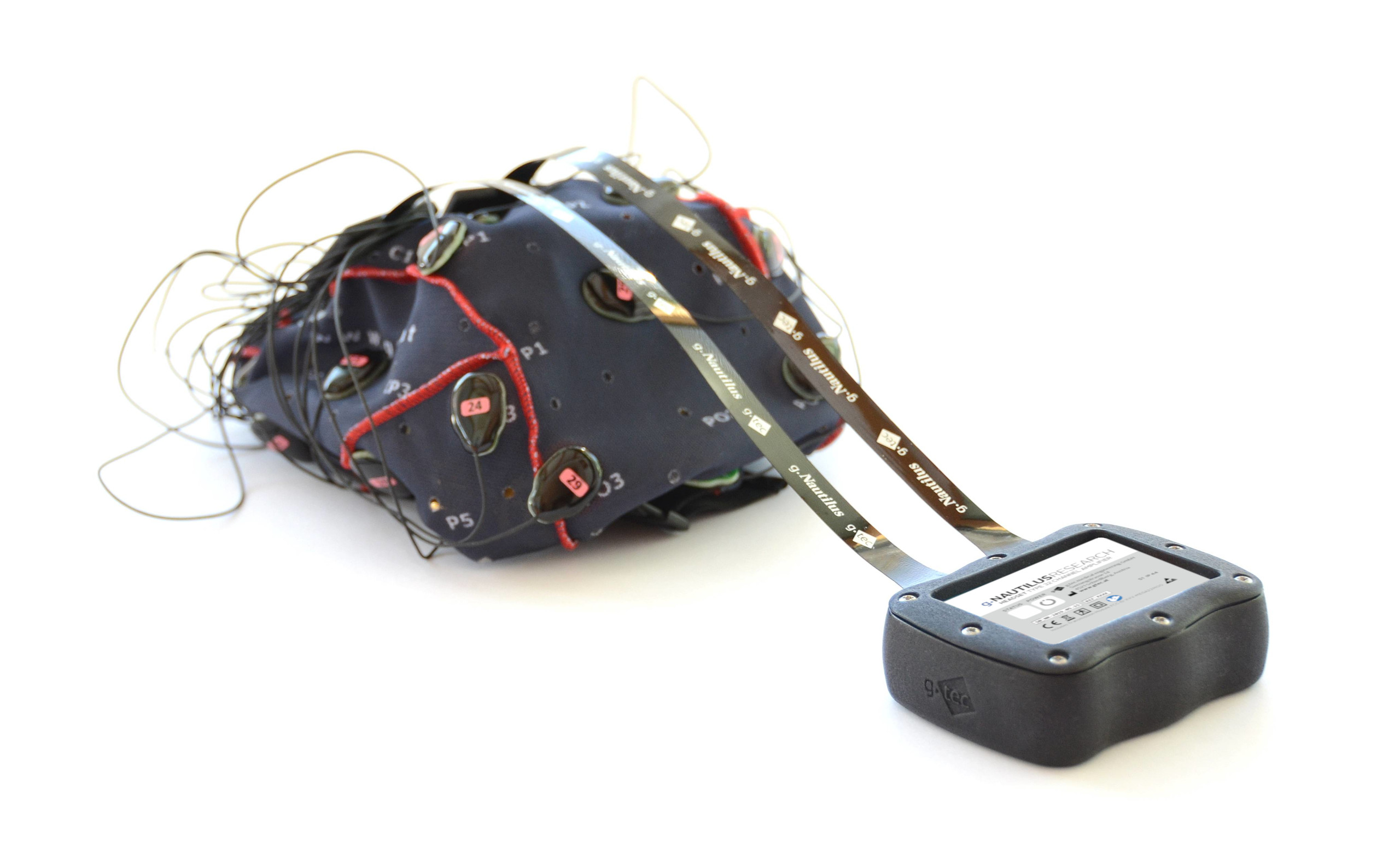
g.Nautilus is g.tec’s new wireless biosignal acquisition system. Its design is completely different from all other devices and it sets a new standard of usability. The tiny and lightweight device is attached to the EEG cap to avoid cable movements and to allow completely free movements. In combination with g.tec’s active electrode technology, you will get top quality EEG recordings from 64/32/16/8 channels within few minutes.
g.Nautilus RESEARCH is a wearable EEG headset for research applications only. This means that it’s less expensive and intended to be used for neuroscience research only. It comes with flexible cables to configure the EEG electrode positions as you wish. A hybrid (dry and wet) EEG electrode version and a gel EEG electrode version with 8/16/32/64 EEG channels are available for any kind of neurological and neuroscience research.

PRODUCT HIGHLIGHTS
.webp)

COMBINED EEG+fNIRS RECORDING
g.Nautilus Research in combination with g.SENSOR fNIRS enables simultaneous recordings of EEG and fNIRS (functional near-infrared spectroscopy) signals. In combination with g.tec’s active EEG electrode technology, researchers get top-quality EEG recordings from 64/32/16/8 g.SCARABEO EEG channels and 8 fNIRS channels within a few minutes.
SIGNAL QUALITY COMPARISON TEST
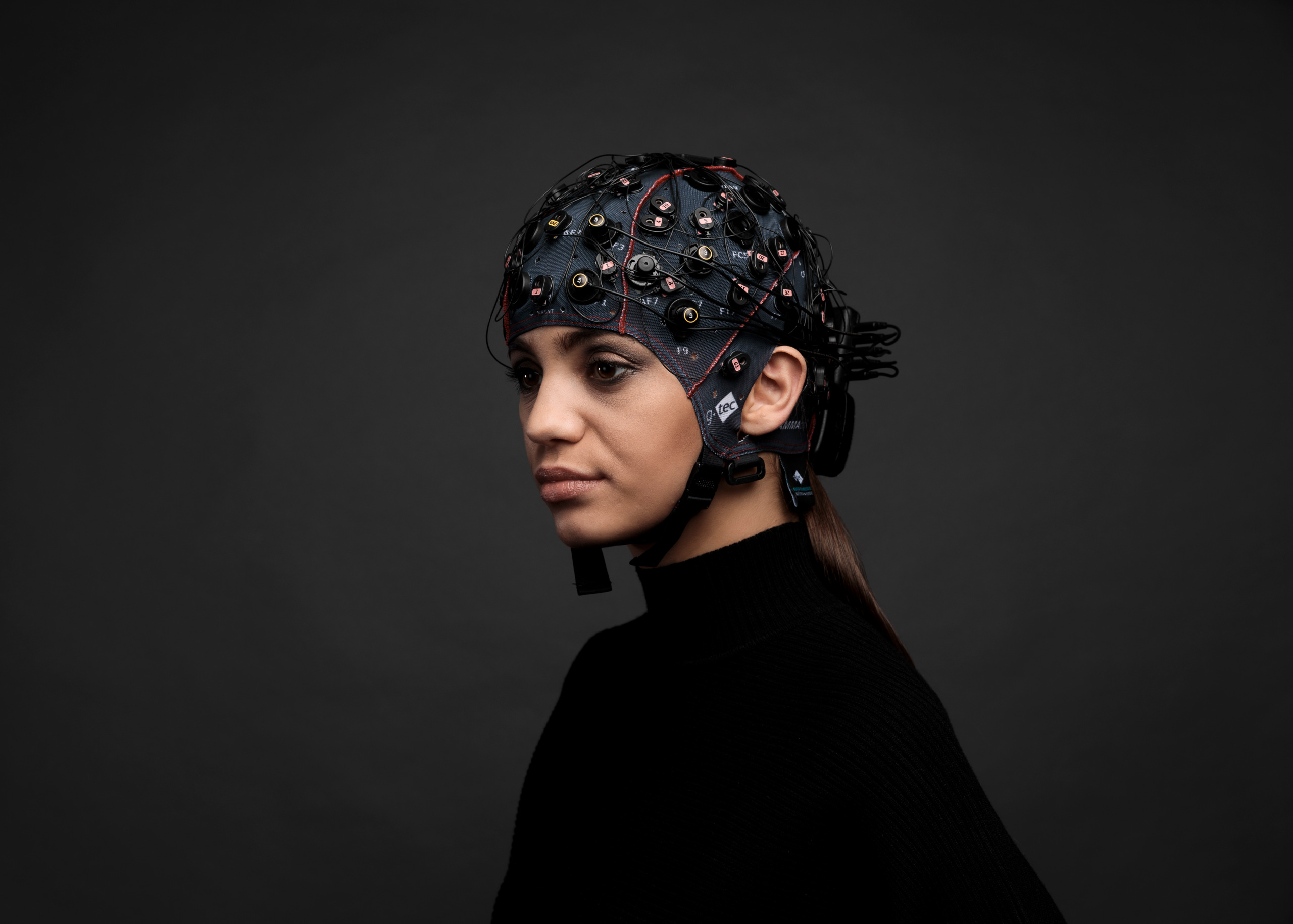
The Frontiers article from Thea Radüntz showed that g.Nautilus Research with g.LADYbird active EEG electrodes and g.SAHARA active dry EEG electrodes offer the best brain signal quality. These results outperform other wearable EEG headsets on the market. The number of artifacts in the EEG signals during resting state recorded from several wireless EEG headsets have been compared in this article.
AUTOMOTIVE RESEARCH
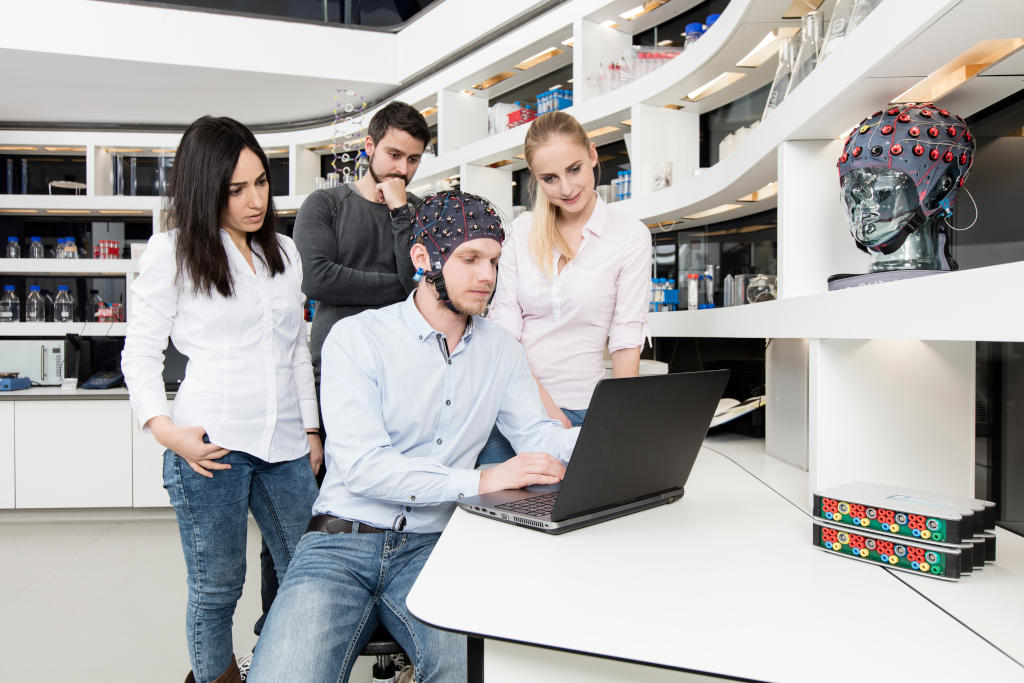
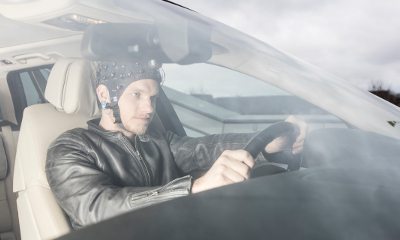
g.Nautilus Research is easy to set up, wearable and provides high-quality recordings despite movements or noisy environments. It is a perfect match for EEG recordings in cars, airplanes, flight simulators and even high-gravity simulators for pilots and astronauts. The wearable EEG headset can be used for Virtual Reality (VR) experiments too to increase embodiment. g.Nautilus Research also works perfectly with eye-trackers and video cameras to record electrophysiological parameters for neuromarketing applications.
SPORTS SCIENCE AND MEDICINE
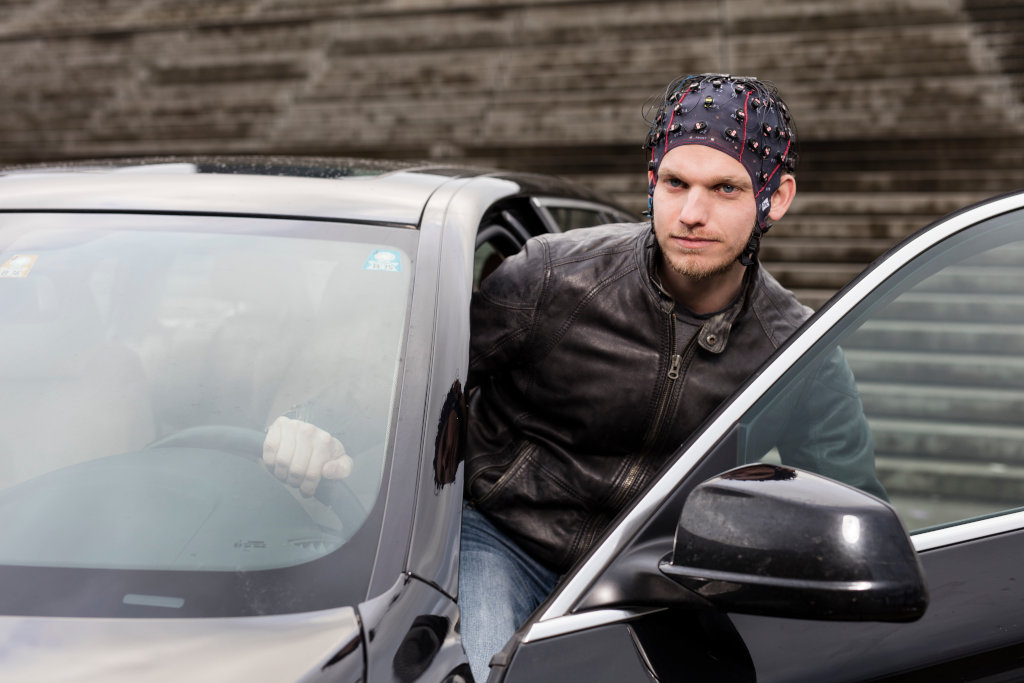
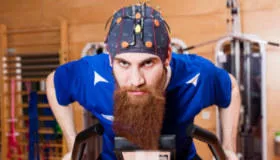
g.Nautilus Research wearable EEG headset is lightweight and highly robust to motion or real-world environments. The brain activity recording device weights about as much as a climbing carabiner and has a very small packaging. g.SAHARA hybrid active EEG electrodes are well suited for remote locations e.g. high-altitude medicine because it does not require any hair washing. g.SCARABEO active wet EEG electrodes provide very good signal quality with less artifacts in the data. This is crucial for e.g. sports applications that require jumping and running.

ROBOT CONTROL
The Serbian Artist Dragan Ilic equipped a KUKA robot with hundreds of pencils to create numerous artworks. Dragan used a g.Nautilus wireless EEG device to select different drawing commands with his mind. These commands have been transmitted to the robot which then carried out the drawing commands at a wallpaper. The production of these artworks have been performed during the Ars Electronica Festival in Linz, where thousands of visitors could watch the robot drawing. The high-resolution EEG headset with 64 channels enables exoskeleton control with the following BCI principles: Motor Imagery, P300 and SSVEP.

WEARABLE EEG HEADSETS FOR KIDS
g.Nautilus Research opens up many new research areas that were not possible because of its mobility. For example, it can be used easily on children. The wearable EEG headset sits comfortably and stable on the kids’ heads, even though they run and move a lot. EEG headsets of a lower-quality generate a lot of motion artifacts.

UNLIMITED POSSIBILITIES OF WEARABLE EEG
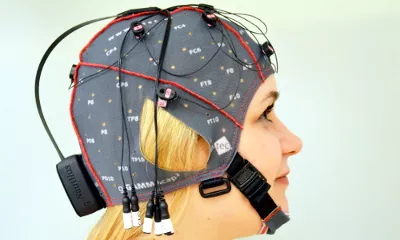
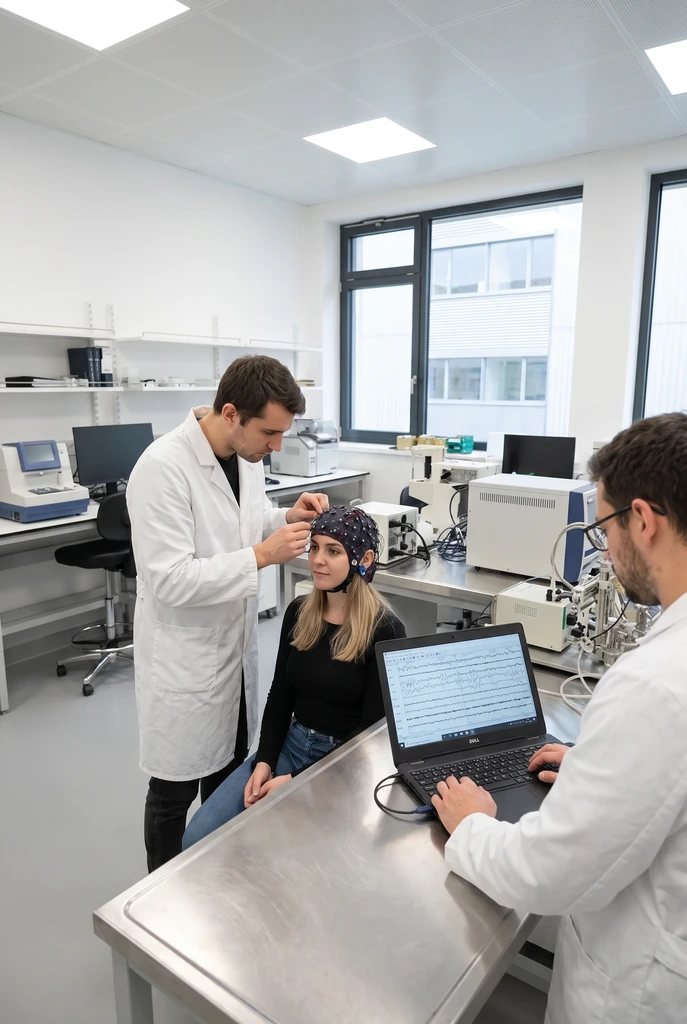
Wearable EEG headsets and biosignal acquisition devices are becoming increasingly important in medical and clinical environments since more and more studies are conducted in the field instead of the lab. Therefore, four different versions of g.Nautilus wearable EEG headsets have been developed to meet individual research needs. Their designs are completely different from all other devices on the market, and set a new standard of usability. The tiny and lightweight biosignal amplifier is attached to the g.GAMMAcap to avoid cable movements and to allow completely free motions. In combination with g.SAHARA hybrid active or g.SCARABEO active wet EEG electrodes, users get top quality EEG recordings from 8/16/32/64 EEG electrodes.

Brain-Computer Interface Research
Explore All ProductsDevelopmental research
Explore All ProductsResearch on Epilepsy and Seizures
Explore All ProductsERP research
Explore All ProductsLearn more about g.Nautilus Research
Academic publications and research studies utilizing the g.tec g.Nautilus Research wireless EEG system, sourced from Google Scholar.
Who distributes g.tec EEG systems in Israel?
NBT (New Biotechnology Ltd) is the exclusive distributor of g.tec medical engineering in Israel. Installation, application training and technical support are provided locally by our team.
How many channels should I order
32 for ERP research, 64 if you plan source localisation, 8 or 16 for motor imagery and SSVEP BCI work.
Gel or hybrid dry and wet electrodes?
Gel for ERP and low frequency work. Hybrid where preparation time is the constraint, which is usually paediatric, clinical or repeated session protocols.
How does it compare to a tethered amplifier?
g.Nautilus attaches to the cap, so cable movement is removed and the subject can move freely. For 256 channels or invasive recording you need g.HIamp instead.
When is 256 channels justified?
Dense source reconstruction and invasive recording. For scalp ERP work, 64 channels does the job at a fraction of the preparation time.
Still have questions?
Request for Quote
Please fill in as much details as possible and we will take care of your request as soon as possible
Request for Quote
Please fill in as much details as possible and we will take care of your request as soon as possible