.svg)
.svg)
Balance Beam Walking Test
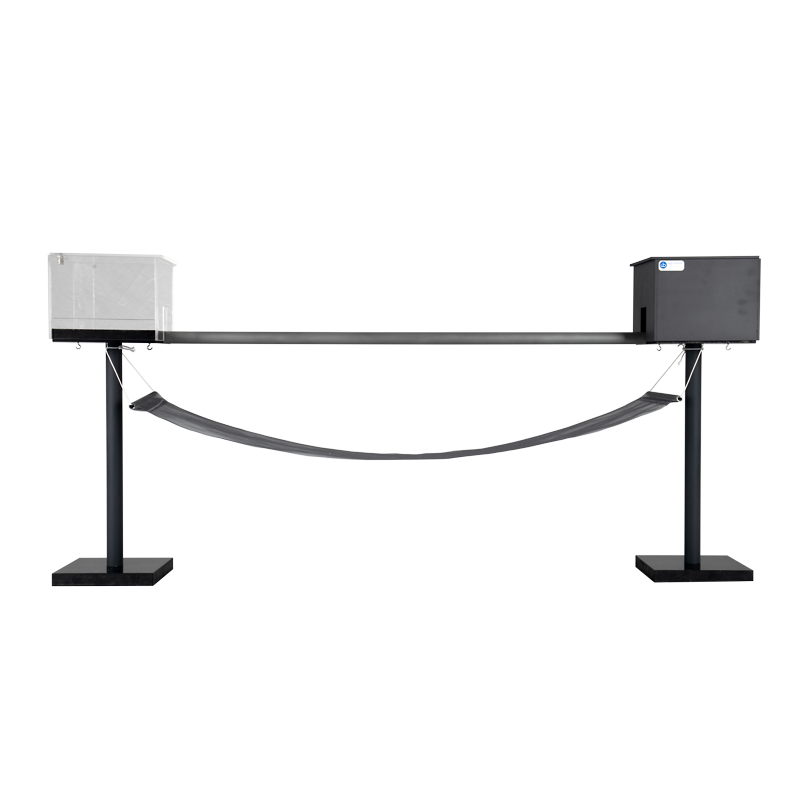
The Ugo Basile Balance Beam Walking Test (Cat. 48303) is a sensitive, standardized tool for assessing fine motor control and sensorimotor integration in mice. Animals traverse round beams of three diameters (6, 12, and 25 mm), enabling researchers to grade difficulty and detect subtle balance deficits. Outcome measures include traversal time, foot slips, stops, and falls - complementing RotaRod and grip strength data for comprehensive motor evaluation.
What is the Balance Beam Walking Test?
The Ugo Basile Balance Beam Walking Test for Mice (catalog number 48303) is a sensitive behavioural assay for evaluating motor coordination, balance, and sensorimotor integration. Mice are placed on an elevated narrow beam and motivated to traverse to a safe goal box at the far end; the experimenter records traversal time, foot slips, stops, and falls as indicators of fine motor performance.
The test is particularly valuable for detecting subtle motor impairments that may go undetected by cruder measures such as open-field locomotion. Three interchangeable beam diameters (6 mm, 12 mm, and 25 mm) allow researchers to tune task difficulty to the expected severity of the motor deficit under investigation.
Key Features
- Three Interchangeable Beam Diameters: 6 mm (thin), 12 mm (medium), and 25 mm (large) round beams cover a wide difficulty range - from highly challenging for mildly impaired animals to appropriate for severely affected animals.
- Non-Slip Surface: The textured beam surface provides adequate grip, ensuring that performance differences reflect genuine motor deficits rather than surface traction.
- Detachable Magnetic Goal Box: The safe box is magnetically attached for quick removal and independent sterilisation between animals.
- Transparent Starting Box: Animals can be observed throughout the trial without disturbing the testing environment.
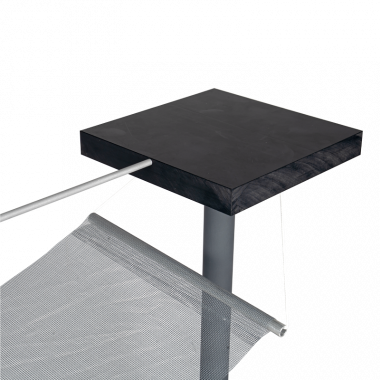
- Adjustable Safety Net: A net below the beam prevents injury from falls, enabling testing of severely impaired animals.
- Video Tracking Compatible: The open design is compatible with automated video tracking systems for hands-free kinematic data collection.
- Compact Footprint: Total length 1390 mm; suitable for standard vivarium rooms and behavioural suites.
.webp)

Research Applications
The Balance Beam Walking Test is valued precisely for its sensitivity to subtle motor impairments that escape detection by less demanding assays. Because traversal of a narrow elevated beam requires the integration of balance, coordination, and fine motor control, even mild cerebellar or cortical deficits produce measurable increases in traversal time, foot slips, or falls.
- Cerebellar Ataxia Models: The beam-walking test is among the most sensitive assays for cerebellar dysfunction - foot slips are particularly elevated in models where rotarod performance remains near normal.
- Parkinson’s Disease: Used as a complement to the RotaRod in unilateral 6-OHDA and MPTP models, where lateralised deficits are most apparent in fine motor control tasks.
- Traumatic Brain Injury (TBI): Post-injury sensorimotor deficits are sensitively captured by beam traversal metrics even at time points where open-field locomotion appears normal.
- Stroke & Cortical Lesion Recovery: Recovery of fine motor coordination is tracked longitudinally across post-injury days using beam traversal time and foot slip counts.
- Spinal Cord Injury: Hindlimb stepping coordination and weight support during beam traversal serve as functional outcome measures in spinal contusion and hemisection models.
- Transgenic & Knockout Phenotyping: The beam-walking test detects motor phenotypes in genetically modified mice that are missed by less demanding motor assays.

Technical Specifications
| Catalog Number | 48303 |
| Total Dimensions | 1390 × 300 × 660 (h) mm |
| Start/End Box Dimensions | 195 × 195 × 140 (h) mm |
| Beam Height from Floor | 520 mm |
| Small Round Beam Diameter | 6 mm |
| Medium Round Beam Diameter | 12 mm |
| Large Round Beam Diameter | 25 mm |
| Beam Surface | Non-slip textured |
| Goal Box Attachment | Magnetic, detachable |
| Safety Net | Adjustable, below beam |
| Species | Mice |
Applications
- Sensorimotor coordination and balance assessment
- Cerebellar ataxia model phenotyping
- Post-TBI and post-stroke fine motor recovery
- Spinal cord injury hindlimb coordination
- Parkinson’s disease lateralised motor deficit detection
- Transgenic and knockout mouse motor phenotyping


Motor Functions
Explore All ProductsBalance Beam Publications
The Balance Beam Walking Test is used to assess fine motor control and sensorimotor integration in rodent models of cerebellar dysfunction, stroke, aging, and neurodegenerative disease. It complements RotaRod data by measuring coordination over a static beam, enabling detection of subtle gait deficits.
What is the Balance Beam Walking Test and what is it used for?
The Balance Beam Walking Test (Cat. 48303) evaluates motor coordination and balance in mice by measuring how well they traverse round beams of varying diameters. It detects subtle motor deficits linked to cerebellar dysfunction, neurodegenerative disease, stroke, aging, and pharmacological treatment - deficits that may not be apparent on the RotaRod alone.
What beam diameters are included, and how does beam size affect the test?
The kit includes three round beam diameters: 6 mm (most challenging), 12 mm (intermediate), and 25 mm (least challenging). Narrower beams require greater balance and coordination, increasing test sensitivity for detecting mild motor deficits. Using multiple diameters within the same study allows grading of motor impairment severity.
What behavioral endpoints can be measured with the Balance Beam?
Researchers can measure traversal time (latency to cross), speed, number of foot slips, stops, and frequency of falls per crossing. The test is compatible with overhead video tracking when using the transparent starting box configuration, enabling automated behavioral scoring.
Is the Balance Beam Walking Test available in Israel with local support?
Yes. NBT Ltd is the exclusive distributor of Ugo Basile products in Israel and provides installation, application training, and ongoing technical support for the Balance Beam Walking Test.
Can the Balance Beam be used with rats, or is it designed for mice only?
The catalog item 48303 is designed specifically for mice, with beam heights and dimensions optimized for mouse size. For comprehensive motor coordination assessment in rats, the Ugo Basile RotaRod for Rats (Cat. 47750) and Treadmill (Cat. 47300) are recommended complementary instruments.
Still have questions?
Request for Quote
Please fill in as much details as possible and we will take care of your request as soon as possible
Request for Quote
Please fill in as much details as possible and we will take care of your request as soon as possible