.svg)
The Importance of Long-Taper Pipettes for Cell Transfection
For gene modification and transfection work, pipette tip geometry drives delivery efficiency, targeting accuracy, cell viability, and repeatability. Here is why long-taper glass tips are the right default for microinjection-based techniques.

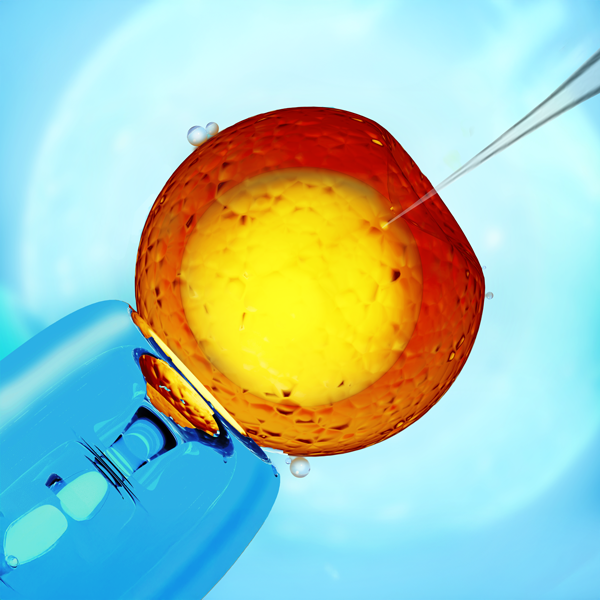
When it comes to gene modification and transfection research, success often depends on the smallest details. One of the most critical factors in microinjection-based techniques is the geometry of the pipette tip.
Long-taper glass pipettes offer distinct advantages that directly affect delivery efficiency, targeting accuracy, cell viability, and experimental repeatability. Here is a breakdown of why long-taper geometry is the right default for transfection-specific microinjection work.
Delivery efficiency: less resistance, more sample where it needs to go
A long, gradual taper reduces internal flow resistance compared with a short, abrupt taper. The result is more predictable ejection at a given pressure, less back-flow inside the pipette, and more of your sample actually reaching the target cell rather than being lost to dead volume or blowback along the shaft.
For plasmid DNA, mRNA, ribonucleoprotein complexes, and any viscous or particulate cargo, this matters even more. A short taper concentrates shear stress at the constriction and can shred fragile constructs before they leave the tip.
Targeting: reach the cell without disturbing the neighborhood
Cells in adherent culture, embryos in medium, and neurons in slice preparations are all crowded environments. A long taper lets you approach a specific cell at a shallow angle without the shoulder of the pipette displacing surrounding tissue or media.
This is particularly important for oocyte injection, ES cell work, and any application where the target sits in a delicate architecture (blastocysts, organoids, brain slices) that a short-tapered tip would deform on approach.
Cell viability: smaller hole, faster reseal
The tip diameter and the geometry above it together determine how much membrane trauma the cell experiences. A long taper allows a small final orifice while keeping the wall thickness manageable. The membrane seals more readily around a slender, tapered shaft than around a stubby one, and the cell’s cytoskeleton has an easier time recovering.
In practice this shows up as higher post-injection survival, less debris in the well 24 hours later, and cleaner downstream imaging or selection.
Repeatability: consistent tips, consistent results
Repeatability in microinjection depends on getting a similar tip every time you pull. Long-taper programs on a good puller produce tips whose orifice size, wall thickness, and overall geometry are much more consistent from pull to pull than short-taper programs, which are sensitive to small variations in heat, pull velocity, and glass type. Fewer outliers means tighter distributions in your injection volumes and less pipette-to-pipette variance in your final data.
The pipette is only half the story
Even the most precisely pulled pipette is only as effective as the microinjection system behind it. A pneumatic injector designed for pre-pulled long-tapered tips gives you clean, repeatable pressure pulses, controlled hold pressures to prevent backflow between injections, and an easy way to switch between fill, inject, and clear modes without losing your alignment.
Pair the right tip with the right injector and the right puller, and the compounding effect is significant: higher transfection rates, fewer damaged cells, tighter experimental replicates, and less time troubleshooting.
Practical checklist
- Use a long-taper program on your puller for any transfection or microinjection into small cells.
- Match tip inner diameter to the largest species in your cargo, not the smallest - over-narrow tips shred large constructs.
- Keep your hold pressure high enough to prevent backfilling but low enough not to leak.
- Log the puller program, glass lot, and injector settings alongside your experiment. Micro-injection is one of the workflows where equipment metadata belongs in the methods section.
For laboratories at the cutting edge of gene modification and cell transfection, combining long-taper pipettes with advanced injection systems is key to achieving consistent and reliable results.
Adapted from an article on the WPI Blog.

NEED MORE INFORMATION ABOUT THIS PRODUCT?
Send us your emailפוסטים אחרונים בבלוג
%3Aquality(100).webp)

.svg)


קדמו את המחקר שלכם
צרו קשר עם NBT עוד היום לקבלת ייעוץ מומחים בנושאי ציוד למדעי המוח.