.svg)
How Precision Automation Is Unlocking the Next Era of Microbiome Research
Microbiome research is moving from species-level surveys to strain-level function, and Molecular Devices argues that automation such as the QPix FLEX colony picker is now central to culture-based validation.
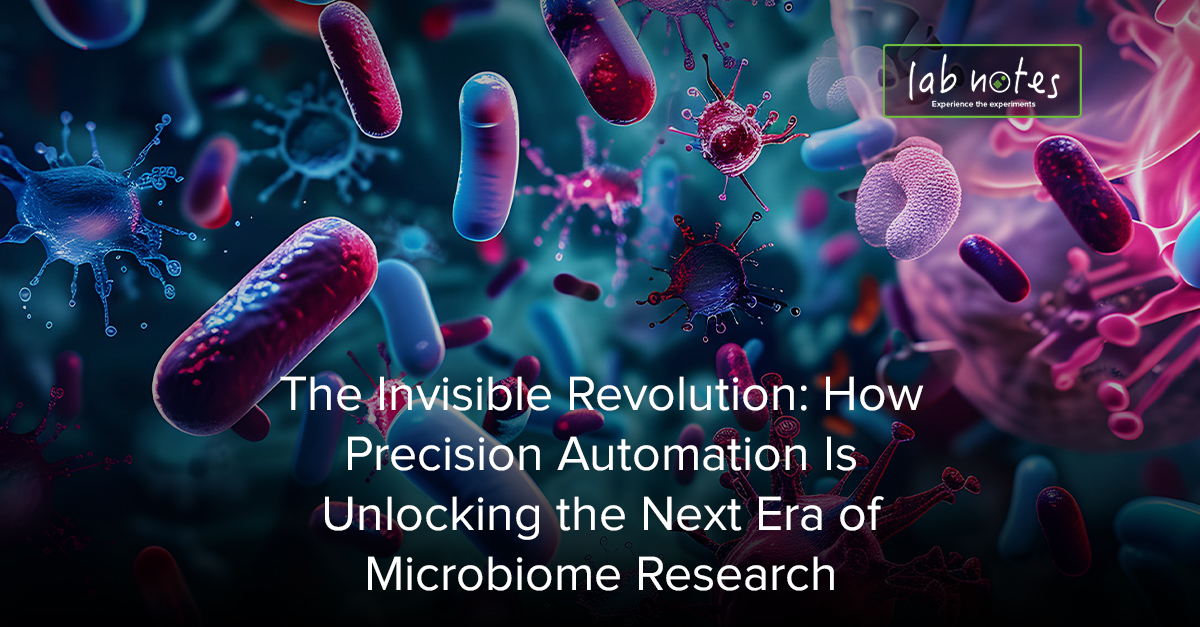
As microbiome science shifts from species-level insights to strain-level function, precision automation becomes essential to ensure reproducibility, scalability, and confidence in microbial workflows.
- Microbiome research is shifting toward strain-level function, requiring more precise and reproducible workflows.
- Metagenomics alone cannot confirm function - culture-based validation remains essential but is limited by manual workflow variability.
- Precision automation platforms like the QPix FLEX Microbial Colony Picker from Molecular Devices enable consistent colony selection, traceability, and scalable strain isolation without sacrificing scientific control.
Microbes are the unseen architects of biology. They drive nutrient cycles, power fermentation, and execute complex chemistry across environments as extreme as deep-sea hydrothermal vents and as familiar as the human gut. Their genetic diversity represents one of the largest untapped reservoirs of biological function on Earth - one increasingly central to medicine, agriculture, and environmental science. Nowhere is this more consequential than in metabolic health: as research into type 2 diabetes and related disorders accelerates, evidence is converging on a critical insight that the gut microbiome matters not at the level of species, but at the level of individual strains.
From species catalogs to strain-level function
Early microbiome studies focused on identifying which microbial species were present in health and disease. Today the field asks a more demanding question: which strains perform which functions, and why? Closely related strains within the same species can differ dramatically in gene content, metabolic output, and interaction with the host, and in metabolic disease these differences often carry the biological signal. Large-scale metagenomic studies have shown that strain-specific gene content within common gut microbes correlates with metabolic risk, including pathways associated with insulin resistance.
Why metagenomics alone cannot close the loop
Metagenomic sequencing has been transformative, resolving strain-level variation and functional gene content directly from complex samples. But sequencing alone cannot complete the scientific loop. Several limitations remain fundamental:
- Correlations identified in DNA do not establish causation.
- Gene presence does not guarantee expression or activity.
- Closely related strains can blur together computationally.
- Sequencing cannot confirm viability or culturability.
- Translation still requires real isolates for functional testing.
As a result, culture-based validation remains essential. The challenge is that as biological questions become more precise, traditional manual microbiology workflows increasingly struggle to keep pace.
The hidden bottleneck in microbiome workflows
In early-stage microbiome research, scientists are still learning what the "right" colony looks like, and that uncertainty makes colony selection inherently subjective. Manual colony workflows consistently introduce inconsistent selection criteria across users and days, throughput limitations, fatigue and ergonomics that reduce accuracy over time, and strain-level provenance risk from mispicks or labeling errors. These issues rarely announce themselves immediately; instead they surface downstream as irreproducible results, noisy datasets, or failed validation that appears biological but is often procedural.
The QPix FLEX Microbial Colony Picker
The QPix FLEX system is designed as an integrated microbial workflow platform, not just a colony picker, supporting the full progression from metagenomic candidate to testable isolate in a compact, guided system. In a single workflow it integrates precise plating and streaking, high-resolution color imaging, colony identification and segmentation, human-in-the-loop operator-driven machine-learning selection, picking, re-arraying and archiving, and built-in sample traceability. The goal is not to remove scientists from the process, but to support expert judgment with systems that enforce consistency.
Source: Molecular Devices Lab Notes.

NEED MORE INFORMATION ABOUT THIS PRODUCT?
Send us your emailRecent Blog Posts

.svg)

Advance Your Research
Contact NBT today for expert consultation on your neuroscience instrumentation needs.