.svg)
Microinjection Dosing Variability: Four Mechanical Causes and How to Eliminate Them
At sub-microliter volumes, four mechanical factors drive inconsistent microinjection: dead volume, air bubbles, plunger stick-slip and manual rate variation. How to eliminate each one.
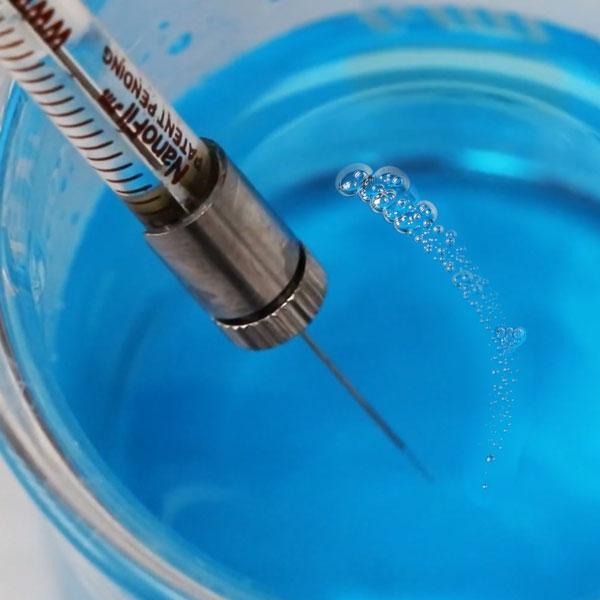
When you inject at sub-microliter volumes, small inconsistencies in the setup or the process stack up. A tiny air gap from improper syringe priming, excessive vibration in the room, or a clog in the system can compromise sample delivery. What comes out of that is variable expression in tissue, inconsistent delivery volume across bilateral targets or between subjects, and unreliable behavioral outcomes. The smaller the volume, the more the workflow depends on a system that is fail-proof and repeatable.
Why Microinjection Accuracy Breaks Down at Low Volumes
At very small volumes, even minor inconsistencies in syringe performance, user technique or sample preparation change the delivered dose. That is why failures in targeted delivery feel unpredictable. Two injections can look identical in practice and still give different results, because of small set-up differences that are easy to overlook.
1. Dead Volume That Reduces Delivered Dose
Dead volume is the liquid that stays in the syringe system and never reaches the needle tip. In low-volume applications, even tiny residual volumes cause significant dosing errors. It costs you most when you are working with expensive sample compounds, small subject cohorts, or scarce drug compounds.
Fix: use a system designed as a true gas-tight, zero dead volume system, so the sample volume you load is the volume you deliver.
2. Air Bubbles and Depressurizing Effects
Even a small air bubble acts like a spring inside the syringe, compressing and expanding during injection. Flow becomes inconsistent and dosing unpredictable: delayed delivery, a "burst release" once the bubble compresses enough, or sample leaking into unintended areas.
Fix: use a gas-tight, zero dead volume system with proper priming technique, so the system acts as a vacuum pressurized to move small volumes with extreme control.
3. Plunger "Stick-Slip" and Inconsistent Force
At low volumes, plunger movement counts for more than most researchers expect. If the plunger drags slightly and then releases, the injection flow surges, especially during manual delivery. This is one reason two researchers using "the same syringe" end up delivering different effective doses.
Fix: use a system engineered for consistent, low-friction movement.
4. User Technique and Rate Variability
Manual injections vary with the user's hand pressure and timing. Even when total volume is controlled, differences in rate change diffusion patterns, backflow and reflux risk, and tissue response.
Fix: standardize your infusion parameters by pairing the syringe with a microinjection pump like the UMP3 when repeatability is critical.
What "True Gas-Tight" Really Changes in Your Workflow
A true gas-tight, zero dead volume syringe system holds a sealed, vacuum-like environment that keeps air out, minimizes evaporation and prevents contamination. Pressure stays stable across multiple injections. You get fewer inconsistencies from depressurization effects, more reliable performance with small high-rigidity needles, and better protection for sensitive samples during handling.
How Zero Dead Volume Protects Precious Samples
A zero-dead-volume design puts the full intended dose into the target with no sample left behind as residue. Accuracy improves because the delivered dose matches what you planned. Efficiency improves because expensive reagents are not lost in tubing and fittings. That counts when you are working with viral vectors or high-value compounds where every microliter matters.
When a Microinjection Pump Makes the Biggest Difference
A syringe system improves accuracy. A microinjection pump improves consistency across users. Using the NanoFil™ syringe with the UMP3 microinjection pump gives you control over flow rate and volume, which reduces variability between injections. Add a pump when you need the same infusion rate every time, when you want to minimize reflux, when several researchers perform injections, or when outcomes are sensitive to slight dosing differences.
A Practical Checklist for More Consistent Microinjections
- Before injection: use a true gas-tight syringe, confirm zero dead volume delivery, prime carefully to eliminate bubbles, select a needle matching your tissue and application, and standardize infusion rate (pump preferred for repeatability).
- During injection: maintain steady delivery, use consistent dwell time if required, and avoid sudden withdrawal to reduce reflux risk.
- After injection: re-check for bubbles or leakage before the next run, and log your syringe and needle parameters for repeatability.
Summary
System mechanics drive microinjection accuracy as heavily as researcher skill does. At sub-microliter volumes, dead volume, bubbles, micro-leaks and manual variability quickly undermine repeatability. A workflow built around a true gas-tight, zero-dead-volume syringe system with controlled infusion reduces dosing variability. WPI's NanoFil™ system comes in syringe sizes from 10 to 100 µL and works with the UMP3 Microinjection Syringe Pump.

Shall we chat about this topic?
Contact usRecent Blog Posts

.svg)


Advance Your Research
Contact NBT today for expert consultation on your neuroscience instrumentation needs.